CNBC
CNBC- U.S. forces struck two Iranian rocket launchers on Larak Island on Sunday, marking the first publicly acknowledged U.S. strike on Iranian positions since late July.
- Iran's Revolutionary Guards Corps reported that the U.S. attack killed and wounded several Iranian soldiers and that it has retaliated with attacks on American military bases in Jordan.
- Oil prices rose more than 1% in early Asian trading on Monday, with Brent at $89.46 and WTI at $84.60.
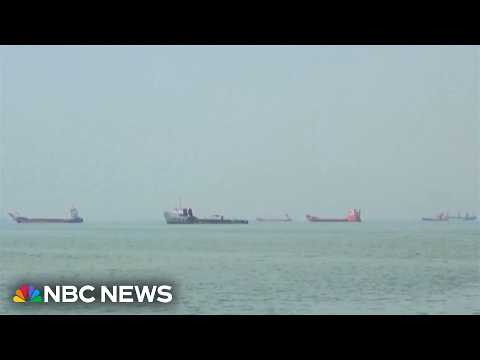
- Vessel traffic through the Strait of Hormuz, a key route for global energy shipments, has been severely disrupted as the conflict enters its sixth month.
- Analyst Tamas Varga of PVM Oil Associates warned that "supply risk will persist and oil inventories will continue to deplete in the coming weeks and months," adding that "the Iranian crisis has likely changed the security status quo in the Middle East."
- Goldman noted that "rising strikes on refineries in the Middle East and Russia have further constrained already-stretched global refining capacity, pushing refined products margins to new highs."
Oil prices rose more than 1% in early Asian trading on Monday, with futures for the international benchmark gaining 1.54% to $89.46 a barrel. This increase follows U.S. military strikes on two Iranian rocket launchers on Larak Island, which heightened concerns over potential supply disruptions.1345
Navy Capt. Tim Hawkins, a spokesperson for U.S. Central Command, confirmed the strikes, stating, "I can confirm that earlier today U.S. forces struck two Iranian launchers on Larak Island. Islamic Revolutionary Guard Corps forces were observed preparing to launch rockets with sea mines into the Strait of Hormuz." This marked the first publicly acknowledged U.S. strike on Iranian positions since late July, according to the Associated Press.6
The Iranian Revolutionary Guards Corps reported casualties among their soldiers due to the U.S. attack and claimed to have retaliated by targeting American military bases in Jordan. The ongoing conflict in the Middle East has severely disrupted vessel traffic through the Strait of Hormuz, a crucial route for global energy shipments, which has now entered its sixth month.2
Analyst Tamas Varga from PVM Oil Associates noted, "Supply risk will persist and oil inventories will continue to deplete in the coming weeks and months," suggesting that the Iranian crisis has altered the security landscape in the region. Additionally, Goldman Sachs highlighted that "Rising strikes on refineries in the Middle East and Russia have further constrained already-stretched global refining capacity, pushing refined products margins to new highs."7
“The strike is the first publicly acknowledged U.S. attack on Iranian positions since late July, per the Associated Press. Vessel traffic through the Strait of Hormuz remains severely disrupted as the conflict enters its sixth month, with analysts warning of persistent supply risk and depleting inventories.”