- Oil prices surged to a near four-month high, with Brent crude jumping to about $108 per barrel and U.S. crude selling at over $103.26 per barrel, more than 20% higher than a month ago.
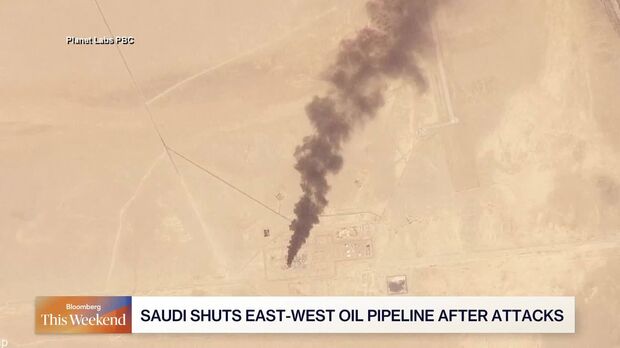
- Satellite photos show the extent of the damage caused by a drone attack on Saudi Arabia's East-West pipeline, which transports crude oil from Abqaiq on the kingdom's eastern Gulf coast to the port of Yanbu on the Red Sea.
- Saudi Arabia on Friday shut the roughly 750-mile system, or Petroline, as a precautionary measure following multiple attacks by drones launched from Iraq.
- Fighting between Iran's Houthi allies and Yemen's Saudi-backed government forces intensified after the rebels captured new ground that could tighten their chokehold on Saudi oil exports via the Red Sea.
- Iran and Oman have delayed talks regarding the Strait of Hormuz amid these escalating tensions.
- The images, released by Vantor and published via Getty Images on Sunday, show a bird's-eye view of fire damage and extensive blackened areas in and around a pumping station on the pipeline.
- Several people were injured in the attacks, the Saudi government said, with drones targeting a key stretch of the pipeline in the Riyadh and Medina regions.
- The pipeline's closure comes as Yemen's Iran-backed Houthis have ramped up attacks on targets in Saudi Arabia and launched a push to exercise control of another critically important oil choke point on the other side of the Arabian Peninsula: the Bab el-Mandeb Strait.
- There are concerns that the Houthis' advance toward the Bab el-Mandeb Strait could have significant ramifications for energy markets and global trade, particularly if the militant group ratchets up threats or attacks on Red Sea shipping.
- Vantor satellite images show the East-West pipeline pumping station in Saudi Arabia before and after the September 11, 2026 drone attack, with fire damage and extensive blackened areas visible.
- Oil prices have surged in recent days amid deepening supply concerns in the Middle East, with international benchmark futures for November expiry rising 3.4% to $108.17 per barrel on Monday morning, extending gains after jumping more than 20% over the past month.
- U.S. futures for October expiry traded 3% higher at $103.07, and the contract, which is up nearly 25% over the past month, surpassed $100 for the first time since May last week.
Oil prices have surged to nearly four-month highs, with Brent crude reaching about $108 per barrel as tensions in the Middle East escalate. U.S. crude also rose to over $103.26 per barrel, marking a more than 20% increase in just a month.12
The rise in oil prices coincides with the postponement of talks between Iran and Oman regarding the Strait of Hormuz, a critical chokepoint for global oil shipments. Oman's Foreign Minister Badr Albusaidi stated the meeting was delayed "in the interests of consensus," reflecting the complex geopolitical dynamics at play.6
Additionally, satellite images have revealed significant damage to Saudi Arabia's East-West pipeline, which transports crude oil from Abqaiq to the port of Yanbu. The images show extensive fire damage and blackened areas around a pumping station, following a drone attack attributed to Iran-backed Houthi rebels. This attack raises concerns about the security of oil exports and the potential for further escalation in the region.3

Saudi Arabia has relied on the East-West pipeline, which has a design capacity of 7 million barrels per day, as tensions with Iran continue. The Houthis' advances toward the Bab el-Mandeb Strait could have significant ramifications for energy markets and global trade, particularly if threats or attacks on Red Sea shipping increase.9
As the situation develops, oil prices are expected to remain volatile amid deepening supply concerns in the Middle East.
“Brent crude jumped 3.2% to $107.94 per barrel, while U.S. crude surpassed $103, up over 20% in a month. Saudi Arabia shut the 750-mile Petroline after drone attacks from Iraq, with several injured in Riyadh and Medina regions.”


 CNBC
CNBC