- Ohio lawmakers passed a 90-day gas tax suspension, saving drivers roughly $55.
- Governor Mike DeWine signed the bill into law on Thursday, suspending gas and diesel taxes for 90 days beginning Sunday.
- Both gubernatorial candidates, Vivek Ramaswamy and Amy Acton, pushed for the tax break.
- Podcast hosts dismissed the measure as an election-year stunt with minimal real-world impact.
- The state’s gas tax is 38.5 cents per gallon, and the holiday is expected to cost about $725 million over 90 days.
- The average driver could save about $55 over the three months, according to the figures discussed by the hosts.
- Critics argue that the tax break will provide minimal relief and is more of a political maneuver than a genuine solution.
- State officials say budget surplus money will replace the transportation funding normally generated by the tax.
Ohio Governor Mike DeWine has enacted a 90-day suspension of the state's gas tax, which is set at 38.5 cents per gallon, aiming to provide temporary relief to drivers amid soaring fuel prices. The initiative is projected to save drivers approximately $55 over three months, costing the state about $725 million in lost revenue.25
Critics, including podcast hosts, have dismissed the measure as a political stunt ahead of the midterm elections, arguing that the savings are negligible. “Not a lot of money,” said Laura Johnston, highlighting that the savings might only allow for an extra tank fill-up. “We just gave oil and fuel companies more money by this tax break,” she added, emphasizing the minimal impact on everyday consumers.
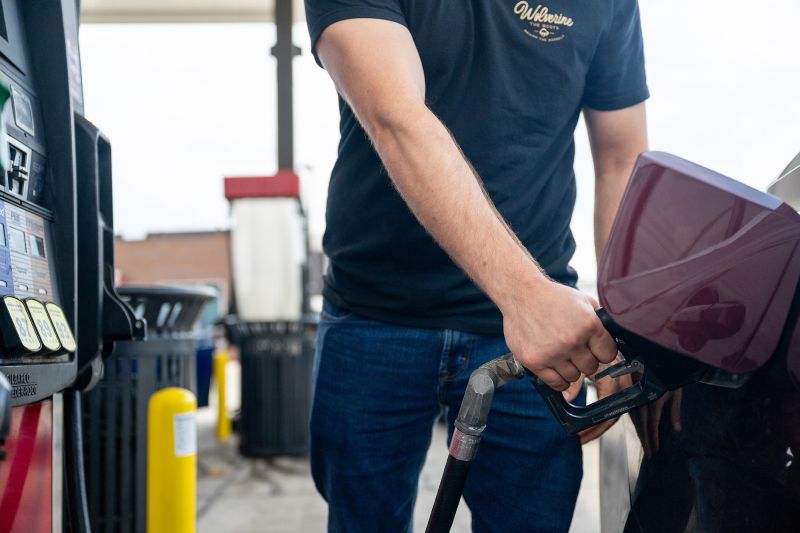
The gas tax holiday has drawn bipartisan support, with both gubernatorial candidates, Republican Vivek Ramaswamy and Democrat Amy Acton, advocating for the tax break. However, critics argue that the funds could be better allocated to address more pressing economic issues. “If this is the biggest economic idea both campaigns are eager to own, that is such a low bar, right?” Atassi remarked.3
Despite the temporary relief, experts caution that the underlying causes of high fuel prices, including the Iran war and the Russia-Ukraine conflict, remain unaddressed. “States are taking actions where they have control, but they can’t control the events in the Middle East and Russia,” said Andy Lipow, president of Lipow Oil Associates, underscoring the limited effectiveness of state-level interventions.
“The suspension, costing $725 million over 90 days, will be funded by budget surplus, but analysts say drivers may only see 60-80% of savings as supply chain players capture the rest. Podcast host Laura Johnston mocked the move, saying it barely gives anyone a break and that both candidates are racing to claim it.”
 Cleveland.com