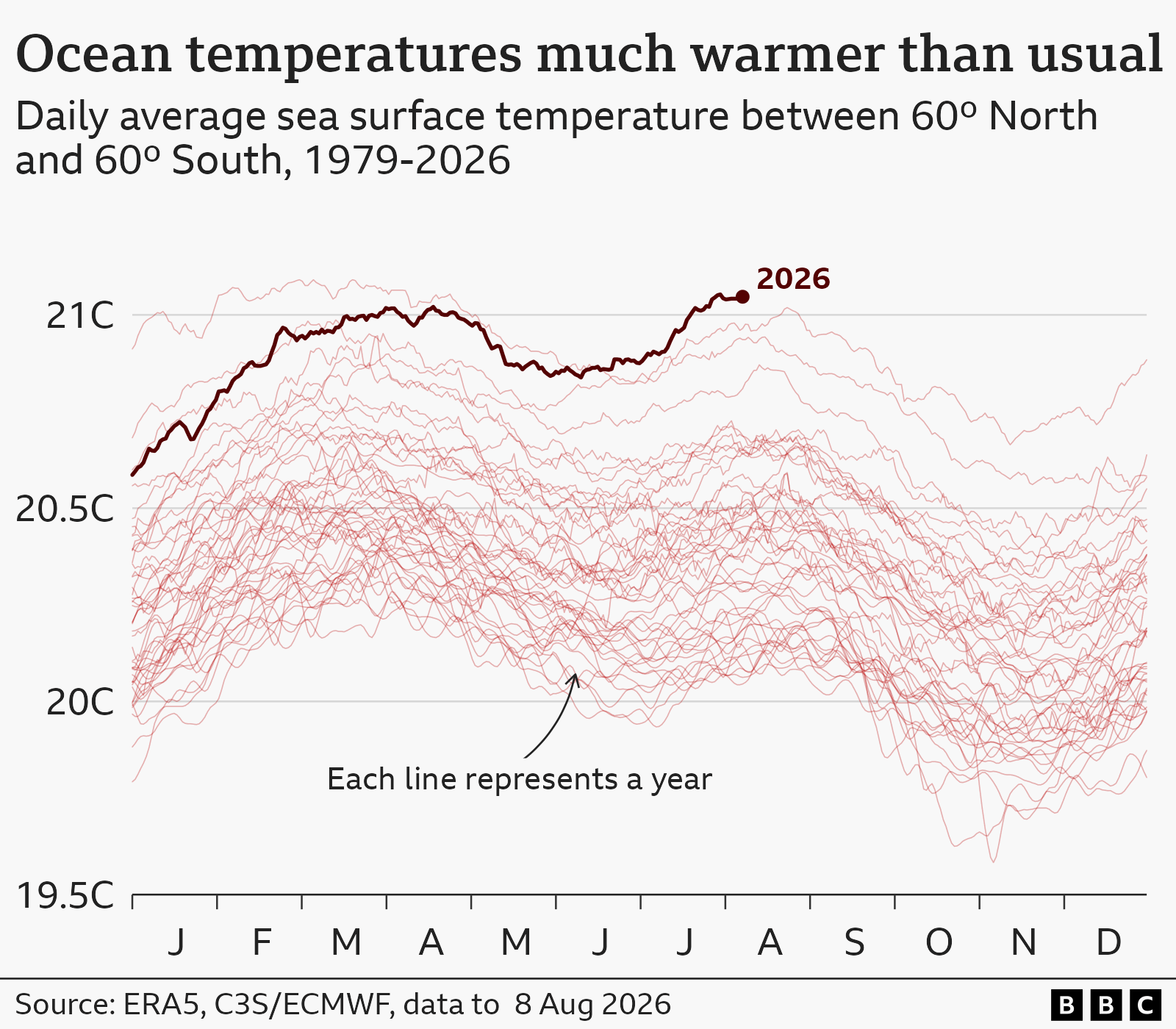
- The average sea surface temperature (SST) outside polar regions was 20.96C last month, beating the previous high of 20.89C set in 2023.
- Last month was the joint second-warmest July globally on record, with temperatures 1.47C above the pre-industrial average, according to the Copernicus Climate Change Service.
- Sea temperatures remained exceptionally high across much of the tropical Pacific, where El Niño conditions are developing and forecast to strengthen in the coming months.
- The world's oceans hit their hottest ever recorded temperatures for July, partly fuelled by developing El Niño conditions in the Pacific, according to the EU's climate monitoring service.
The world's oceans reached unprecedented temperatures in July, with an average sea surface temperature of 20.96C, surpassing the previous record of 20.89C set earlier this year.1
This month was also noted as the joint second-warmest July globally, with temperatures 1.47C above pre-industrial averages, according to the Copernicus Climate Change Service.2
The rise in temperatures is partly attributed to developing El Niño conditions in the Pacific, which are expected to strengthen in the coming months.34
Around Europe, record sea surface temperatures were observed along the Atlantic coast and in the western Mediterranean, leading to widespread and severe marine heatwaves.
Oceans play a crucial role in regulating the climate, absorbing most excess heat from greenhouse gas emissions and producing half of Earth's oxygen. However, warmer waters absorb less carbon dioxide, exacerbating climate change.
The impact of higher ocean temperatures extends to marine ecosystems, as species migrate in search of cooler waters, disrupting food chains and threatening biodiversity.
“The average sea surface temperature outside polar regions reached 20.96C, surpassing the previous high of 20.89C set in 2023. El Niño conditions are developing in the tropical Pacific and are forecast to strengthen, potentially driving further ocean warming.”