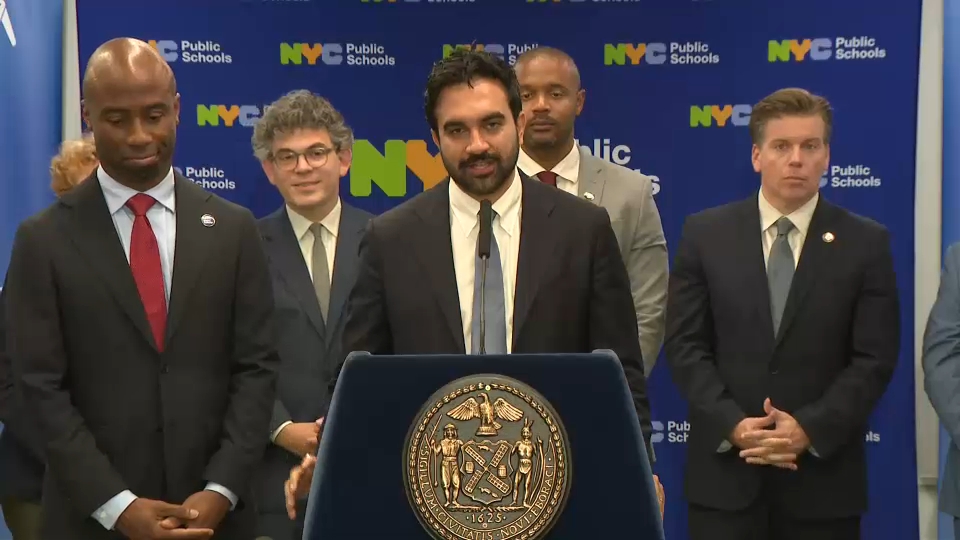
- Mayor Mamdani announces a policy banning AI for students through eighth grade.
- The moratorium takes effect during the 2026-27 school year, affecting nearly 600,000 students, roughly two-thirds of the city's public school enrollment.
- A coalition of educators, parents, experts, and elected officials will study AI's impact and recommend next steps.
- High school classrooms may participate in monitored AI pilot programs, and all high school students will receive twice-yearly AI literacy lessons.
- Mayor Mamdani called the move necessary to protect human connection in classrooms, arguing children should develop problem-solving and social skills alongside teachers and peers rather than relying on AI tools.
- The policy also introduces new screen time guidelines, including restrictions on one-to-one device use for the youngest students and recommended daily caps of 30 minutes for grades 3-5 and 45 minutes for grades 6-8.
New York City public schools will implement a ban on generative AI for students in grades 2-K through eighth, starting in the 2026-27 school year. This policy, announced by Mayor Zohran Mamdani, will impact nearly 600,000 students, or about two-thirds of the city's public school enrollment.2
Mamdani stated, "This moratorium is a commitment to getting the future right," emphasizing the need to embrace technology only when it benefits students. The ban prohibits student-facing AI tools and chatbots for younger grades while a coalition of educators and experts evaluates the technology's impact.
High school classrooms will have limited participation in monitored AI pilot programs, and all high school students will receive twice-yearly lessons on AI literacy, bias, ethics, and critical thinking. Teachers, however, can still use AI for lesson planning and administrative tasks that comply with city safety standards.4
The policy also introduces new screen time guidelines, including restrictions on device use for younger students and recommended daily caps of 30 minutes for grades 3-5 and 45 minutes for grades 6-8. Mamdani argued that the move is essential to protect "human connection" in classrooms, asserting that children should develop problem-solving and social skills alongside teachers and peers rather than relying on AI tools.56
“The moratorium, effective in the 2026-27 school year, will affect nearly 600,000 students, roughly two-thirds of the city's public school enrollment. Mamdani said, "This moratorium is a commitment to getting the future right," while new screen time guidelines cap daily device use at 30 minutes for grades 3-5 and 45 minutes for grades 6-8.”
 ABC7 New York





