- Nvidia's sales soar as the rapid buildout of AI data centres drives demand, with revenue and earnings topping forecasts.
- Nvidia's financial success and processors are central to the AI boom, powering data centres used to train and run AI models, and have made it the world's most valuable firm with a market capitalisation above $5tn.
- Nvidia has become a backer to companies like OpenAI, Anthropic, and SpaceX to help continue the costly buildout of AI infrastructure.
- Competition is emerging from customers designing their own processors and cheaper suppliers in China, but the latest numbers suggest those challenges remain limited for now.
Nvidia's financial performance has surged, with a reported revenue of $96 billion for the second quarter, more than double from the previous year.
CEO Jensen Huang emphasized that "AI has reached its inflection point," as the company accelerates its infrastructure buildout.
The data center division alone generated $89 billion, marking a 117% increase year-over-year, showcasing the industry's reliance on Nvidia's hardware.
Matt Britzman, a senior equity analyst, described the results as "another monster set," with guidance for the next quarter indicating revenue above $110 billion.
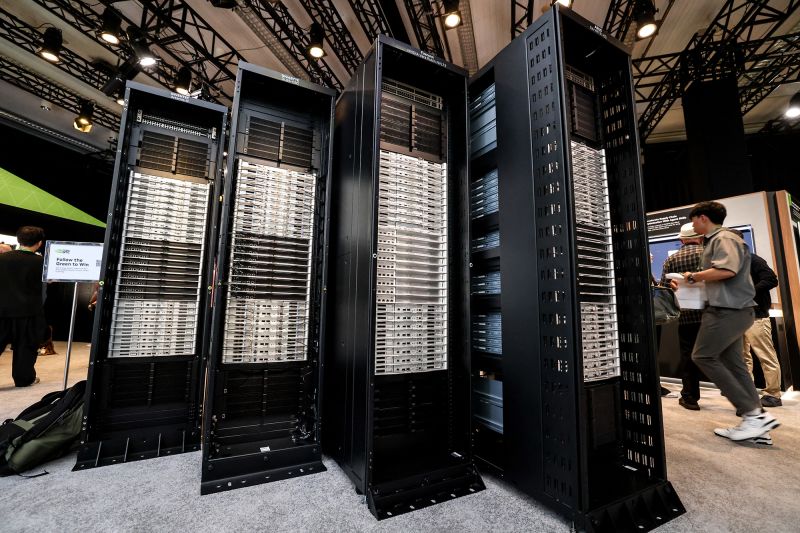
Nvidia's processors are now central to the AI boom, powering data centers that train and run AI models.23
The company has become a key partner for firms like OpenAI and SpaceX, supporting their costly AI infrastructure buildout.4
Despite emerging competition from customers designing their own processors and cheaper suppliers in China, Nvidia's latest numbers suggest these challenges are currently limited.
The demand for Nvidia's computing power has propelled it to become the world's most valuable firm, with a market capitalization exceeding $5 trillion.
“Nvidia's market capitalisation has surpassed $5tn, making it the world's most valuable firm, as its processors power data centres for AI training. The company has also backed OpenAI, Anthropic, and SpaceX to support the costly AI infrastructure buildout, while facing emerging competition from customers' own chips and cheaper Chinese suppliers.”
 BBC
BBC