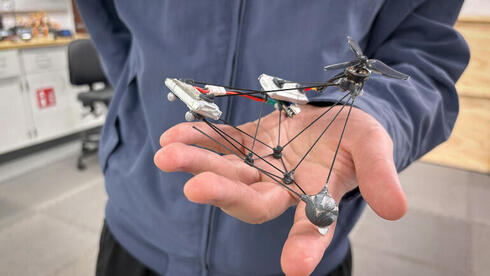
- Phantom Twist is a drone designed by Northwestern University researchers that spins up to 25 times per second, creating a faint blur that is about 10 times harder to see than conventional quadcopters.
- The drone's design process involved generating roughly 20,000 configurations, which were simulated against hundreds of real-world backgrounds to assess visibility.
- The final design was fabricated and flight-tested, confirming its stability and controllability.
- The research was presented on July 16 at the Robotics: Science and Systems 2026 conference in Sydney.
- The drone's counter-rotating design eliminates stationary parts, making it difficult for the human eye to focus on any specific component.
- According to researchers, the optimized drone is about 10 times less visually perceptible than a conventional quadcopter.
- The drone's motion blur exploits human visual perception, making it suitable for applications like wildlife monitoring and infrastructure inspection.
Northwestern University researchers have unveiled the Phantom Twist, a drone that utilizes rapid spinning to achieve a level of invisibility that traditional camouflage cannot match. The drone rotates up to 25 times per second, creating a motion blur that renders it 10 times harder to detect than standard quadcopters.12910
The design process was highly automated, with researchers generating approximately 20,000 configurations to find the most effective design. Each configuration was tested against real-world backgrounds to assess visibility, leading to the selection of the 500 lowest-visibility designs for further optimization. “The design process was fully automated,” said lead researcher Michael Rubenstein, highlighting the efficiency of their approach.34
The Phantom Twist's unique structure features a counter-rotating body that eliminates stationary parts, making it difficult for the human eye to focus on. “When an object spins quickly, we perceive it as blurring out and losing distinct features,” explained Emma Alexander, an expert in computer vision.7
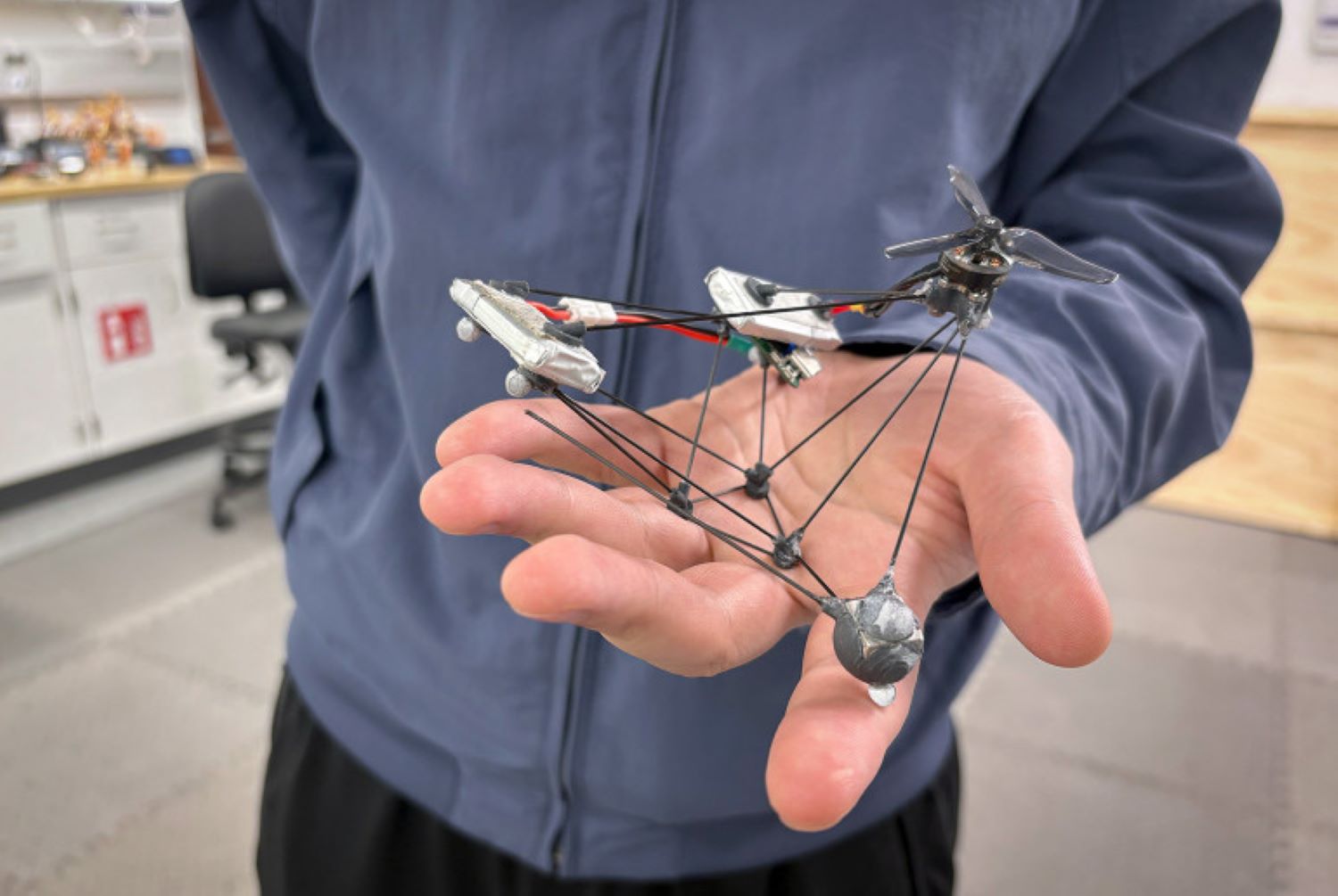
Potential applications for this technology include wildlife monitoring, where the drone can observe animals without disturbing them, and infrastructure inspection, allowing for assessments with minimal visual disruption. The team plans to enhance the drone with transparent materials and quieter propulsion systems in future iterations.
The research was presented on July 16 at the Robotics: Science and Systems 2026 conference in Sydney.6
“The Phantom Twist was presented July 16 at Robotics: Science and Systems 2026 in Sydney, where the researchers showed it is about 10 times less visually perceptible than a conventional quadcopter. The team sees potential for monitoring nesting birds and inspecting infrastructure with less disruption, though the drone remains loud and wires visible at close range.”
 Ynetnews
 Gadget Review



