- NOAA's Space Weather Prediction Center has issued a G1 (minor) geomagnetic storm watch for tonight.
- The coronal hole high speed stream (CH HSS) became 'geoeffective' on Thursday, meaning Earth is now immersed in its blustery flow.
- Potential for short periods of G2 (moderate) activity is forecasted, with timing from sunset through around 10 p.m. EST on Friday, November 6.
- Space weather forecasters have been monitoring an immense coronal hole on the Sun rotating towards Earth over the past few days.
- Coronal holes are regions of the solar atmosphere exposed directly to space by the orientation of the magnetic fields on the Sun's surface.
- The solar wind from this coronal hole consists of fast, energetic solar particles that disrupt the normal flow of the solar wind.
- During geomagnetic storms, there is potential for 'substorm' activity, which can create bright auroras.
- Substorms are pulses of increased aurora brightness and can dazzle observers, although their duration is typically shorter than that of a registered storm.
A G1 geomagnetic storm watch has been issued for tonight as solar winds from a coronal hole on the Sun are expected to enhance aurora visibility across Canada. The NOAA's Space Weather Prediction Center predicts activity from sunset until 10 p.m. EST, particularly in the eastern regions.16
The storm is fueled by a coronal hole high speed stream (CH HSS), which has become geoeffective, meaning Earth is now experiencing its energetic solar particles. This could lead to geomagnetic storms that may spark auroras, especially in Labrador, northern Quebec, and northern Ontario.2
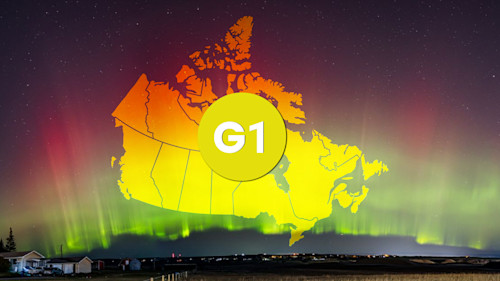
While G1 storms typically keep displays well to the north, there is potential for short periods of G2 (moderate) activity as well. The SWPC notes that geomagnetic storms are measured in three-hour blocks, and if activity dips below a certain threshold, it won't be registered as a storm. However, substorm activity can still produce dazzling auroras, albeit for shorter durations of minutes to a couple of hours.3
As solar winds continue to increase, the chances of witnessing the Northern Lights are rising, making tonight an exciting opportunity for skywatchers across Canada.
“The storm watch is driven by a coronal hole high speed stream that became geoeffective Thursday, with potential for short G2 activity. NOAA's SWPC expects the display from sunset through 10 p.m. EST Friday, favoring eastern Canada, though G1 storms typically keep auroras far north.”