
- New Jersey's 'Skip the Stuff' law took effect on August 1, requiring that single-use utensils and condiments be provided only upon request for takeout orders.
- The law, signed by then-Gov. Phil Murphy in January, aims to reduce plastic waste and the environmental footprint of food purveyors.
- Under the new law, online food ordering platforms like DoorDash and Instacart must also comply by not providing utensils unless specifically requested by the customer.
- The New Jersey Department of Environmental Protection (NJDEP) emphasizes that the goal is to reduce waste by only taking what you actually need.
- The 'Skip the Stuff' law builds on previous plastic reduction efforts in New Jersey, which included banning single-use plastic carryout bags and polystyrene foam food containers in 2022, and restricting plastic straws in 2021.
- The law applies to both takeout and eat-in restaurants, which must now provide only washable utensils and serve condiments in full-size bottles or reusable containers.
- K-12 schools, state correctional facilities, and healthcare facilities are exempt from the new law, as are food court restaurants until August 1, 2028.
- Public opinion on the law has been mixed, with some praising it for reducing waste while others criticize it as virtue signaling by politicians.
- Some diners expressed concerns that they might forget to request necessary items like condiments or utensils, leading to potential inconveniences.
New Jersey's 'Skip the Stuff' law, effective Aug. 1, requires takeout customers to request single-use utensils, napkins, and condiments, aiming to reduce plastic waste. The law builds on previous efforts to limit plastic use, including bans on plastic bags and foam containers.1269
The New Jersey Department of Environmental Protection (NJDEP) states that the initiative seeks to minimize waste, noting that approximately 95% of food packaging is discarded after one use. Restaurants must comply or face fines, starting with warnings for first violations and escalating to up to $250 per day for repeat offenses.4
While some diners, like Kathleen Burns, support the law for reducing waste, others, such as Derrick Williams, express concern over the inconvenience it may cause. Williams remarked, "Because I'm not going to always remember to ask for condiments or a fork and if I'm going somewhere where I need to eat quick, then I don't have what I need."
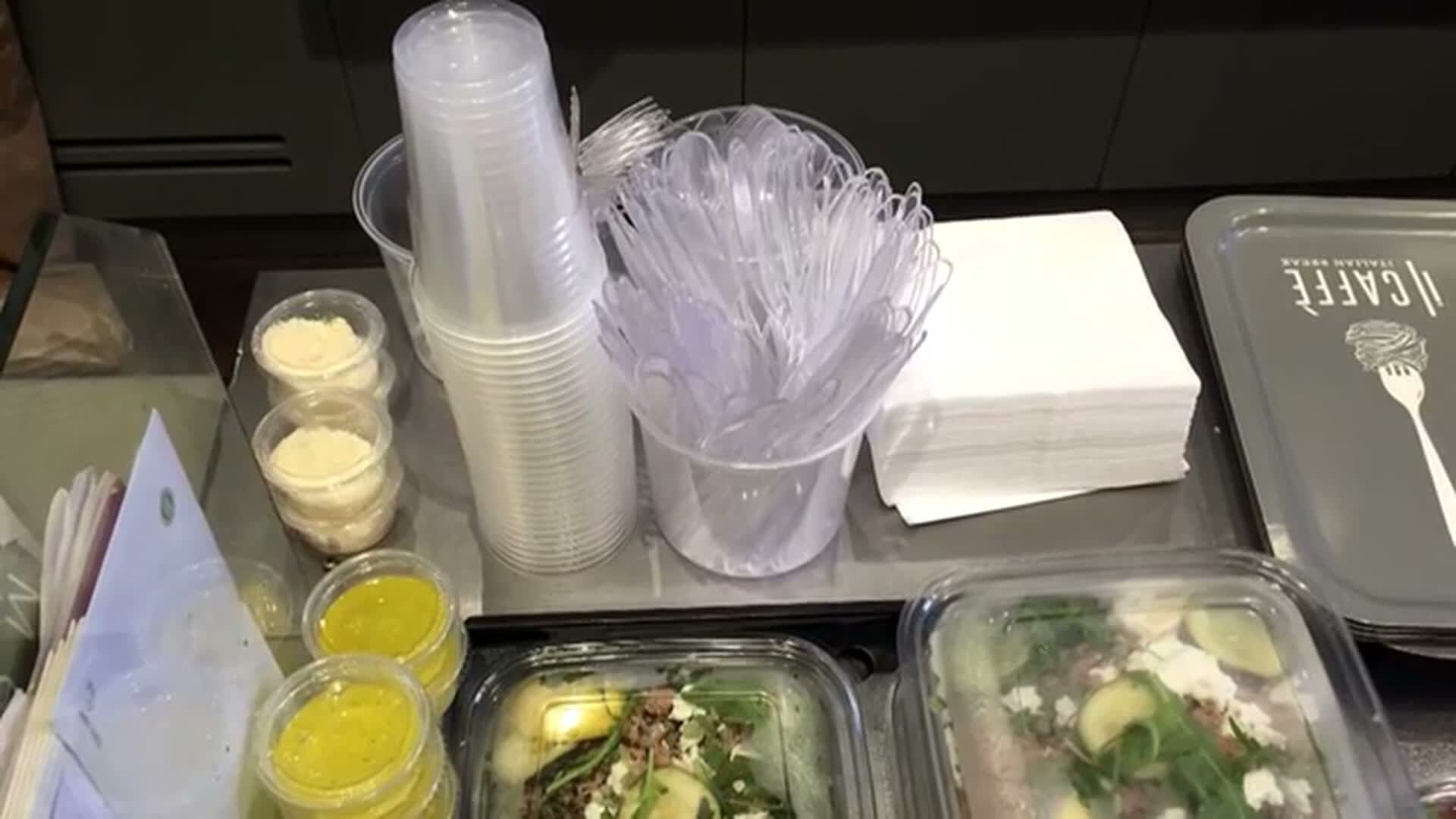
The law also applies to online food ordering platforms, which must default to not providing utensils unless specifically requested. Critics argue the law is unnecessary, with some social media users labeling it as “virtue signaling.” However, supporters believe it is a step towards sustainability, with the New Jersey Restaurant and Hospitality Association suggesting it could save businesses money in the long run.38
As the law takes effect, diners and restaurants alike are adjusting to the new requirements, with many anticipating confusion in the early days of implementation.
“Under the law, a first violation brings a warning, but a second could bring fines up to $100 per day, with subsequent violations up to $250 per day. K-12 schools, correctional facilities, healthcare facilities and food courts are exempt, while NJDEP says about 95% of food packaging is discarded after one use.”





