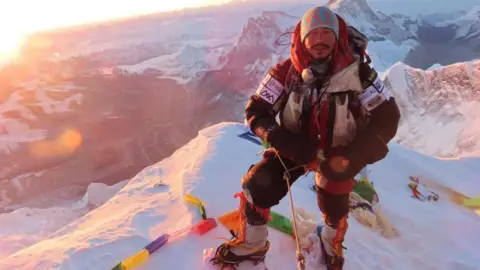
- Nirmal Purja, known for speed climbing the "14 peaks", led the Broad Peak expedition; six Nepalis died in an avalanche on Pakistan's Broad Peak, elevating recognition of Nepali guides.
- The six victims were record-setting Nepali guides: they summited Everest dozens of times and achieved feats such as climbing 8,000m peaks without supplemental oxygen and scaling K2 in winter; fellow guides called their deaths a devastating blow.
- Ben Ayers, a longtime Everest reporter, described Purja as "iconic and undisputedly amongst the best of his generation" and called the other deceased Broad Peak guides Kili Pemba Sherpa and Pur Bahadur Gurung "strong climbers with a solid resume".
- Kili Pemba, 46, had just completed the mountaineering Grand Slam after finishing his last of the 14 highest peaks; he was part of the first winter ascent of K2 in January 2021 and twice guided double-leg amputees on Everest.
- Pur Bahadur Gurung, 37, scaled 12 of the 14 highest peaks and was an International Federation of Mountain Guides Association (IFMGA)-certified guide; the loss was described as "unprecedented".
- Other victims included Gyaljen Sherpa, who scaled Kanchenjunga three times in one season; Nima Sherpa, who scaled four eight-thousanders; and Nawang Thindu Sherpa, described as among Nepal's rising generation of guides.
- Purja is credited with bringing Pakistan onto the climbing radar through his 14-peaks feat documented in a Netflix film; Ayers said Purja helped "publicise a new era of mountaineering" but also "fuelled commercialisation and risk".
- Alan Arnette, an expert mountaineer and writer, cited previous disasters that changed nothing and doubted the Broad Peak incident would have a significant impact; many believe high-altitude tourism will change little.
Nirmal Purja, 43, a legendary British-Nepali climber, was leading a 10-member team on Broad Peak when an avalanche struck, claiming his life and those of five other esteemed Nepali guides. This incident marks a profound loss for Nepal's mountaineering community, which has seen these climbers elevate the status of Sherpas globally.123
Purja, known for his record-breaking speed climbs, was instrumental in bringing attention to Pakistan's mountains. His achievements included summiting all 14 of the world's highest peaks in just over six months, a feat documented in a Netflix film. Fellow climbers described him as “iconic and undisputedly amongst the best of his generation,” according to Ben Ayers, a veteran Everest reporter.671516
The other victims included Kili Pemba Sherpa, who recently completed the Grand Slam of mountaineering, and Pur Bahadur Gurung, one of only 100 Nepali guides certified by the International Federation of Mountain Guides Association. Their deaths have been described as a “devastating blow” to the community, with calls for improved safety standards in high-altitude tourism.
Despite the tragedy, experts like Alan Arnette express skepticism that significant changes will occur in the industry, citing past disasters that led to little reform. “I doubt the Broad Peak incident will have a significant impact, given history,” he stated, reflecting on the ongoing risks faced by climbers in pursuit of their passions.171819
“The six Nepali guides killed included Kili Pemba Sherpa, 46, who had just completed the mountaineering Grand Slam, and Pur Bahadur Gurung, 37, an IFMGA-certified guide who scaled 12 of the 14 highest peaks. Fellow guides called the loss devastating, while expert Alan Arnette doubted it would change high-altitude tourism.”


 BBC
BBC





