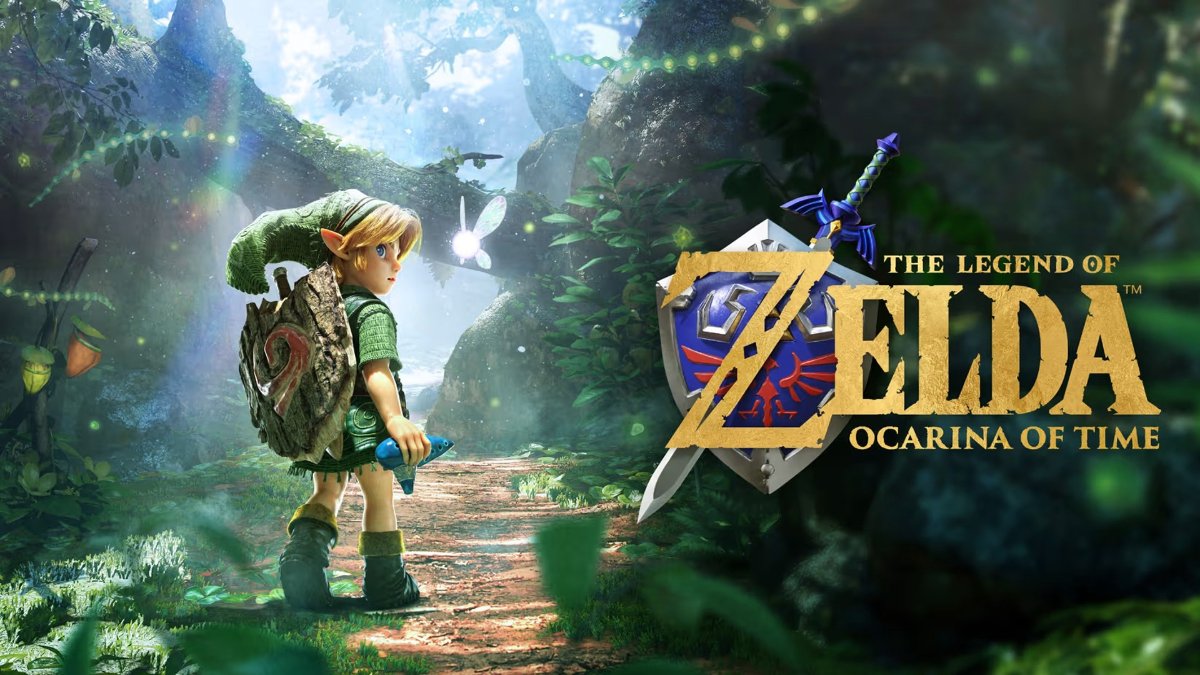
- Sound director Masato Ohashi said that because the remake includes new cutscenes, new music was composed, such as in a Kokiri Forest scene where motifs from the original background music were incorporated.
- Ohashi clarified that the soundtrack did not use the Nintendo 64's audio output directly, but instead used the original sound source as a reference to faithfully recreate some sounds, aiming to bring back memories.
- Producer Hidemaro Fujibayashi admitted that he initially doubted the decision to use the old sounds, but ultimately felt that mixing in sounds from that era makes the game feel like more than just a modern remake.
- Ohashi explained that the new compositions use shifts in pacing rather than just volume changes, with grander areas receiving more sweeping orchestral arrangements and simpler moments given limited instrumentation.
- Fujibayashi noted that the music in *Ocarina of Time* differs from the more ambient scores of *Breath of the Wild* and *Tears of the Kingdom*, and that it has a real power to guide players' emotions.
Nintendo's remake of *Zelda: Ocarina of Time* features a rich orchestral soundtrack, integrating both new compositions and nostalgic N64 sound samples.
Sound director Masato Ohashi explained that the team composed new music for various cutscenes, such as one set in Kokiri Forest, where they incorporated motifs from the original background music.1
The new compositions aim to enhance emotional engagement, with Ohashi stating, “The compositions didn’t merely increase in volume to emphasize various moods but utilized shifts in pacing.” This approach allows for more sweeping orchestral arrangements in grander areas, while simpler moments feature limited instrumentation.4
Producer Hidemaro Fujibayashi highlighted the distinctiveness of the music in this remake compared to recent titles like *Breath of the Wild* and *Tears of the Kingdom*, which focused on ambient soundscapes. He noted, “It has real power to guide players’ emotions, whether by heightening their excitement or by capturing the place or moment they’re in.”3
Ohashi clarified that they did not use the original N64 audio output directly, but instead referenced it to recreate sounds authentically. He stated, “We wanted to do something only Nintendo could as a way of bringing back memories of that time.” Fujibayashi concluded, “mixing in the sounds from that era makes the game feel like more than just a modern remake.”
“Sound director Masato Ohashi said new compositions use shifts in pacing, with grander areas getting sweeping orchestral arrangements and simpler moments limited instrumentation. Producer Hidemaro Fujibayashi noted the music differs from Breath of the Wild and Tears of the Kingdom, having real power to guide players' emotions.”