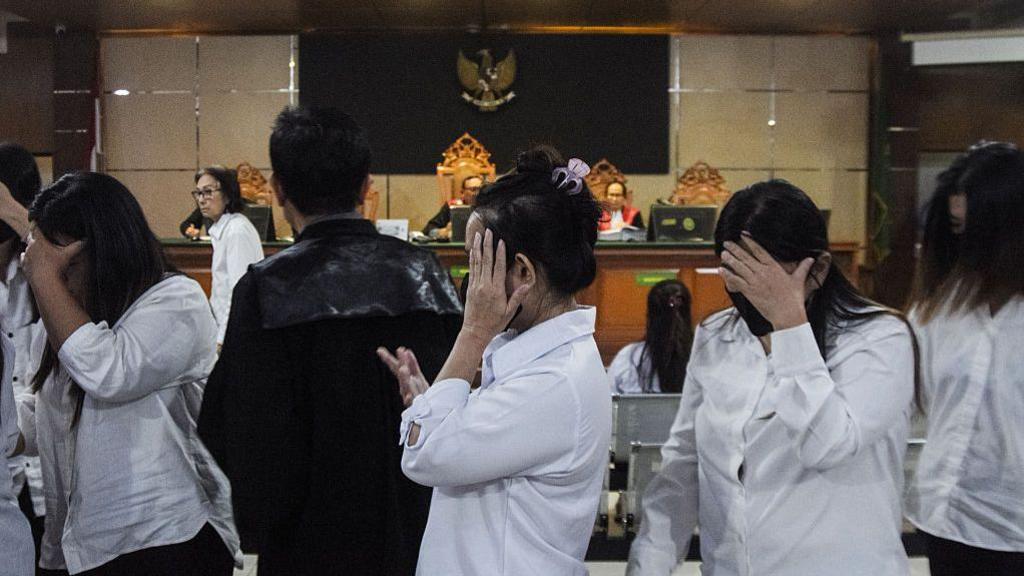
- Nineteen individuals have been found guilty of trafficking babies between Indonesia and Singapore.
- Astri Fitrinika, who sourced almost all of the babies, was sentenced to six years and seven months.
- Lai Siu Ha, who falsified documents for the babies, was sentenced to six years and seven months and is appealing.
- The syndicate was uncovered after a father reported a kidnapping, leading police to broker Astri Fitrinika, whose phone revealed dozens more babies.
- Singaporean adoptive parent expressed fear and anxiety, asking authorities to decide based on the child's best interests.
- Singaporean authorities pledged to review child adoption processes in February 2025.
- A criminologist highlighted the difficulty of pursuing transnational crimes due to jurisdictional differences.
An Indonesian court has convicted 19 individuals involved in a baby trafficking ring that illegally sold 34 infants between Indonesia and Singapore. The ringleader, a 70-year-old woman, received a seven-year sentence, while others faced three to six years in prison.
The trafficking operation, which spanned from 2023 to 2025, involved the illegal purchase of babies in West Java for adoption in Singapore and Indonesia. Of the 34 babies, 12 are believed to already be in Singapore, raising concerns among adoptive parents about their welfare.
Astri Fitrinika, identified as the main broker, was sentenced to six years and seven months for her role in procuring the babies. Another key figure, Lai Siu Ha, received the same sentence for providing falsified documents, including birth certificates.234
Lai's lawyers expressed disappointment with the verdict, arguing that her actions were aligned with her role in processing civil registration documents. David, a Singaporean parent who adopted a child believed to be trafficked, expressed his concerns: "I sincerely hope that both authorities can come to a decision based on the best interests of the child."
In response to the case, Singaporean authorities have pledged to review child adoption processes. Criminologist Ni Made Martini Puteri noted, "That's one of the difficulties with transnational crimes. Should they be treated under Indonesian law or Singaporean law?"67
The case highlights the complexities of international adoption and the need for stricter regulations to prevent such trafficking incidents in the future.
“Main broker Astri Fitrinika was sentenced to six years and seven months for sourcing the babies, while accomplice Lai Siu Ha appeals her same-length sentence for falsifying documents. A Singaporean adoptive parent expressed fear and anxiety over his son's future, urging authorities to prioritize the child's best interests.”




