- New York City will implement a one-year moratorium on student-facing generative AI for children in 2-K through eighth grade, as announced by Mayor Mamdani and Schools Chancellor Kamar Samuels.
- This ban will cover nearly 600,000 students in the country’s largest public school system and will also prohibit companion chatbots across every grade.
- In 2023, the school system initially forbade students' use of ChatGPT, but this ban was reversed less than a year later.
- In March, the city published an initial AI framework that utilized a traffic light system to determine AI usage in schools.
- The 2026 framework allowed students to use AI for research, exploration, and creative projects, which led to significant backlash from parents and teachers.
- Following the backlash, a majority of the City Council signed a letter requesting a two-year pause on AI in schools, citing concerns over student privacy and critical thinking.
New York City has announced a one-year moratorium on the use of AI in public schools for students in 2-K through eighth grade, impacting nearly 600,000 students. This decision, made by Schools Chancellor Kamar Samuels, aims to address concerns regarding mental health and cognitive development among younger students.123
The ban, which will take effect next week, prohibits the use of AI companion chatbots and limits technology use in classrooms, particularly for students under the age of 14. The city’s education department has emphasized the importance of critical thinking and peer interaction in early education, stating that children need to learn to think independently and engage with their peers.
Samuels acknowledged that previous policies had “missed the mark” and that the new rules are a response to feedback from parents and educators. “Kids need to learn to think for themselves, they need to work alongside their peers,” he said during the announcement. The moratorium is part of a broader effort to reassess the role of technology in education, with plans for a task force to develop future policies.
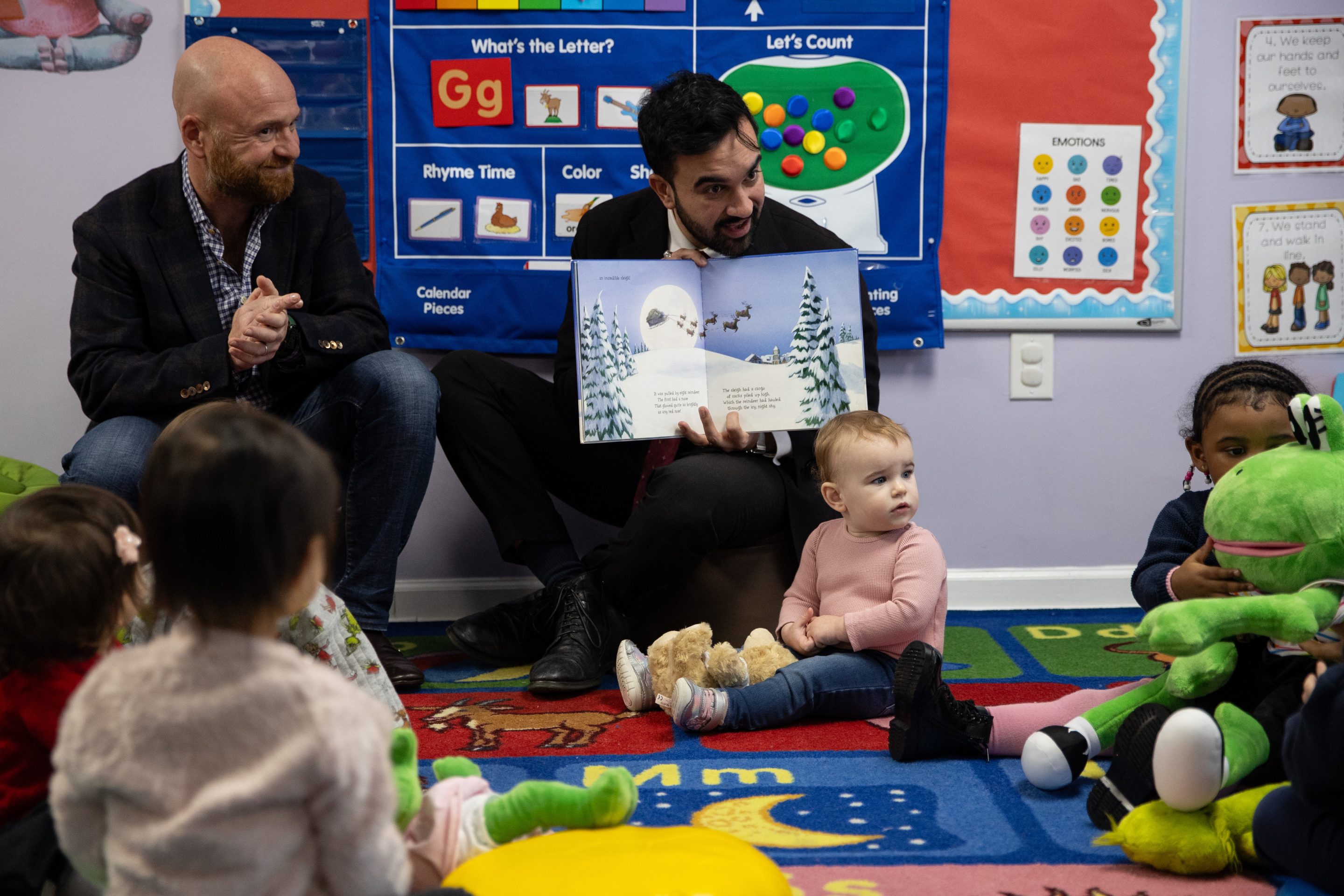
Critics, including Leonie Haimson of the Parent Coalition for Student Privacy, have expressed concerns about the potential risks of AI in schools, urging for a more cautious approach. “We just don’t want to waste another 10 years in which our kids’ education is undermined,” Haimson stated. The city plans to allow AI use in high school, focusing on teaching students about its implications and applications.
“Whether we like it or not, our teenagers are growing up in an AI-saturated world,” Mamdani said, emphasizing the need to prepare students for the future while maintaining the importance of student-teacher interaction.
“The ban follows a March framework that allowed AI for research and creative projects, which drew backlash from parents and teachers. Mayor Mamdani said, "I have yet to see a study showing that AI is beneficial for students in elementary and middle school," and the city will set up a taskforce to report in April.”

 The Guardian