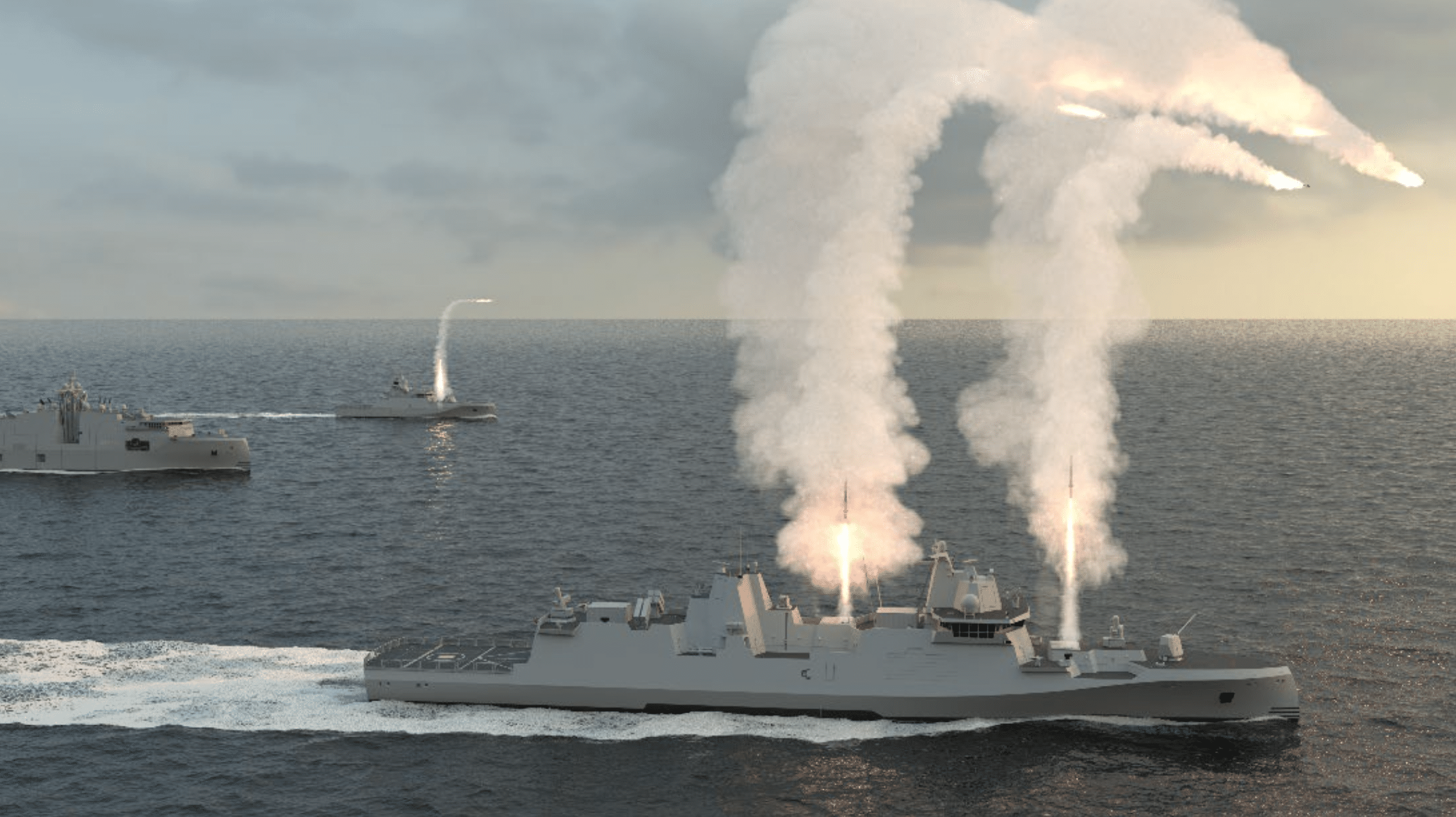
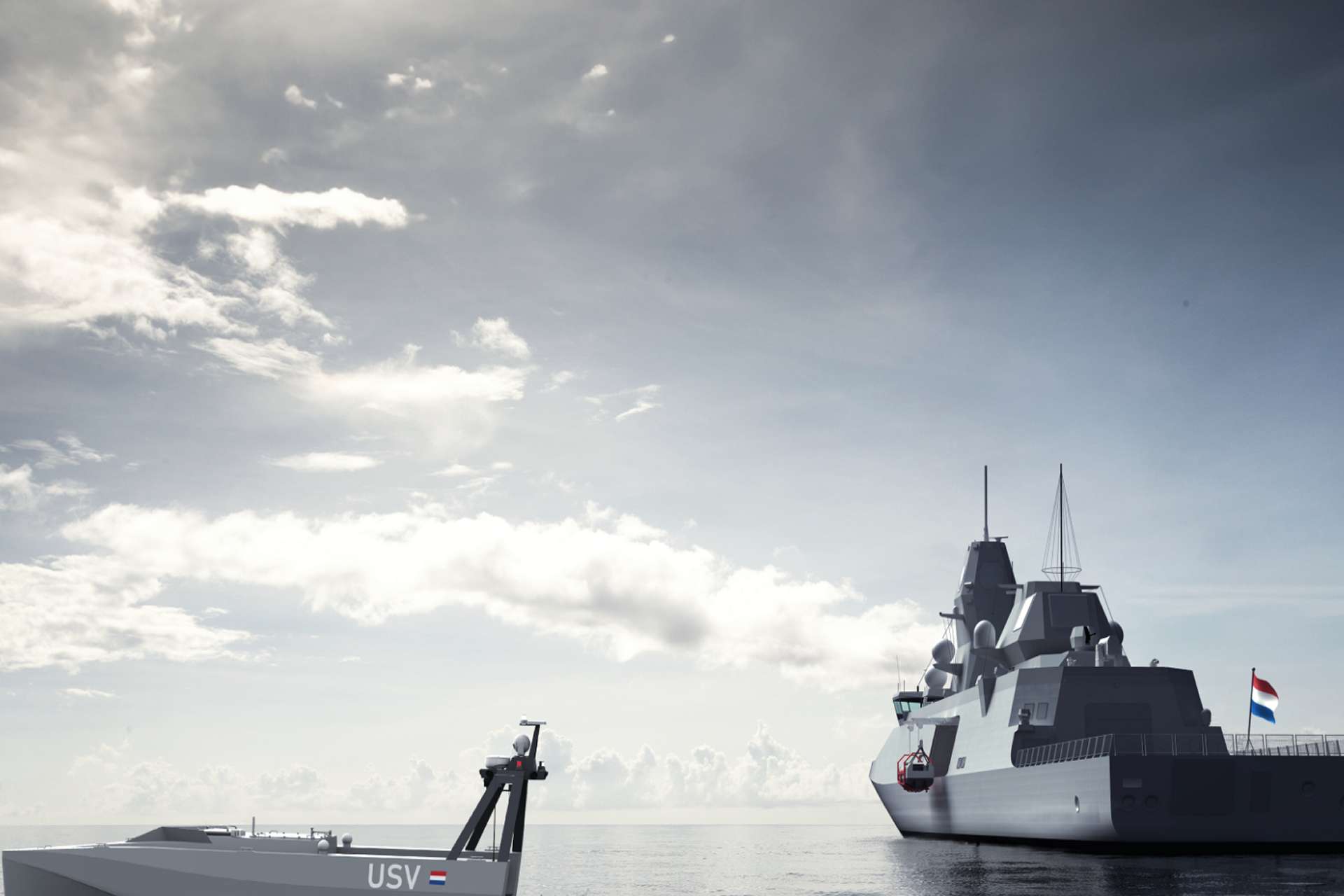
- The Netherlands is advancing an uncrewed sonar vessel for its new anti-submarine warfare frigates, which will enhance their ability to detect and track submarines beyond the reach of the ships' organic sonar.
- The program builds on a 2024 agreement between the Dutch Materiel and IT Command (COMMIT) and Dutch Naval Design, a consortium led by Damen Naval.
- The uncrewed vessel is designed to have at least 96 hours of endurance and a sprint speed of 20 knots in Sea State 5.
- The vessel will operate at a maximum displacement of 10 tonnes and is primarily a sensor carrier rather than an armed combat craft.
- The uncrewed vessel's design allows for bistatic or multistatic operations, expanding the detection area for submarines.
The Netherlands is developing a 12-meter uncrewed sonar vessel to enhance its future Anti-Submarine Warfare frigates, significantly improving submarine detection capabilities. This initiative follows a 2024 agreement between the Dutch Materiel and IT Command and Dutch Naval Design, led by Damen Naval.12
The uncrewed vessel, designed to operate beyond the frigate's organic sonar range, is expected to have a 96-hour endurance with a sprint speed of 20 knots in challenging sea conditions. It will allow for bistatic or multistatic operations, expanding the detection area while relying on helicopters for attack conversion.35
In contrast, Rheinmetall's GMF140 frigate, which aims to attract the US Navy, boasts a missile capacity double that of the Constellation class. However, its suitability for anti-submarine warfare is under question, as it may not meet the pressing requirements of modern naval engagements.
The GMF140's design includes advanced systems like the AEGIS combat system and a hybrid diesel-electric propulsion to minimize noise during submarine searches. Despite its capabilities, the vessel's military value will hinge on sonar performance and operational reliability in harsh conditions.
The frigates themselves measure 145 meters in length and displace approximately 6,400 tonnes, with a core crew of 117.
As the Netherlands pushes forward with its uncrewed vessel, the future of anti-submarine warfare remains a critical focus for naval forces worldwide.
“The 12-meter uncrewed vessel needs 96-hour endurance, 20-knot sprint in Sea State 5, and launch and recovery in the same conditions. No torpedo, missile, or gun has been announced; it is a sensor carrier, not an armed combat craft.”
 Army Recognition



