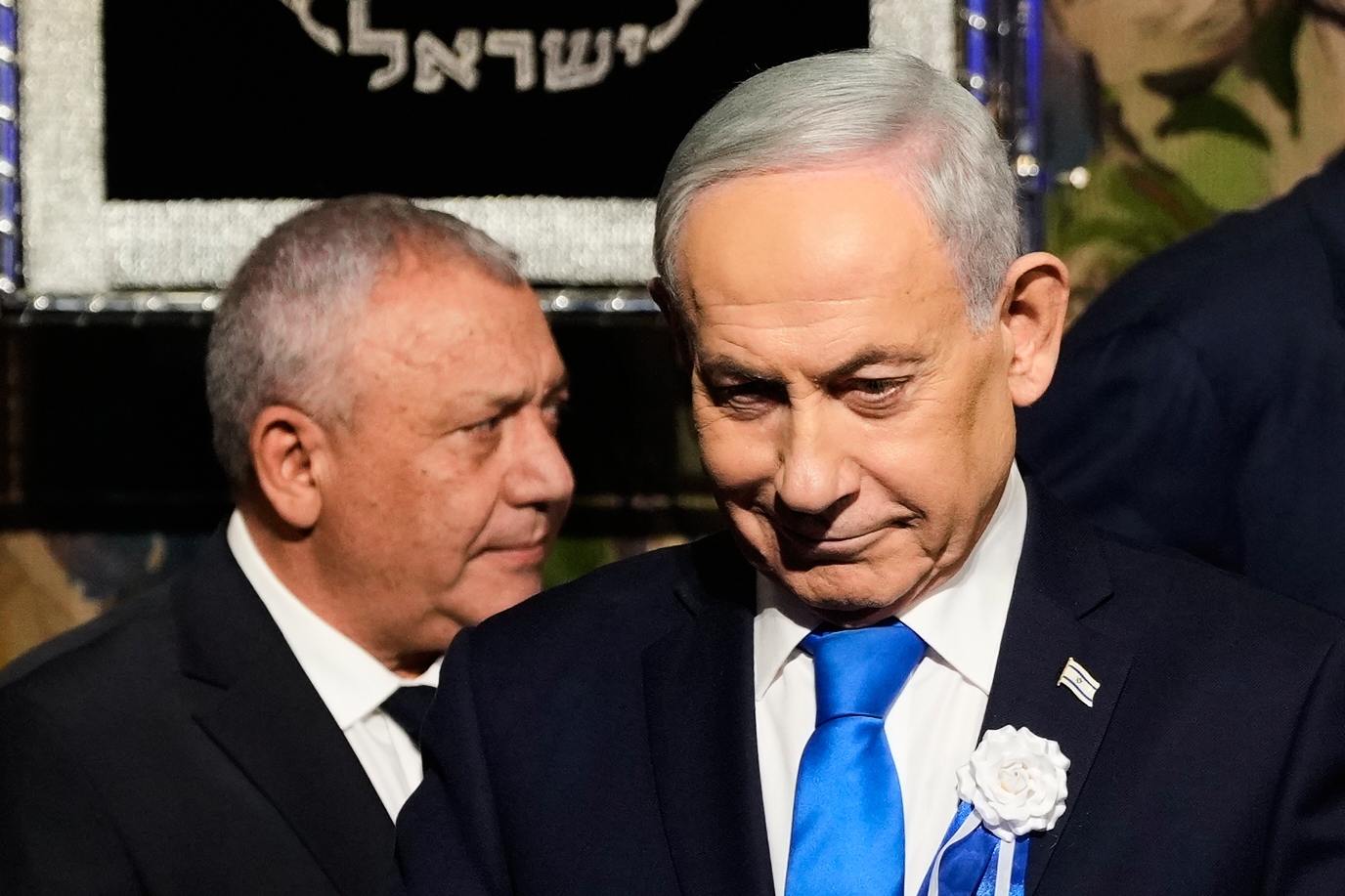
- Eisenkot's efforts to form a coalition government were picking up steam, having signed agreements with Yisrael Beiteinu and the Democrats.
- Ra'am leader Mansour Abbas recognized Hamas as a terrorist organization, meeting one of Eisenkot's requirements for partnership.
- Netanyahu offered to let Eisenkot lead first in a power-sharing government, fulfilling a demand made by Naftali Bennett.
- Critics dismissed the offer, with Yair Lapid calling it 'yet another transparent scam' and Liberman warning it would be 'merely a ploy.'
- Together, those parties would account for about 63 seats, crossing the threshold for a majority in the 120-seat Knesset.
- In 2020, Netanyahu formed a unity government with Benny Gantz, serving first, and exploited a budget loophole causing the government to fall before Gantz could start his term.
Israeli Prime Minister Benjamin Netanyahu has made a significant concession by offering Gadi Eisenkot, a former military chief, the opportunity to serve first as prime minister in a proposed power-sharing government. This move comes as Eisenkot's coalition-building efforts gain traction, with agreements signed with Yisrael Beiteinu and the Democrats, potentially securing a majority in the Knesset.13
Eisenkot has not yet accepted the offer but is set to meet with Netanyahu to discuss the arrangement. He stated, “If Likud is ready for genuine unity, I am prepared to see how serious it is over the next 24 hours.” The coalition is expected to include support from Ra’am, an Islamist party, whose leader, Mansour Abbas, recently condemned Hamas, aligning with Eisenkot's requirements for partnership.2
The coalition, if formed, would command approximately 63 seats in the 120-seat Knesset, surpassing the majority threshold. Netanyahu justified his offer by citing “immediate dangers that threaten our very existence,” emphasizing the need for unity over party hierarchy. He acknowledged, “my responsibility as a leader requires me to set everything aside” for the sake of national security.6
Former Prime Minister Naftali Bennett had previously urged Netanyahu to allow Eisenkot to lead first, while Yair Lapid criticized the offer as a “transparent scam”. Liberman also warned that Netanyahu's proposal could be a mere ploy, recalling past instances where Netanyahu exploited agreements for political gain.45
“Eisenkot's coalition would control about 63 seats in the 120-seat Knesset, crossing the majority threshold. Ra'am's Mansour Abbas recognized Hamas as a terrorist organization, meeting Eisenkot's requirement, while Lapid dismissed the offer as 'yet another transparent scam by a serial deceiver.'”