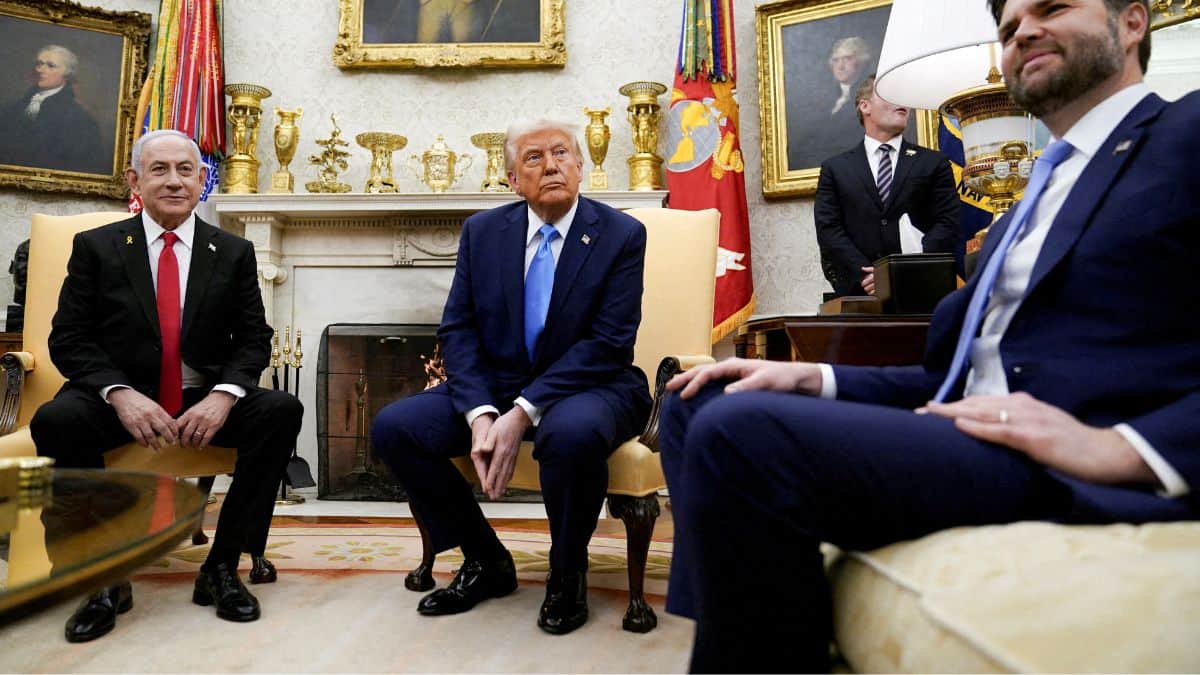
- Commentators have speculated whether Prime Minister Benjamin Netanyahu’s visit to the White House revealed cracks in the relationship between an American president looking for an exit ramp from the Iran conflict and an Israeli prime minister hoping to cling to office.
- The meeting between Netanyahu and Trump was held behind closed doors on the five-month anniversary of the start of the US-Israel war with Iran.
- Trump described the meeting as 'very good' and stated that 'many important subjects were discussed.'
- Netanyahu stated he had 'an excellent meeting with President Trump' a conversation of full partnership, of mutual support, with an understanding of the shared goal to ensure that Iran will not have nuclear weapons.
- Former US intelligence officer Norman Roule stated that the lackluster response should not be misconstrued as 'degradation of relationship.'
- The meeting provided an opportunity to discuss the challenge of Hezbollah in Lebanon and progress on resolving the Israeli-Lebanon crisis.
- The US administration has made good progress on bringing Israel and Lebanon to direct talks and disarming Hezbollah.
- The Iranian strikes on Jordan, hours after the Trump-Netanyahu meeting, demonstrate that Iran’s military capacity remains.
- The strikes aimed to diminish threats posed by Iran and its proxies to American forces and commercial shipping.
Israeli Prime Minister Benjamin Netanyahu held a closed-door meeting with U.S. President Donald Trump amid escalating tensions over Iran, marking Netanyahu's eighth meeting with Trump since his second term began. Both leaders described the meeting as 'very good', emphasizing mutual support and shared goals.1234789
Netanyahu stated, 'an excellent meeting with President Trump ... a conversation of full partnership, of mutual support', focusing on preventing Iran from obtaining nuclear weapons. Analysts, however, noted that the lack of specific details from both leaders should not be interpreted as a 'degradation of relationship', according to former U.S. intelligence officer Norman Roule.5
The meeting also provided an opportunity to address the Hezbollah challenge in Lebanon and the ongoing Israeli-Lebanon crisis. Roule highlighted that the U.S. administration has made significant progress in facilitating direct talks between Israel and Lebanon, including the withdrawal of Israeli troops and assurances from Beirut to disarm Hezbollah.6
In the wake of the meeting, Iranian strikes on Jordan underscored the ongoing military threats posed by Iran and its proxies, aiming to diminish risks to American forces and commercial shipping in the region. Roule remarked that these strikes demonstrate that Iran's military capacity remains intact.
“The meeting provided a platform to discuss the ongoing challenge of Hezbollah in Lebanon and the US's progress in facilitating direct talks between Israel and Lebanon. Additionally, Iranian strikes on Jordan shortly after the meeting highlighted the persistent military capacity of Iran and its proxies in the region.”


 Arab News