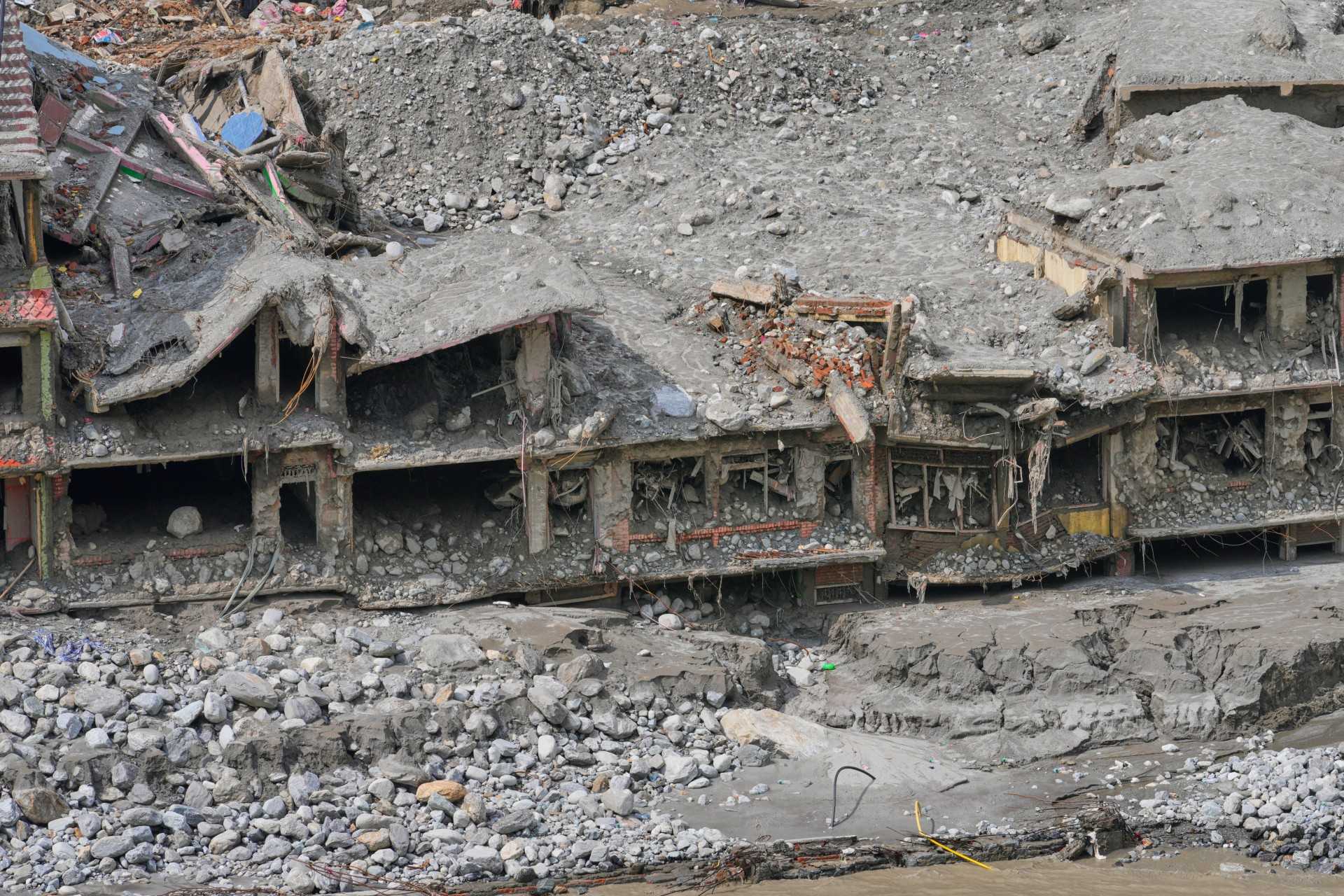
- Recent floods in Nepal, triggered by a glacier collapse linked to melting permafrost, killed at least 1,400 people.
- Nepal's leader Shah stated the floods serve as a 'warning to the world' about climate change.
- Nepal's foreign minister Shisir Khanal reported losses over $5 billion (nearly 15% of GDP) from the disaster, calling it a 'development emergency' and a 'justice crisis'.
- Shah noted Nepal contributes less than one-tenth of 1% of heat-trapping gases, yet pays a 'colossal price' for a crisis it did not create.
- Shah described climate impacts on Nepal: glaciers retreating, mountain slopes unstable, rivers less predictable, and disasters erasing development.
- Shah stressed that climate change does not recognize borders and called for climate justice with immediate action, not bureaucratic delays.
- The U.S. has emitted about 1,500 times more carbon than Nepal over 75 years, and its $36 million aid is less than 1% of Nepal's needs.
Nepali Prime Minister Balendra Shah addressed the U.N. General Assembly, stating that the recent floods in Nepal serve as a dire warning about climate change. He emphasized that the August disaster, which resulted in over 1,400 deaths and significant economic losses, is a global issue, not just a local tragedy.12456789
Shah noted, "We did not create this crisis, yet we are paying a colossal price for it." He highlighted that Nepal contributes less than 0.1% of global greenhouse gas emissions, yet suffers disproportionately from climate impacts. The floods have caused an estimated loss of over $5 billion, nearly 15% of Nepal's GDP, and threaten years of development progress.
Shah criticized the slow response to climate finance, stating, "When the house is burning, we do not ask a family to complete 50 forms. We act. This is what climate justice means." He called for immediate action and support for vulnerable countries, stressing that climate change does not recognize borders.
The U.S. announced $31 million in aid for flood recovery, totaling $36 million in assistance, which Shah argued is insufficient compared to Nepal's needs. He urged global leaders to heed the warnings of scientists and take decisive action against climate change.1011
Shah's remarks echo a previous warning from U.N. Secretary-General António Guterres, who highlighted the urgency of addressing climate change from the heights of Mount Everest.
“Shah noted Nepal contributes less than one-tenth of 1% of heat-trapping gases yet pays a 'colossal price' for a crisis it did not create. International scientists linked melting permafrost to the glacier collapse that triggered the flood, which killed at least 1,400 people.”


 KCCI
KCCI