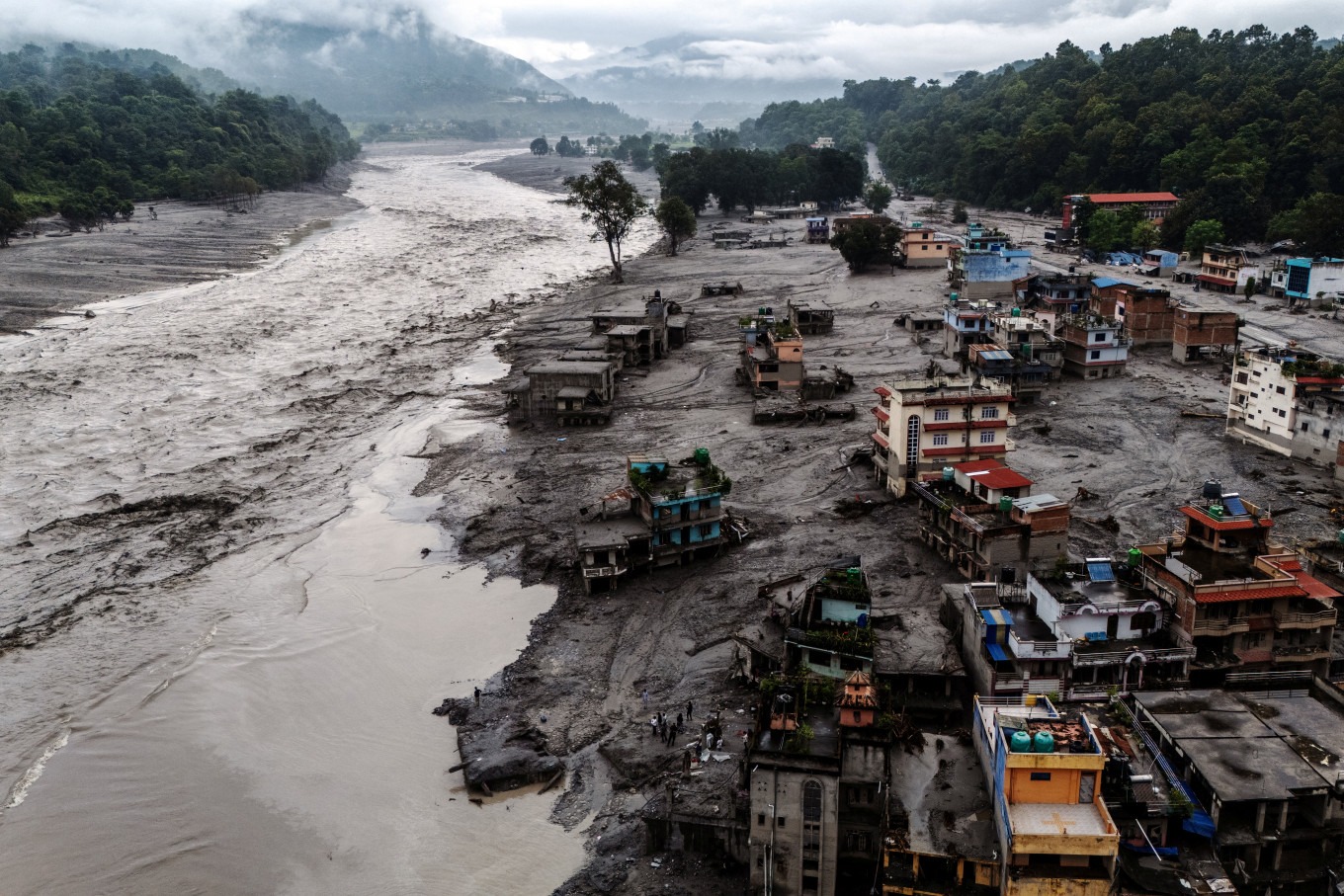
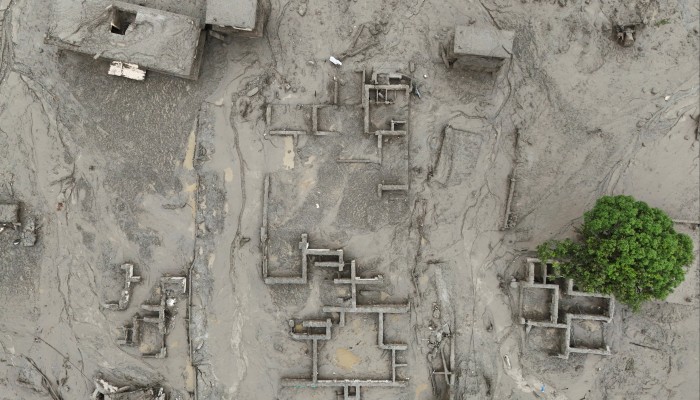
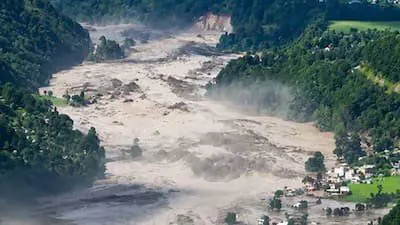
- A glacier collapse triggered a catastrophic mudslide and flood that has killed nearly 800 people and left more than 3,000 missing.
- The flood destroyed at least four monitoring stations, damaged 19 bridges and 40 km of highway, and knocked out more than 10% of Nepal's power-generation capacity, according to a Nepali government assessment.
- In May, Nepal and China met to discuss joint risk-reduction measures, but Nepali officials said they did not receive enough information on glacier risks and water levels.
- Nepal raised similar concerns last year after a glacial lake flood in Tibet killed at least nine in Nepal.
- China's embassy said 'substantial progress' was made at the May meeting, but Nepali hydrologists wanted early warnings of glacier movements.
Nepal's recent flood disaster, which claimed nearly 800 lives, has highlighted the shortcomings in data sharing with China regarding glacier risks.3
Officials from both countries had met in May to discuss enhancing cooperation on monitoring floods and glacier-related hazards. However, two Nepali officials expressed dissatisfaction with the information received from China, fearing it could hinder disaster preparedness.
"What we actually wanted from them, and still want, is if there are early movements of glaciers... we would want to know a bit early," said Sauhardra Joshi, a hydrologist at Nepal's Flood Forecasting Division.
Despite the discussions, China's embassy in Nepal claimed substantial progress had been made in promoting cross-border disaster information sharing. However, experts noted that the lack of a well-articulated system for data exchange remains a significant issue.
The recent disaster was triggered by a glacier collapse in a relatively unmonitored area, leading to a mudslide that affected both Nepal and China. Environmental anthropologist Austin Lord stated, "That's not to forgive the fact that there isn't really a well-articulated system. And there is very limited exchange between Nepal and China."1
The floodwaters caused extensive damage, destroying monitoring stations and impacting Nepal's power generation capacity. At least four monitoring stations were destroyed by the flood that rampaged 168 km downstream, carrying over 57.4 million cubic metres of water, according to a Nepali government assessment.2
“The flood destroyed at least four monitoring stations, damaged 19 bridges and 40 km of highway, and knocked out more than 10% of Nepal's power-generation capacity. China's embassy said it shared information 'in a timely manner' and made 'substantial progress' at the May meeting, but Nepali hydrologists still want early warnings of glacier movements.”