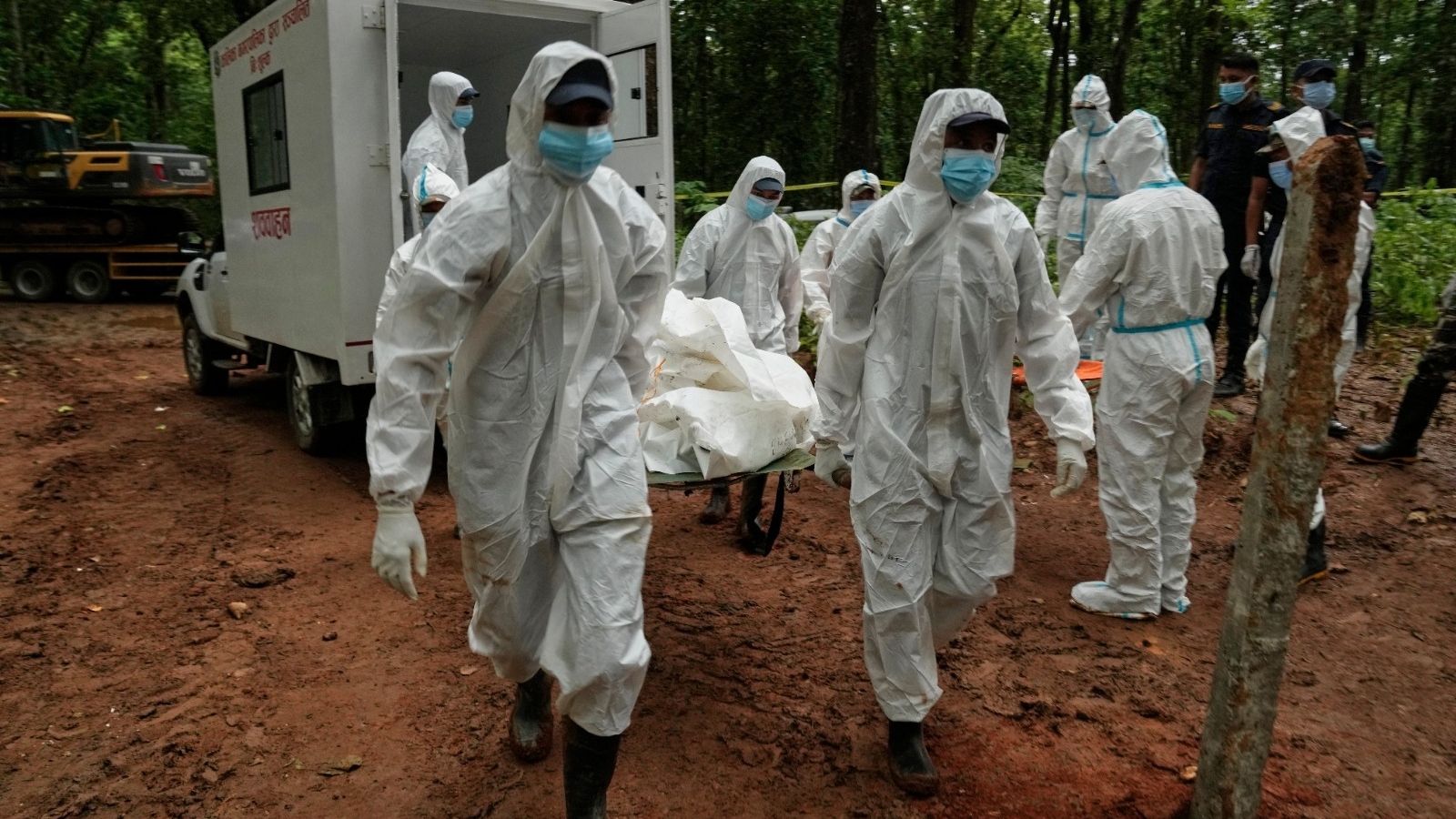
- On Monday, Nepal's National Disaster Risk Reduction and Management Authority estimated that 292 people have died in the floods, with 3,916 missing and over 90,000 affected.
- Rescue operations are ongoing, with hundreds rescued from hydropower tunnels, highlighting the urgency of recovery and rebuilding efforts.
- A recent event saw a warming glacier shear off Langtang Lirung peak, causing a magnitude 5.2 shock and unleashing a devastating wall of rock, ice, mud, and water down the Bhotekoshi-Trishuli River valley.
- In August 2024, a glacial lake near Mount Everest released, resulting in the destruction of homes, a school, and a health post overnight.
- In July 2025, a smaller flood washed away the Friendship Bridge connecting Rasuwagadhi in Nepal with Gyirong in China.
- Nepal is experiencing a pattern of extreme climate events induced by climate change, with disasters becoming more frequent and severe.
- The Hindu Kush Himalaya region is losing ice at an alarming rate, with glaciers disappearing 65% faster between 2011 and 2020 than in the preceding decade.
- Nepal's geologists, seismologists, and climate scientists need to collaborate to create evolving multi-hazard maps and practical measures to reduce vulnerability.
- The climate crisis is a global issue, with Nepal contributing only 0.1% of global greenhouse gas emissions, yet facing severe consequences.
Nepal is facing a catastrophic aftermath of a glacial collapse that has resulted in 292 confirmed deaths and 3,916 individuals reported missing, according to the National Disaster Risk Reduction and Management Authority. The disaster, triggered by a warming glacier shearing off Langtang Lirung mountain peak, unleashed a torrent of rock, ice, mud, and water, devastating communities in the Rasuwa and Nuwakot districts.1
The flooding has affected over 90,000 people, with around 600 missing individuals being foreign nationals from 39 countries. The rapid rise of the Trishuli River, which surged up to nine meters in just 30 minutes, left little time for residents to react. “Behind every casualty figure is a family waiting for a phone call,” a local lamented, emphasizing the personal toll of this tragedy.
As rescue operations continue, experts stress the need for multi-hazard resilience and climate action. “Courage after a disaster cannot substitute for preparedness before one,” said a disaster management official, urging a shift in focus towards sustainable infrastructure that can withstand future calamities. The Hindu Kush Himalaya region, often referred to as the “Third Pole,” is experiencing climate change impacts that are more severe than the global average, threatening the livelihoods of nearly two billion people downstream.8
UN Secretary-General Antonio Guterres has called for urgent action, stating, “We must end the fossil fuel age.” The recent events serve as a stark reminder of the urgent need for global climate responsibility, particularly from industrialized nations that contribute significantly to greenhouse gas emissions.
“The disaster has killed at least 292 people and left 3,916 missing, with over 90,000 affected, including 600 foreign nationals from 39 countries. Finance Minister Swarnim Wagle estimates rebuilding will cost $4–5 billion, nearly a tenth of Nepal's economy.”



 The Indian Express



