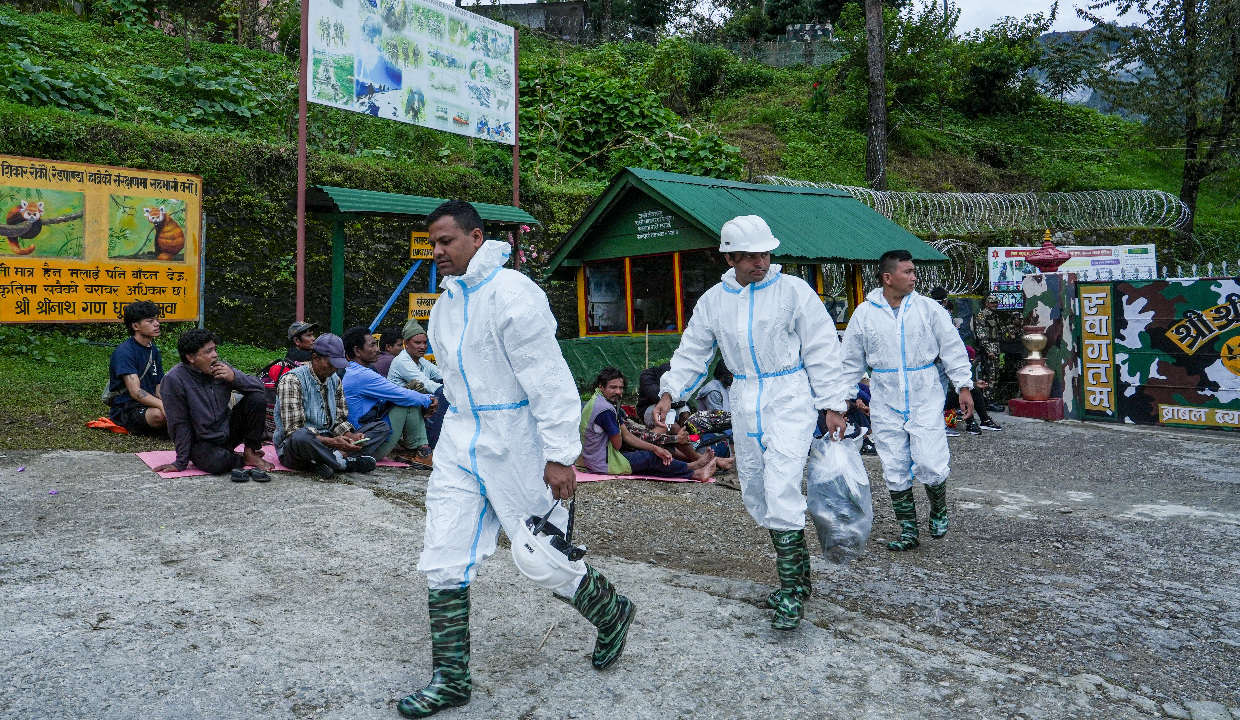
- Survivors who fled up mountainsides are still being collected by army helicopters and evacuated a week after the disaster.
- Thousands remain missing and the delivery of aid has been hampered by treacherous conditions in communities almost wiped out of existence.
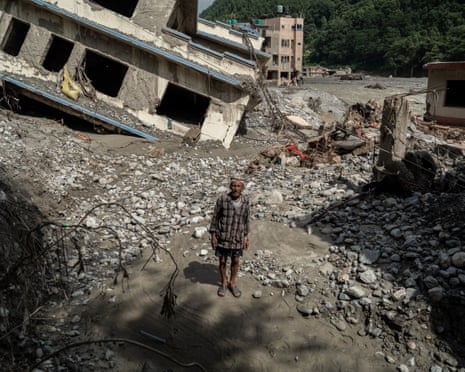
- The mountain village of Syabru Besi was among those destroyed, with even the road to the village gone.
- According to local government officials, at least 500 people there are missing, a quarter of the population.
- The village resembles nothing more than a muddy riverbed, with just one building left standing.
- Journalists Hannah Ellis-Petersen and Gaurav Pokharel have been in the Betrawati and Rasuwa districts with the photographer Ahmer Khan.
- They have reported from a region now full of human suffering.
In the wake of catastrophic floods in Nepal, aid operations are severely hindered by treacherous conditions, leaving thousands missing and communities devastated.2
Survivors continue to be evacuated by army helicopters, with reports indicating that at least 500 people are unaccounted for in the mountain village of Syabru Besi, which has been almost entirely destroyed.134
Local officials report that the village now resembles a muddy riverbed, with only one building left standing and the road to the village completely gone.5
As rescue efforts continue, the delivery of aid remains challenging due to the hazardous terrain and the scale of destruction, which has left many communities nearly wiped out.
Hannah Ellis-Petersen and Gaurav Pokharel, along with photographer Ahmer Khan, have been documenting the human suffering in the Betrawati and Rasuwa districts, emphasizing the urgent need for assistance in the region.67
The situation remains critical as authorities work to locate the missing and provide necessary support to survivors.
“In Syabru Besi, at least 500 people are missing—a quarter of the population—and the village is now a muddy riverbed with just one building left. Journalists reporting from Betrawati and Rasuwa describe a region full of human suffering.”


 The Guardian