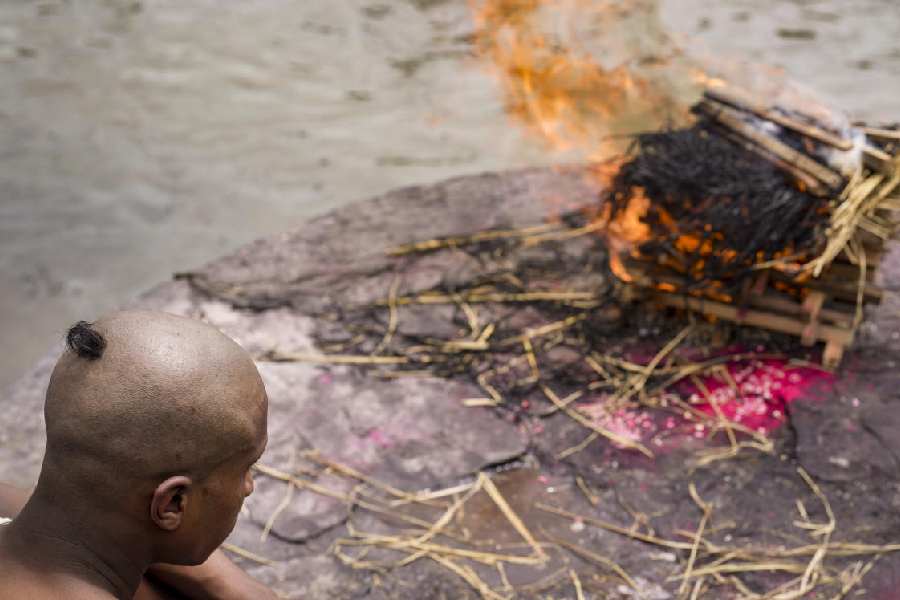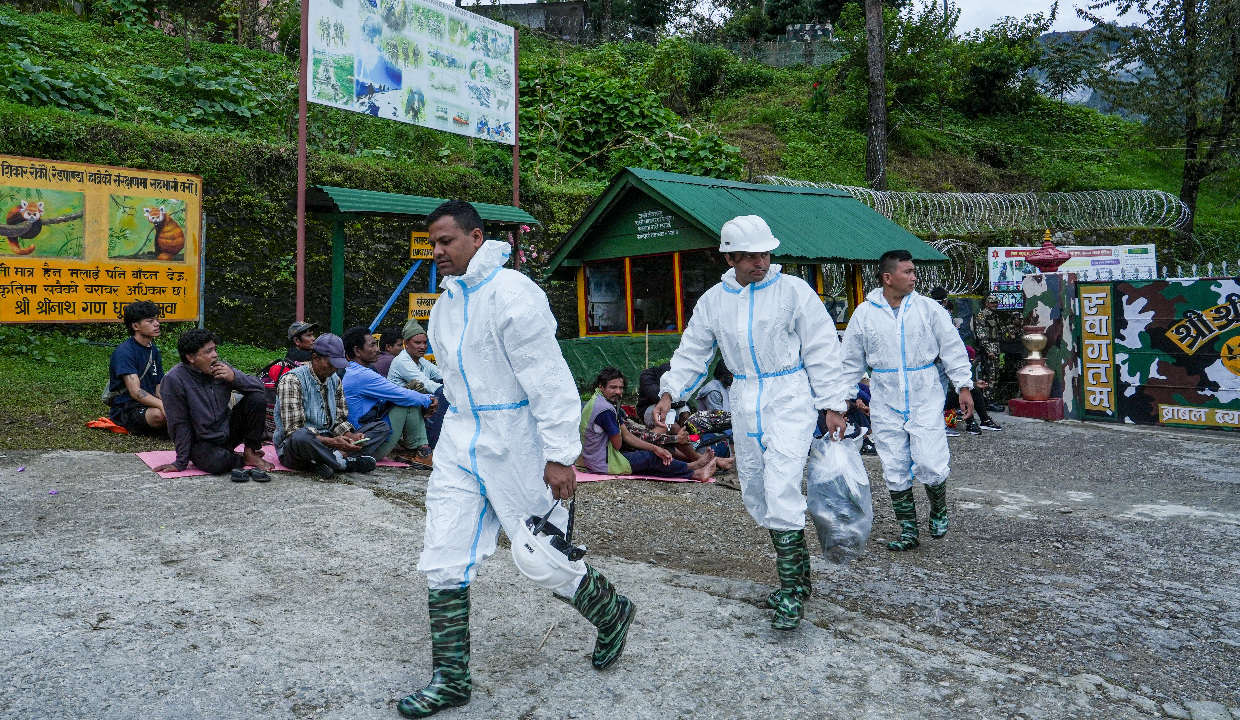
- The death toll from the disaster has surged to more than 1,270, with authorities reporting more than 4,700 still missing as of Thursday.
- Nepal's Foreign Minister Shisir Khanal described the Bhotekoshi River floods as a Himalayan Tsunami and thanked the international community for their support.
- Khanal briefed diplomats on the government's search and rescue operations, stating that the top priority was to save both Nepalese and foreign nationals.
- Prime Minister Balendra Shah stated that authorities will continue searching for survivors while starting rehabilitation and rebuilding efforts.
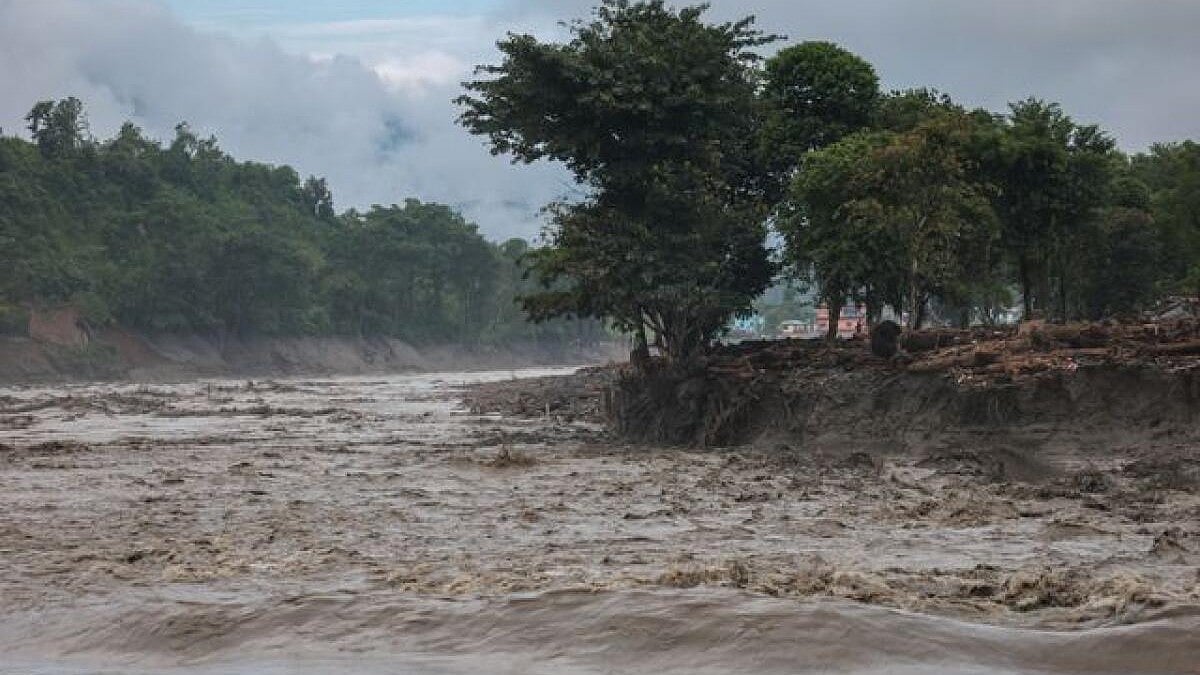
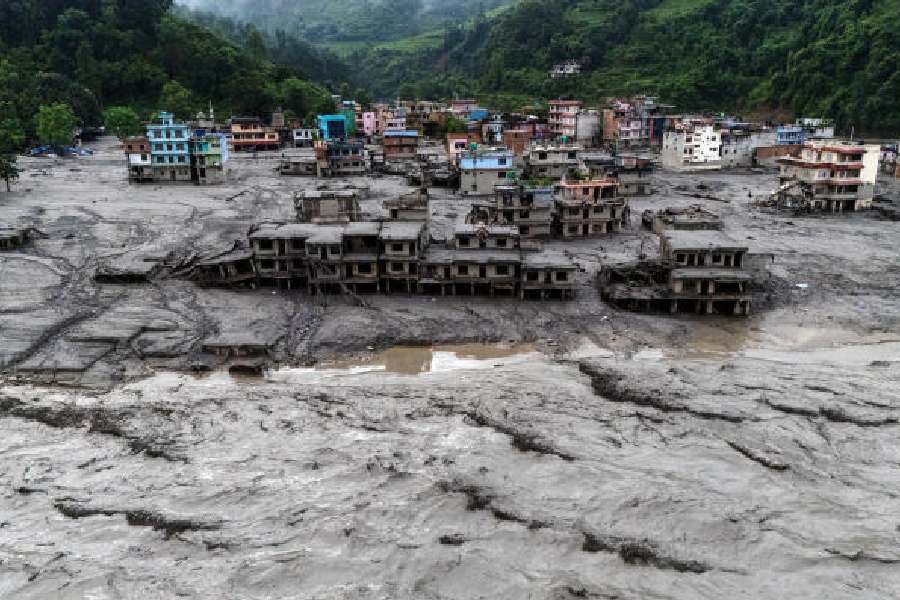
- A glacier collapse near Langtang Lirung triggered a cascade of rocks, mud, and water, sweeping away villages in both Nepal and Tibet.
- Authorities reported that 1,252 bodies have been recovered in Nepal, with 4,216 still missing, while Chinese authorities reported 21 deaths and 541 missing in Tibet.
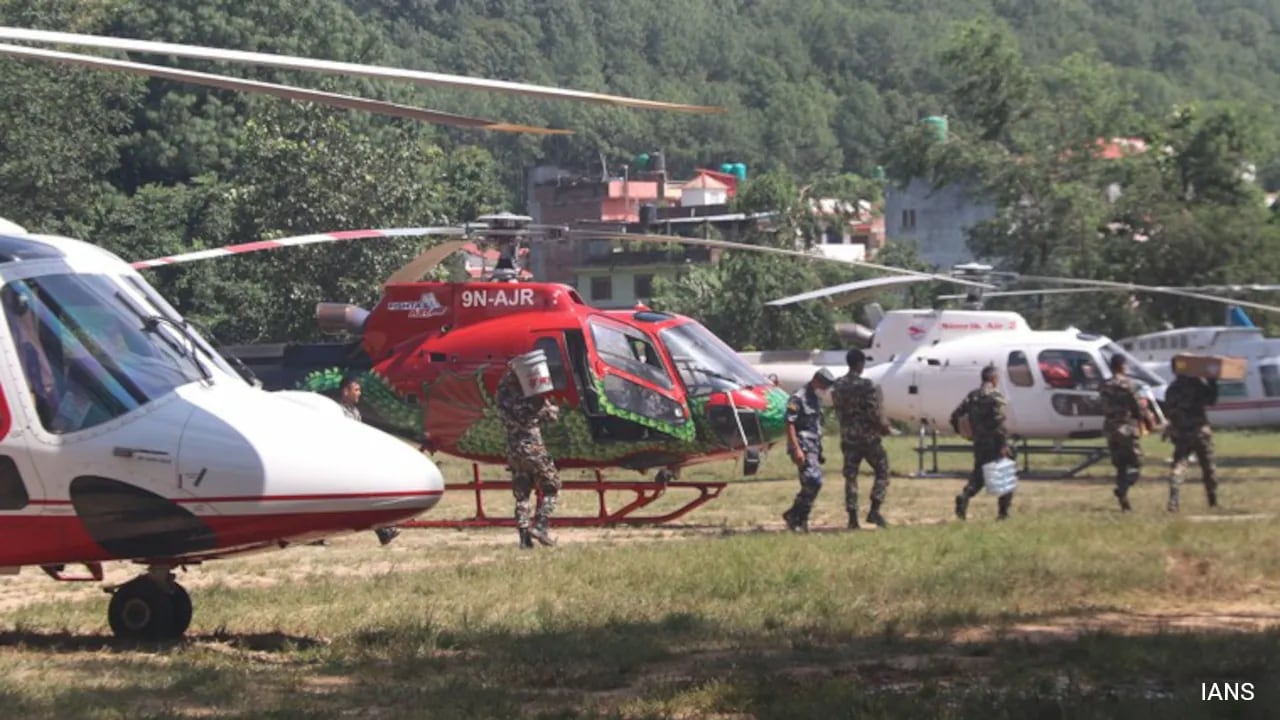
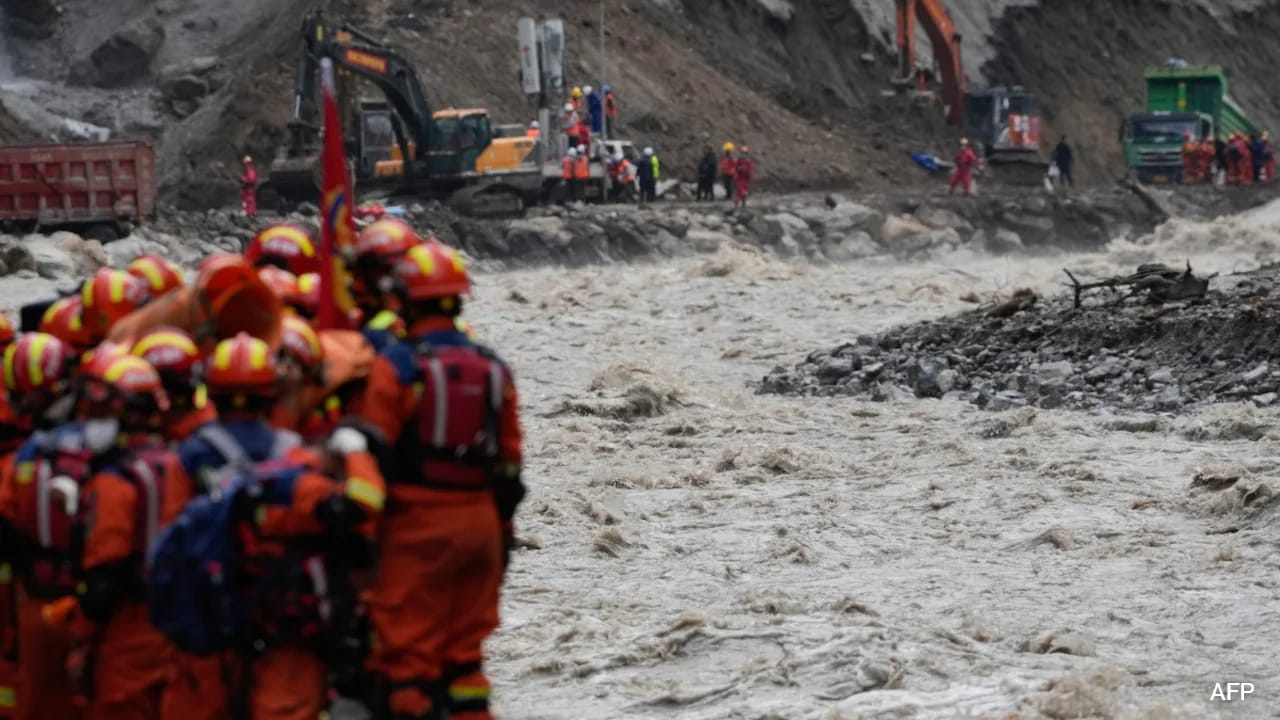
- Rescue teams are using zip lines and helicopters to reach people trapped in remote villages, with the UNDP estimating at least 2.2 million tonnes of debris left by the floods.
- As of Monday, the UN reported that more than 3,400 displaced people were living in 27 displacement sites in Nuwakot and Rasuwa, mostly in schools.
Nepal's Foreign Minister Shisir Khanal has termed the catastrophic Bhotekoshi floods a 'Himalayan Tsunami', with the death toll surpassing 1,270 and over 4,800 individuals still unaccounted for. The disaster, triggered by an ice-rock avalanche on August 26, has devastated numerous towns and villages across northern and central Nepal.2
Khanal expressed profound gratitude to the international community for their support during this crisis, stating, “Nepal will continue close cooperation and collaboration with the international community in this regard.” Rescue operations are ongoing, with teams working tirelessly to reach trapped individuals, including those inside hydropower facilities.
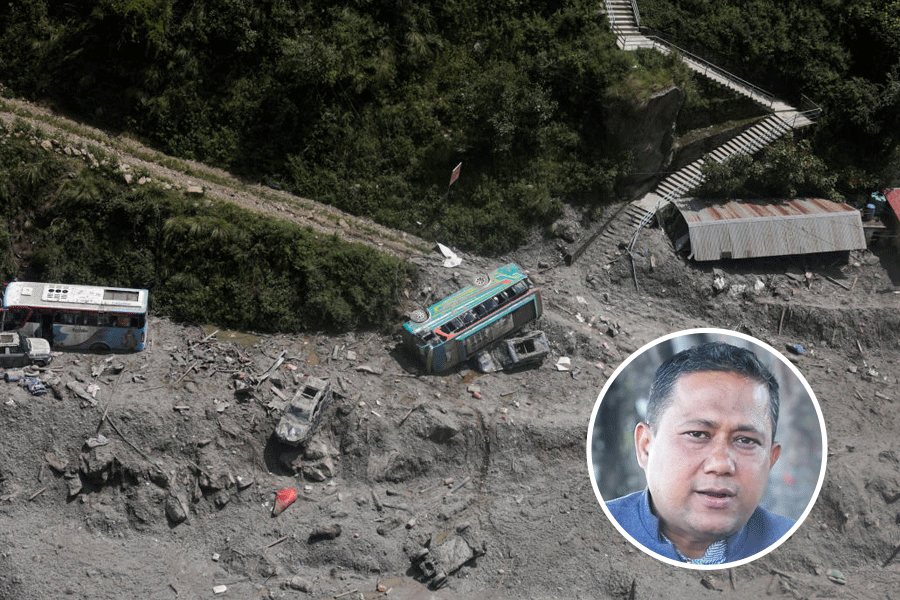
The Nepalese government has prioritized saving both local and foreign nationals, with 1,252 bodies recovered so far, according to the National Disaster Risk Reduction and Management Authority (NDRRMA). In addition, 21 deaths and 541 missing have been reported in neighboring Tibet.6
Khanal has also highlighted the role of major greenhouse gas emitters, stating they have a “historical responsibility to compensate vulnerable nations like Nepal.” Prime Minister Balendra Shah emphasized the need to address the disaster's link to climate change and announced plans for rehabilitation and rebuilding efforts.4

Authorities estimate that around 20,000 houses will need reconstruction, with a focus on relocating communities to safer areas. As of now, over 3,400 displaced individuals are residing in temporary shelters across Nuwakot and Rasuwa.8
The United Nations Development Programme (UNDP) reported that the floods have left at least 2.2 million tonnes of debris, complicating recovery efforts.7
“Nepal's foreign minister filed a formal climate compensation claim letter, citing the 'historical responsibility' of major emitters like China, the US, and India. The UNDP estimates at least 2.2 million tonnes of debris, and about 20,000 houses need rebuilding, with 7,500 destroyed.”