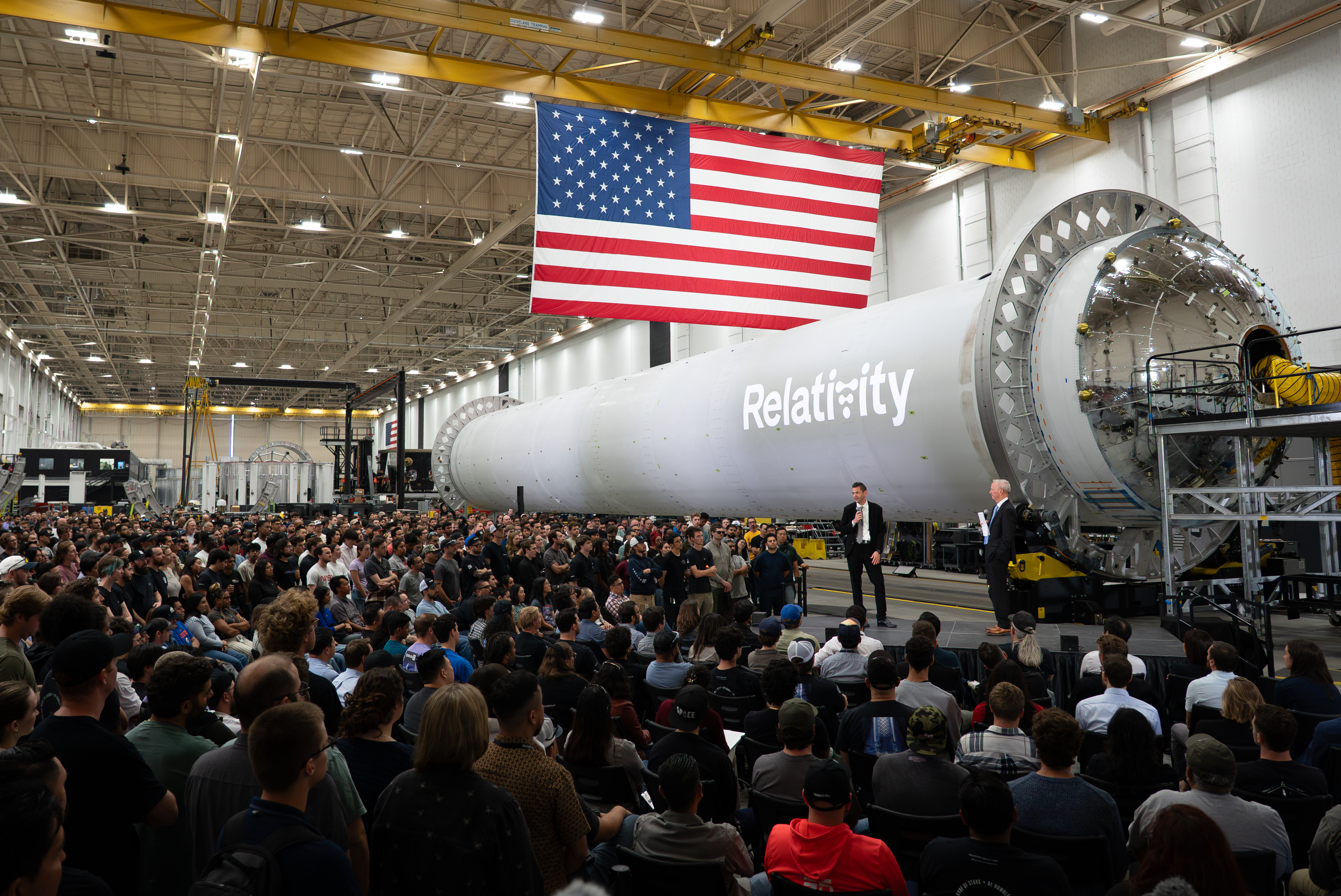
- NASA has selected Relativity Space to launch Aeolus to Mars, setting up a competitive landscape with SpaceX in private space exploration.
- If Aeolus manages to launch on schedule, it will be the first private Mars mission.
NASA has enlisted Relativity Space to develop the Aeolus mission, which aims to deliver the first daily global view of Mars' atmosphere by 2028. This mission will utilize four scientific instruments to measure dust, winds, and temperatures from orbit.12
The 2028 launch deadline places significant pressure on Relativity, requiring rapid development of both the spacecraft and the rocket. This public-private partnership model allows NASA to mitigate financial risks while pushing the boundaries of space exploration.
Founded in 2015 by former SpaceX and Blue Origin engineers, Relativity Space aims to revolutionize rocket manufacturing through 3D printing. Their first rocket, Terran-1, launched in March 2023 but ended in failure. Despite this setback, the Aeolus mission represents a bold step forward for the company.

If successful, Aeolus will be the first private Mars mission, potentially catalyzing further private-public collaborations in space exploration and altering the landscape of government funding in this sector. NASA has not disclosed the financial terms of the contract with Relativity, but the partnership exemplifies a growing trend in space exploration funding.
As the race for Mars intensifies, the collaboration between NASA and Relativity Space could redefine the future of private space exploration, setting the stage for competition with established players like SpaceX.
“NASA has chosen Relativity Space to send the Aeolus spacecraft to Mars, potentially marking the first private Mars mission. This decision could catalyze the expansion of private-public space projects and alter government funding roles.”
 TechCrunch
 mezha.net