- Nasa satellite images reveal a skull-shaped formation on Vega Island, Antarctica, where warming temperatures and melting glaciers threaten to reshape its eerie features.
- On March 22, 2025, a Landsat 9 image showed Vega Island covered in snow.
- By October 10, 2026, another Landsat 9 image revealed large areas of exposed ice without snow cover.
- The 2026 winter experienced above-average temperatures, particularly in June, which contributed to the ice exposure seen in October.
- Since the Antarctic summer of 1998-1999, Devil's Bay Glacier has been losing ice, with measurements showing significant changes.
- Satellite images taken over recent decades have shown ice loss from other glaciers on Vega Island, along with an increase in the areas where the underlying bedrock is exposed.
- The skull-like appearance of Vega Island is characterized by a rocky peak resembling an eye socket and a long ridge of glacial material forming a mouth.
NASA satellite images have unveiled a striking skull-shaped formation on Vega Island, located in the Weddell Sea, east of the Antarctic Peninsula. The island's unique features, resembling a skull, include a rocky peak that looks like an eye socket and a ridge of glacial material forming a mouth.16
Images captured by the Operational Land Imager (OLI) aboard Landsat 9 on March 22, 2025, and October 10, 2026, show significant changes in the island's ice-covered surface. The March image depicts a snow-blanketed landscape, while the October image reveals extensive areas of darker ice, indicating substantial melting.23
According to glaciologist Mauri Pelto of Nichols College, unusually warm winter temperatures in 2026, particularly in June, have contributed to the large areas of exposed ice. He noted, “The winter season was no treat for these glaciers.”
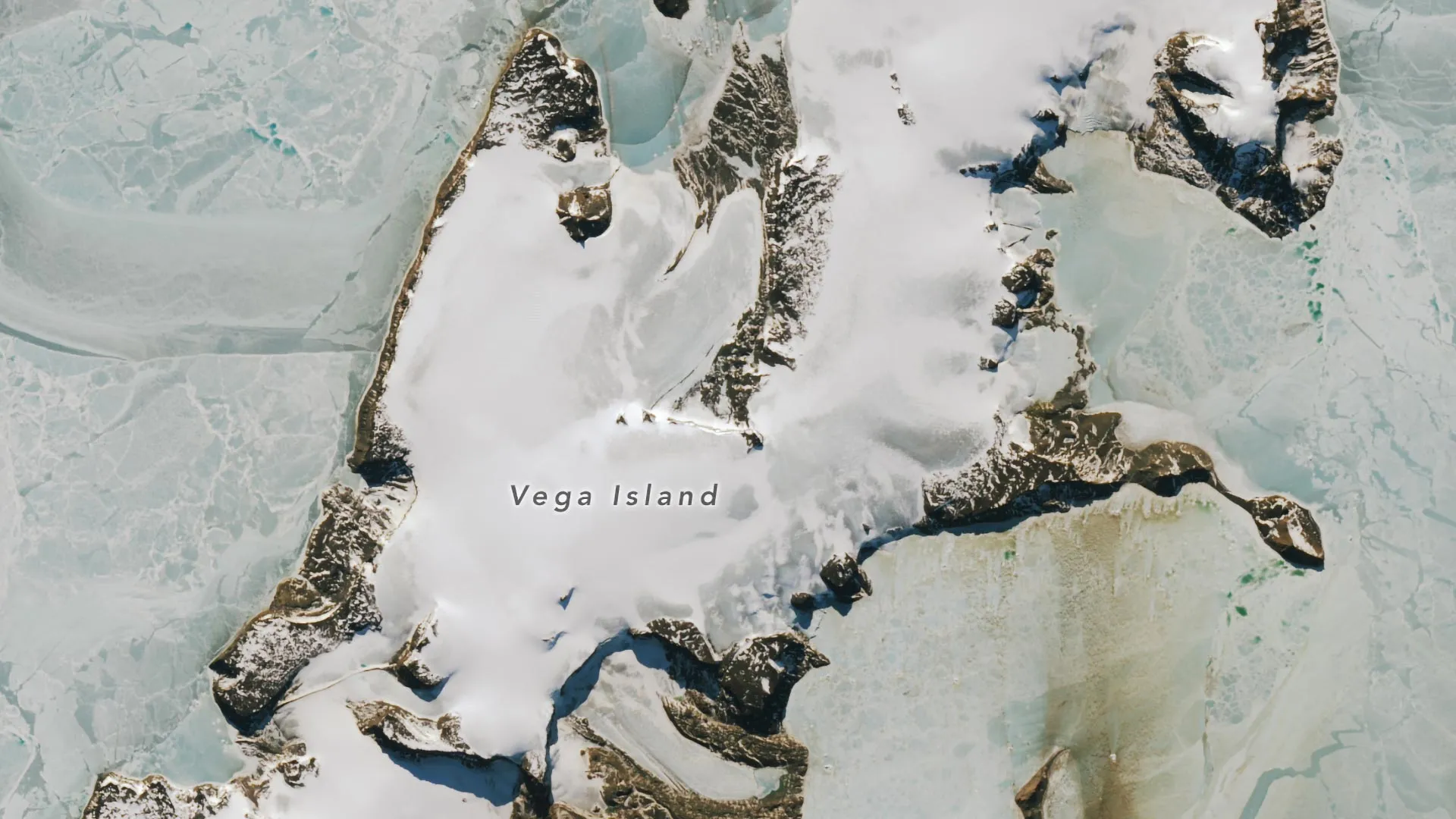
The exposed ice suggests that little new snow accumulated during the winter, with some snow lost through sublimation and strong winds. Pelto emphasized that “even a thin cover of new snow from a spring storm would be helpful in the short run.”
As the days grow longer and warmer, the dark ice could lead to accelerated melting, reshaping the island's eerie skull-like features. Pelto warns, “When exposed to melt, it weathers away, which will lead to a changing jawline and expanding eye socket.”
“Glaciologist Mauri Pelto of Nichols College attributes the exposed ice to above-average winter temperatures in 2026, especially in June, and notes that sublimation and strong winds reduced snow. He warns that dark ice absorbs more solar energy, potentially accelerating melting as days lengthen.”