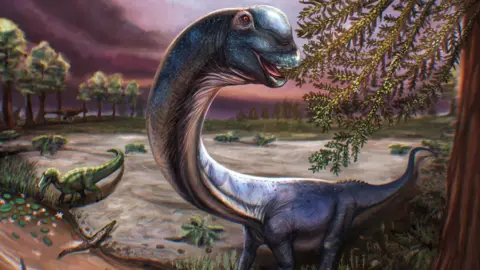
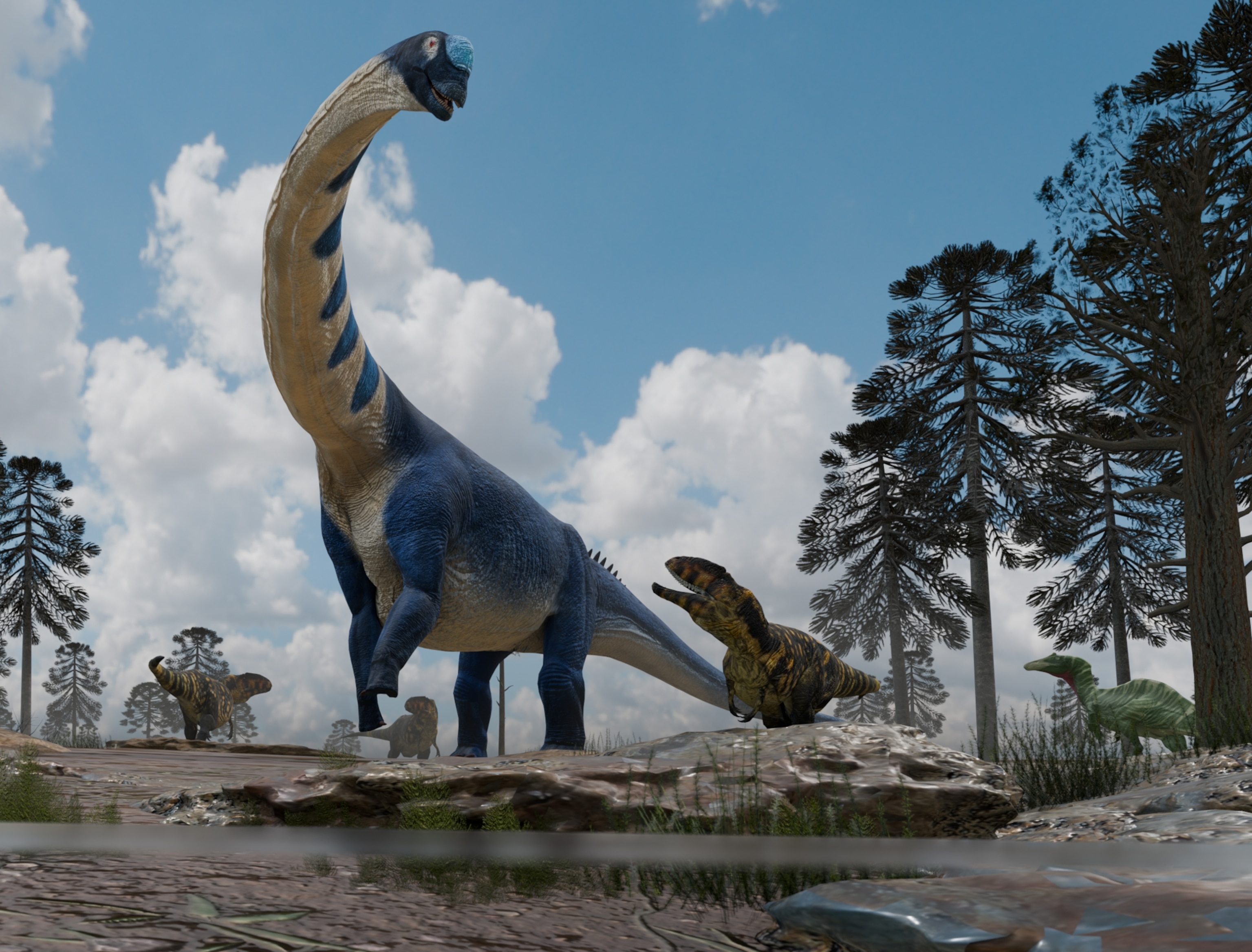
Nagatitan chaiyaphumensis, newly identified as the largest dinosaur in Southeast Asia, weighed around
30 tons and measured over
88 feet long. Discovered in 2016 by villager Thanom Luangnan, the find is significant for understanding dinosaur evolution,
dating back approximately 113 million years in the Cretaceous period.
The researchers derived the name from
'Naga', a serpent from Southeast Asian folklore, and 'titan,' reflecting its enormous size.
Sita Manitkoon, a leading paleontologist, commented that the discovery could unlock insights into past climate changes that allowed giant dinosaurs to thrive.
At the time, Thailand was closer to the equator, contributing to the giant size of
Nagatitan. Early estimations suggest its body mass may vary from
25 to 28 tons, underscoring the evolutionary adaptations that enabled such large forms to exist during that era.
Interestingly,
Thitiwoot Sethapanichsakul, lead author of the study, cautioned that as the geology changed towards the end of the dinosaur age, it became less likely to find such fossils again in Southeast Asia. This hints at
Nagatitan potentially being one of the last large sauropods discovered in the region.
The find not only enriches the diversity of Southeast Asian dinosaurs but also highlights the region's prolific fossil record. With 14 dinosaurs named in Thailand, the country maintains a reputation for having a rich assemblage of prehistoric vertebrates.
Sources: 

Paleontologists identified _Nagatitan chaiyaphumensis_ as Southeast Asia's largest dinosaur, weighing about 30 tons and measuring over 88 feet long. Discovered in 2016 in Chaiyaphum, Thailand, this sauropod lived approximately 113 million years ago and offers new insights into dinosaur evolution in the region.