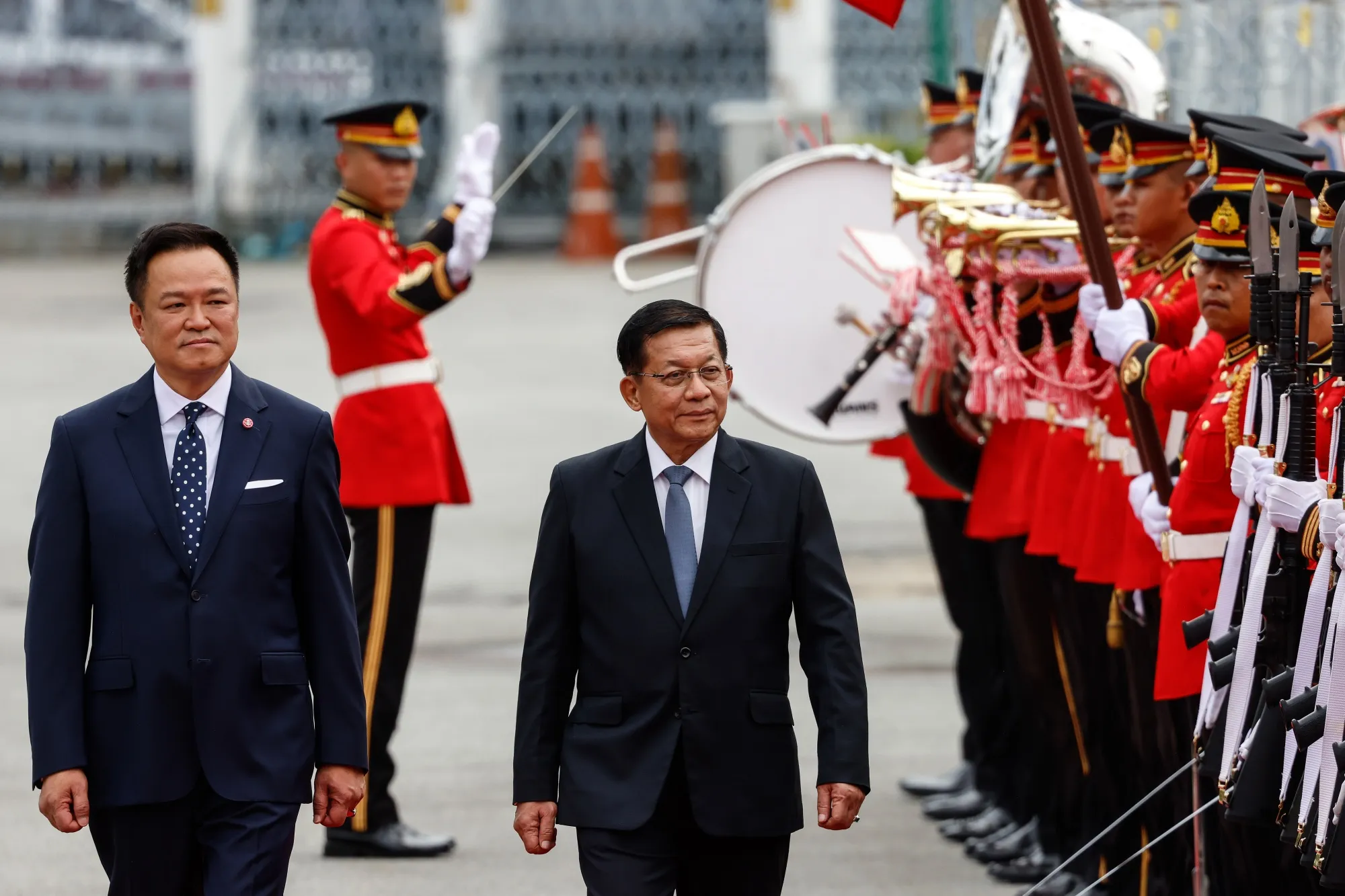
- Min Aung Hlaing has arrived in Thailand for his first official visit since the coup that ousted Aung San Suu Kyi's elected government in 2021.
- Thai Prime Minister Anutin Charnvirakul welcomed Min Aung Hlaing, highlighting Thailand's efforts to rebuild ties with Myanmar after years of regional ostracism.
- This visit is the clearest sign of Thailand's efforts to re-engage Myanmar following the military coup in 2021.
- Min Aung Hlaing will attend an official dinner, meet leaders of both houses of the Thai parliament, and preside over a Thai-Myanmar business forum to enhance economic ties.
- The 2021 coup ignited a civil war in Myanmar, resulting in thousands of deaths and significant economic damage.
- Min Aung Hlaing was declared president in April 2026 after an election that was widely condemned for not being free or fair.
- The election was marked by the exclusion of opposition parties and no voting in areas controlled by armed insurgents.
- Min Aung Hlaing has been barred from attending Asean meetings due to his failure to implement a five-point consensus aimed at de-escalating violence.
- Thailand's diplomatic engagement with Myanmar is moving quickly, following similar actions by China and India, which have recognized the new government.
- Critics argue that Thailand's engagement lends false legitimacy to the junta and prolongs the suffering of the Myanmar people.
Myanmar's military leader Min Aung Hlaing arrived in Thailand for his first official visit since the 2021 coup, a move that highlights Bangkok's strategy of 'calibrated re-engagement' with the junta. Thai Prime Minister Anutin Charnvirakul welcomed Hlaing, emphasizing the need for dialogue given their shared 2,400 km border.14568
This visit follows a period of regional isolation for Myanmar, where Hlaing has faced international condemnation and sanctions for his role in the coup and subsequent civil war, which has resulted in thousands of deaths and a devastated economy. The military leader was previously barred from attending ASEAN meetings due to his refusal to adhere to a five-point consensus aimed at de-escalating violence and negotiating with opposition groups.
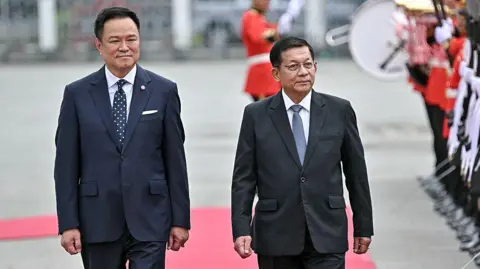
Despite the ongoing humanitarian crisis, Thailand's approach contrasts with other ASEAN nations like Indonesia, Malaysia, the Philippines, and Singapore, which are advocating for more concessions from the military before restoring full diplomatic relations. Critics, including the group Justice for Myanmar, argue that Thailand's engagement grants the junta false legitimacy and prolongs the suffering of the Myanmar people.10
Hlaing's visit included an official dinner, meetings with Thai parliamentary leaders, and a business forum aimed at strengthening economic ties between the two nations. This diplomatic shift mirrors actions taken by Myanmar's larger neighbors, China and India, which have also recognized Hlaing's government and engaged with him post-election.
“Thailand's move follows similar recognition by China and India, which invited Min Aung Hlaing after his April election win. Critics, including Justice for Myanmar, say the visit lends the junta false legitimacy and prolongs suffering, as the coup-triggered civil war has killed thousands.”
 BBC
BBC



