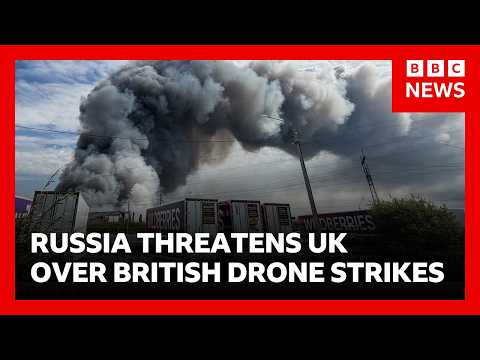
- Putin's threats to Britain are viewed as the last gasp of a dying Russia, with experts suggesting that this is standard Russian bluster and will lead to no serious consequences beyond the current situation.
- Since the start of the war, Putin has made multiple threats regarding military support, including tanks, F-16s, and Storm Shadow missiles, but nothing material has changed.
- Putin is described as more fragile than he has ever been, indicating a weakened position.
- By the end of May, Russia's federal deficit had reached 6tn roubles ($83bn), which is 2.6 percent of GDP and twice last year’s level, highlighting the economic turmoil in Russia.
- Putin needs a war to deflect his own people's anger away from himself and towards an invented enemy abroad, which may explain his aggressive rhetoric.
- There are concerns that if Putin wins in Ukraine, he will target the Baltics or Poland next, raising alarms about future aggression.
- These threats are seen as a reason to support Ukraine more, not less, emphasizing the need for increased military aid.
Russian threats to the UK regarding military support for Ukraine are increasingly viewed as mere posturing amid Putin's fragile regime and ongoing economic challenges. The Russian embassy in London recently warned of 'serious consequences' for Britain's military aid, yet analysts characterize this as standard Russian bluster.1
Experts argue that Putin's threats have become routine since the war's onset, with previous warnings about tanks, F-16s, and Storm Shadow missiles failing to yield significant repercussions. 'Each time he drew a red line. Each time we crossed it. And each time, nothing material changed,' noted a defense analyst.2
The Kremlin's current posture is seen as a desperate attempt to distract from internal issues, with the federal deficit reaching 6 trillion roubles ($83 billion) by May, a staggering 2.6% of GDP and double last year's level. 'Putin needs a war. He needs it to deflect his own people's anger away from himself and towards an invented enemy abroad,' said a political expert.5
Despite the threats, many believe they should prompt increased support for Ukraine. 'If anything, these threats are a reason to do more, not less. We should give Ukraine everything it needs,' emphasized a military strategist. The consensus is clear: while Putin's rhetoric may escalate, the actual threat level remains unchanged.
“By the end of May, Russia's federal deficit reached 6tn roubles ($83bn), which is 2.6 percent of GDP and twice last year’s level. Experts suggest that Putin's threats are a means to deflect his people's anger towards an external enemy, raising concerns about future aggression towards the Baltics or Poland.”


 The Independent
.jpeg?crop)