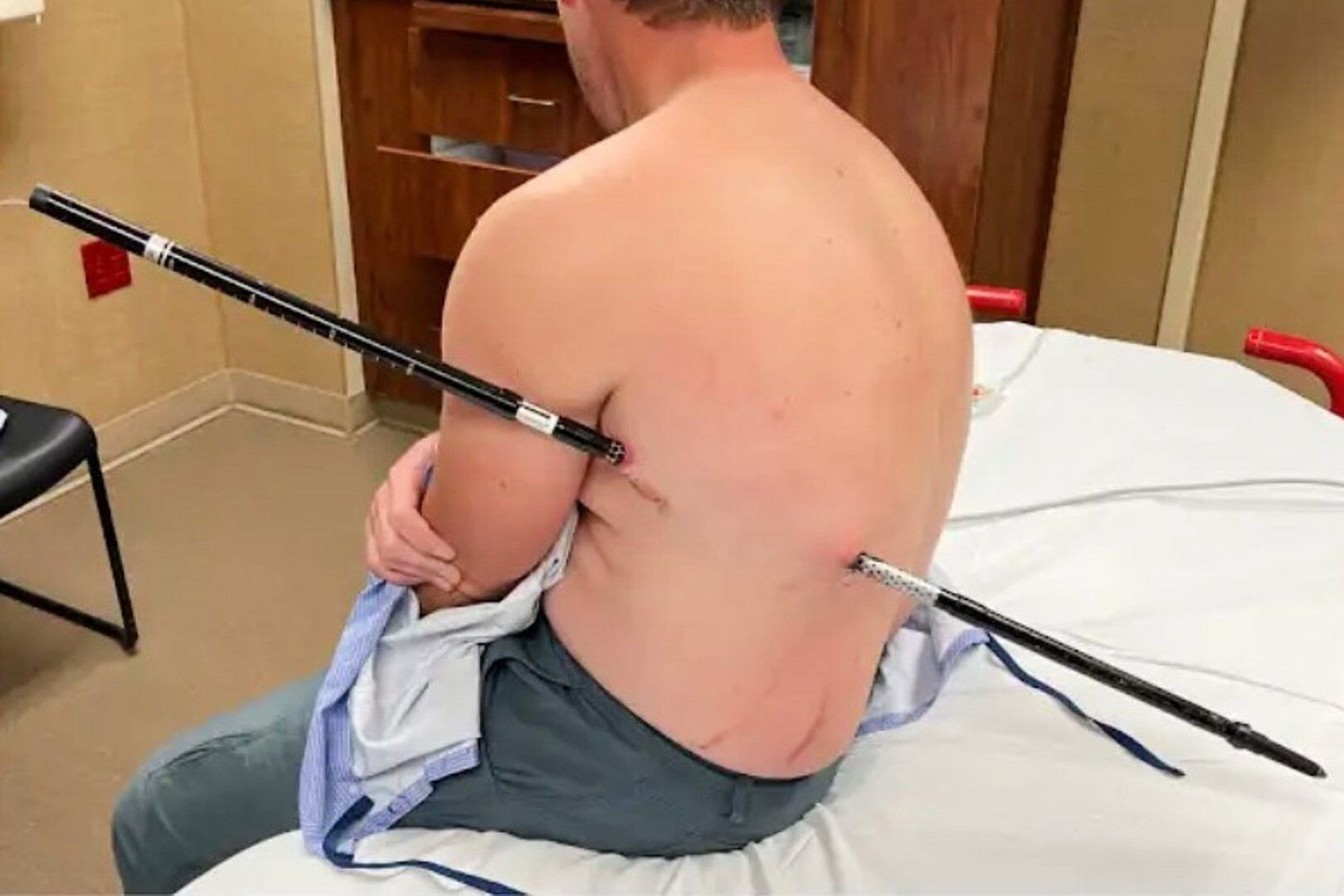
- David Cifaldi and his two hiking companions were crossing Montana’s ominous Froze-to-Death Plateau when Cifaldi slipped and impaled himself on his trekking pole at 9:44 a.m. on July 20.
- The 44-inch steel-tipped pole passed through the flesh beneath Cifaldi’s left arm, missing any vital organs, and protruded from his back.
- After more than six hours, the group traveled about 10 miles and descended roughly 5,000 feet before reaching a trailhead where one of them had parked a vehicle.
- By about 3:30 p.m., the hikers were in Ross’s vehicle headed to the nearest clinic.
- Cifaldi had long wanted to climb Granite Peak, Montana’s tallest mountain at 12,800 feet, which is prone to unpredictable weather including dangerous lightning storms and bitter cold.
- After conferring with his friends and considering the high cost of a helicopter rescue, Cifaldi decided to self-rescue.
- The group used a satellite-based communication device, a Garmin inReach, to contact local authorities and inform them of their plan to self-rescue.
- When they arrived at the clinic, they were told Cifaldi needed more advanced treatment, in Billings.
Montana nurse David Cifaldi faced a life-threatening situation while hiking Granite Peak when he slipped and impaled himself on a 44-inch steel-tipped trekking pole. The pole passed through the flesh beneath his left arm, missing vital organs and protruding from his back.15
After assessing the situation with his two hiking companions, Cifaldi opted for a self-rescue rather than a costly helicopter extraction. They used a Garmin inReach device to inform local authorities of their plan. Over the course of more than six hours, the group traveled about 10 miles and descended roughly 5,000 feet to reach safety at a trailhead where Cifaldi's friend, Jesse Ross, had parked a vehicle.36
Cifaldi had long aspired to climb Granite Peak, which stands at 12,800 feet and is known for its unpredictable weather, including dangerous lightning storms. The first call for help came at 9:44 a.m. on July 20, shortly after the accident. By 3:30 p.m., they were in Ross's vehicle heading to the nearest clinic, where Cifaldi was informed he required more advanced treatment in Billings.48
“Cifaldi's 44-inch steel-tipped pole passed through the flesh beneath his left arm, narrowly missing vital organs. After using a Garmin inReach to contact authorities, he and his friends hiked about 10 miles and descended 5,000 feet to reach help.”




