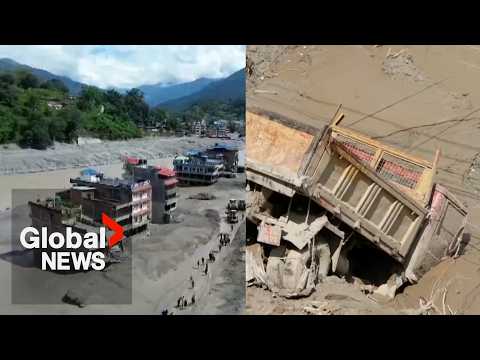
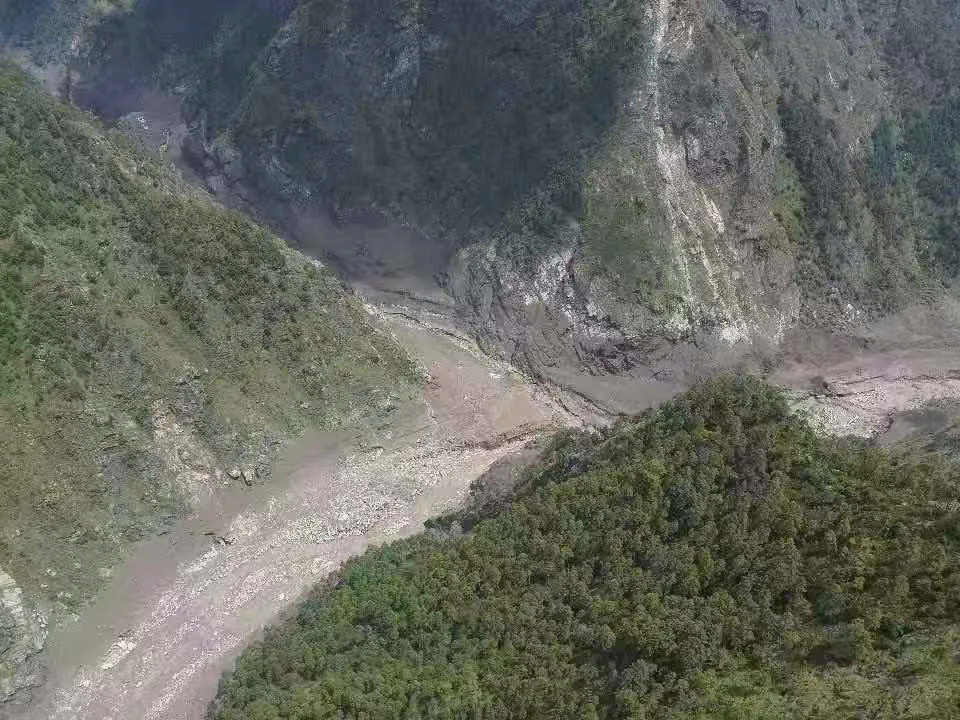
- The number of missing soared past 2,400 on Friday as emergency teams said they had recovered 623 bodies - with some of the dead possibly swept downstream as far away as India.
- Nepal reported a death toll of 616 people on Friday, with 1,924 people, including 517 foreigners, out of contact, the disaster authority said.
- Nepali police urged all rescuers to "immediately move to a safe location", saying they had received information that "a water dam has burst again on the Tibetan side".
- In Tibet, Beijing suspended its rescue operation at the hardest-hit area of Gyirong over the risk of renewed flooding, before saying the threat had eased.
- In an area home to vast energy infrastructure projects, Nepal's disaster authority added 933 hydropower workers to a missing persons list already including trekkers and pilgrims to Tibet's sacred Mount Kailash.
- The Red Cross said the trauma of Wednesday's catastrophe has been "enormous", and as many as 93,000 people may have been affected, with the death toll expected to rise.
- Survivor Buddhi Ram Dangol told AFP: "All the settlements near the river were swept away. There is nothing left."
- Army spokesman Raja Ram Basnet told AFP: "Two helicopters have been dispatched but it is challenging because it is tough to even locate the entry points of the tunnel."
The death toll from the devastating floods in Nepal and Tibet has reached 623, with over 2,400 individuals reported missing. Emergency teams are struggling to recover bodies, with some victims possibly swept downstream into India.14
In a region known for its energy infrastructure, Nepal's disaster authority has added 933 hydropower workers to the missing persons list, which already includes trekkers and pilgrims to Tibet's sacred Mount Kailash.5
Survivor Buddhi Ram Dangol described the destruction, stating, "All the settlements near the river were swept away. There is nothing left." The Red Cross reported that the trauma from the catastrophe has been “enormous”, affecting as many as 93,000 people in total, with the death toll expected to rise further.67
In response to the ongoing crisis, Nepali police have urged rescuers to “immediately move to a safe location” due to a dam bursting again on the Tibetan side, which has complicated rescue efforts. In Tibet, Chinese authorities suspended their rescue operations in the hardest-hit area of Gyirong due to the risk of renewed flooding, although they later indicated that the threat had eased.3
Army spokesman Raja Ram Basnet noted, "Two helicopters have been dispatched but it is challenging because it is tough to even locate the entry points of the tunnel." As of Friday, Nepal reported a death toll of 616 people, with 1,924 individuals, including 517 foreigners, still out of contact.28
“Nepal's disaster authority added 933 hydropower workers to the missing list, which already included trekkers and pilgrims to Mount Kailash. The Red Cross said up to 93,000 people may be affected, with the death toll expected to rise.”