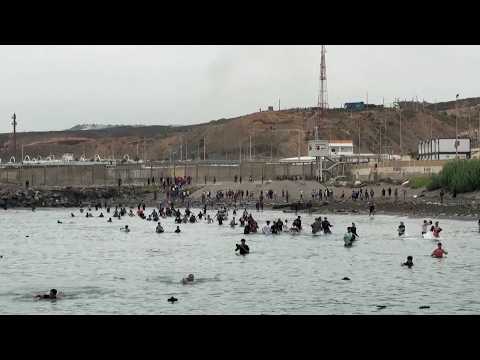
- The surge into Ceuta brought around 50,000 migrants this week and left at least 57 people dead; Spanish officials, including Prime Minister Pedro Sánchez, said trafficking networks encouraged the crossings by misrepresenting the Supreme Court ruling.
- The surge became a political flashpoint across Europe: Italy announced temporary border controls for arrivals from Spain, France said it would reinforce checks along its frontier, and Sánchez announced plans to install floating barriers around Ceuta to restore immediate returns while complying with the ruling.
- Spain and Morocco signed a bilateral readmission agreement in 1992 that requires Morocco, under certain conditions, to take back third-country nationals who entered Spain irregularly via Moroccan territory.
- Gemma Pinyol-Jiménez, head of migration policies and diversity at Instrategies, said the ruling 'just means you cannot push them back at sea' because there is no crossing of a formal border, and it 'doesn’t mean these people can stay in Ceuta.'
- Pinyol-Jiménez said the required process could be brief, allowing deportation within days; under a 1992 bilateral readmission agreement, Spain can still send irregular entrants back to Morocco.
- Daniel Thym, a professor of public, European and international law at the University of Konstanz, called the decision 'a very technical ruling' and said the court laid out a way for Spain to install water barriers that would again allow immediate returns.
- Experts also cited Spain’s relatively strong economy, a recent regularization program, favorable summer conditions at sea, and economic pressures on young North Africans as drivers; many of the migrants were adolescents, and unemployment for Moroccans aged 15 to 24 is 37.2%.
- Ceuta and Melilla form the European Union’s only land borders with Africa; Morocco claims sovereignty over both, and Pinyol-Jiménez said organized movements need at least passive collaboration from Moroccan authorities. Morocco denied any involvement.
Spain's Ceuta has seen a massive influx of around 50,000 migrants this week, leading to at least 57 fatalities during the perilous crossings. The situation has overwhelmed local authorities and prompted Prime Minister Pedro Sánchez to announce plans for floating barriers to manage the crisis.123456
The surge is attributed to various factors, including Spain's relatively strong economy, a recent regularization program for undocumented migrants, and high unemployment rates among young Moroccans, which stands at 37.2% for those aged 15 to 24. “These kinds of organized movements don’t happen without, at minimum, passive collaboration from Moroccan authorities,” said Gemma Pinyol-Jiménez, a migration policy expert. However, Morocco has denied any involvement.891011141516171819
The situation has escalated into a political flashpoint, with Italy implementing temporary border controls for arrivals from Spain and France reinforcing checks along its borders. The recent Supreme Court ruling in Spain, which restricts the immediate deportation of migrants arriving by sea, has further complicated the issue. “It just means you cannot push them back at sea because there is no crossing of a formal border,” Pinyol-Jiménez explained.
Sánchez's proposed floating barriers aim to comply with the court ruling while restoring the ability to carry out immediate returns, highlighting the ongoing diplomatic tensions surrounding migration in the region.
“Spain and Morocco's 1992 readmission agreement still allows deportations within days for irregular entrants, even after the Supreme Court barred pushbacks at sea. Experts note Morocco's 37.2% youth unemployment and the large number of adolescent migrants as key drivers, while Morocco denies any involvement in the organized crossings.”