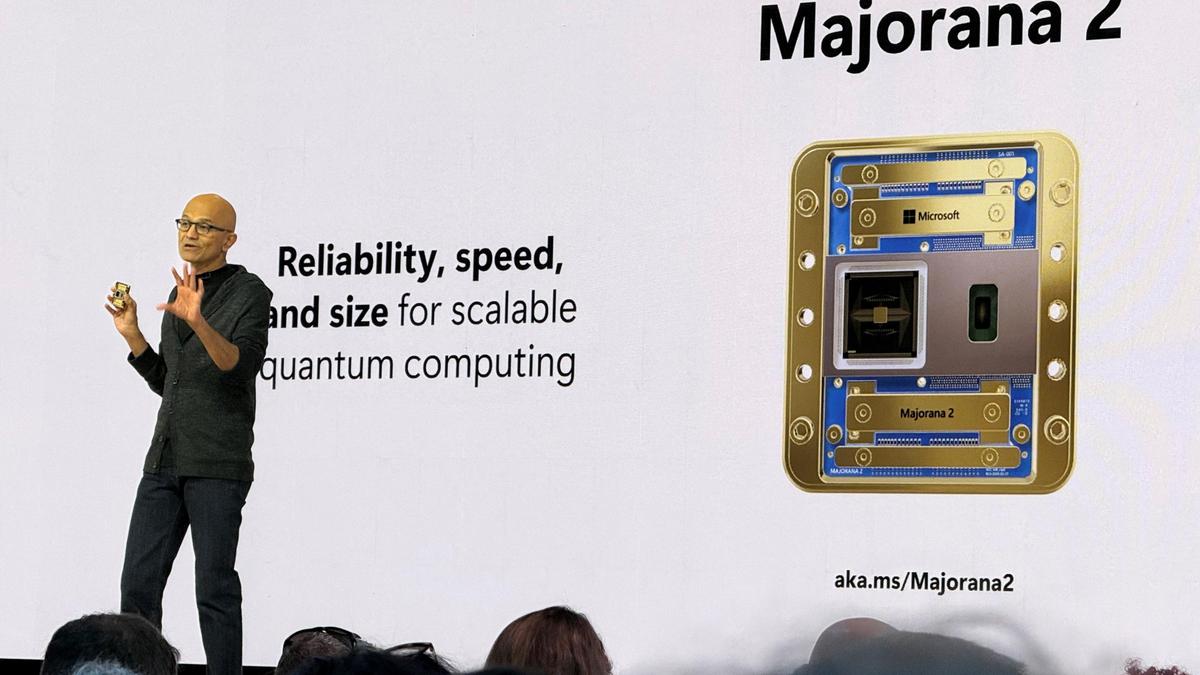
- Microsoft unveiled a new quantum computing chip called Majorana 2, stating that it now believes it will have commercially useful quantum machines by 2029.
- The new target date puts Microsoft on track to have quantum computers the same year as rival IBM, which plans to spend $10 billion on quantum machines.
- Microsoft's approach to quantum computing relies on quasiparticles known as Majoranas, which had not been proven to exist until Microsoft claimed to have observed them.
- The biggest change to Microsoft’s chip is that it uses an entirely new set of materials, specifically lead, instead of aluminum typically used by competitors.
- The redesign with the help of AI tools led to a 1,000-fold improvement in some aspects of Majorana 2’s performance.
- Confidential discussions with the U.S. Defense Advanced Research Projects Agency have informed the evaluation of the feasibility of several different types of quantum systems.
Microsoft's Majorana 2 quantum chip represents a significant advancement, achieved through AI-driven material innovations. Jason Zander, Microsoft’s executive vice president, noted a 1,000-fold performance improvement. The chip's unique use of lead, instead of aluminum, is expected to outperform competitors'. Microsoft anticipates commercial quantum systems by 2029, sharing insights with the U.S. Defense Advanced Research Projects Agency. IBM's $10 billion investment further intensifies the rivalry in quantum computing, as both giants race to deliver practical solutions. The emphasis on Majoranas, quasiparticles critical to Microsoft's quantum strategy, underlines its pioneering efforts, positioning the company as a leader in revolutionizing computational technology.123457
“Microsoft introduced the Majorana 2 quantum chip, redesigned with AI, and believes it can offer commercially useful systems by 2029. This timeline coincides with IBM's plan to invest $10 billion in quantum computing.”
