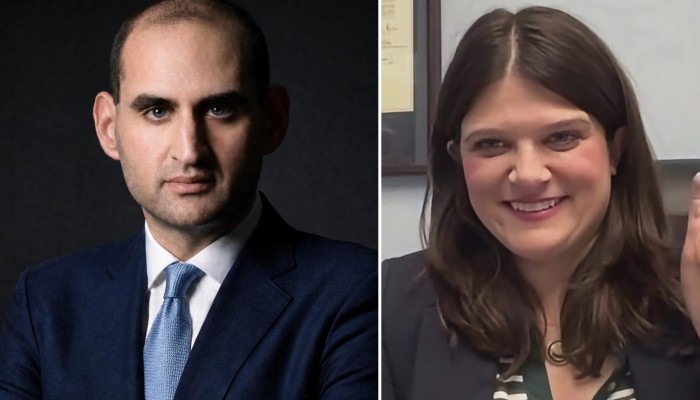
- Stevens endorses Mike Rogers, prompting backlash on social media.
- Critics on social media attributed Stevens' endorsement to her fiancé's influence: Ray Wert claimed her voice "more often than not is now her fiancé", and former representative Susan Wild called the endorsement "appalling", speculating that Turkish was behind the "betrayal".
- Stevens called the backlash "sexism dressed up as political analysis" and defended her agency: "A woman can serve in Congress, run statewide, and fight for her convictions, and still be told that when she makes a choice people dislike, someone else must be pulling the strings."
- Experts see the criticism as reflecting a broader "double bind" that has "compromised the ability of women to play a role in political life" and undermines women's agency: "It takes away her own agency, which she has just as a human being, but certainly as a member of Congress."
- Kelly Dittmar noted that "too often assumed women... will behave in ways that are aligned with or even controlled by dominant male partners or spouses" and stressed that "we want women to have autonomy of choice and agency", but they should be held accountable for their decisions.
- A gender studies professor at UCLA called the focus on the fiancé "totally sexist and unnecessary", saying legitimate critics should not rely on "demeaning and disrespectful explanations".
- Williams cautioned against framing the issue as partisan, noting that "this kind of bias is much deeper and pervasive than any one particular party or moment", and emphasized that "women are not taken seriously as their own independent thinkers".
- Williams described the "no right way" for women: "If you have a partner, it's believed that you think and act at the whims of their beliefs. If you don't, you're a ..."
- One observer acknowledged that while a fiancé with an "opposite opinion" might try to influence, "he didn't make that decision" Stevens "ultimately makes that decision, and again is accountable for that decision".
Haley Stevens has faced significant backlash for endorsing Mike Rogers, with critics alleging her fiancé, Jason Turkish, influenced her decision. Stevens responded on X, stating the criticism reflects "sexism dressed up as political analysis", emphasizing that women are often not seen as independent thinkers.14
Former Rep. Susan Wild condemned the endorsement as "appalling", suggesting Turkish's influence led to a betrayal of women in politics. She stated, "any woman who abandons her friends when a comes along is no friend at all".23
Political analysts like Williams and Dittmar highlighted the "double bind" women face in politics, where their choices are often scrutinized through the lens of their male partners. Dittmar noted, "We have too often assumed women... will behave in ways that are aligned with or even controlled by dominant male partners".56
Critics argue that Stevens' situation exemplifies a broader issue of women's autonomy in political life. Williams warned against framing sexism as a partisan issue, stating, "This kind of bias is much deeper and pervasive than any one particular party or moment". Ultimately, Stevens maintains that her endorsement was her own decision, despite external influences.1011
“Critics, including journalist Ray Wert and former representative Susan Wild, accuse Jason Turkish of swaying Stevens' endorsement, with Wild calling it "appalling" and a "betrayal." Experts say such criticism reflects a "double bind" that undermines women's political agency.”