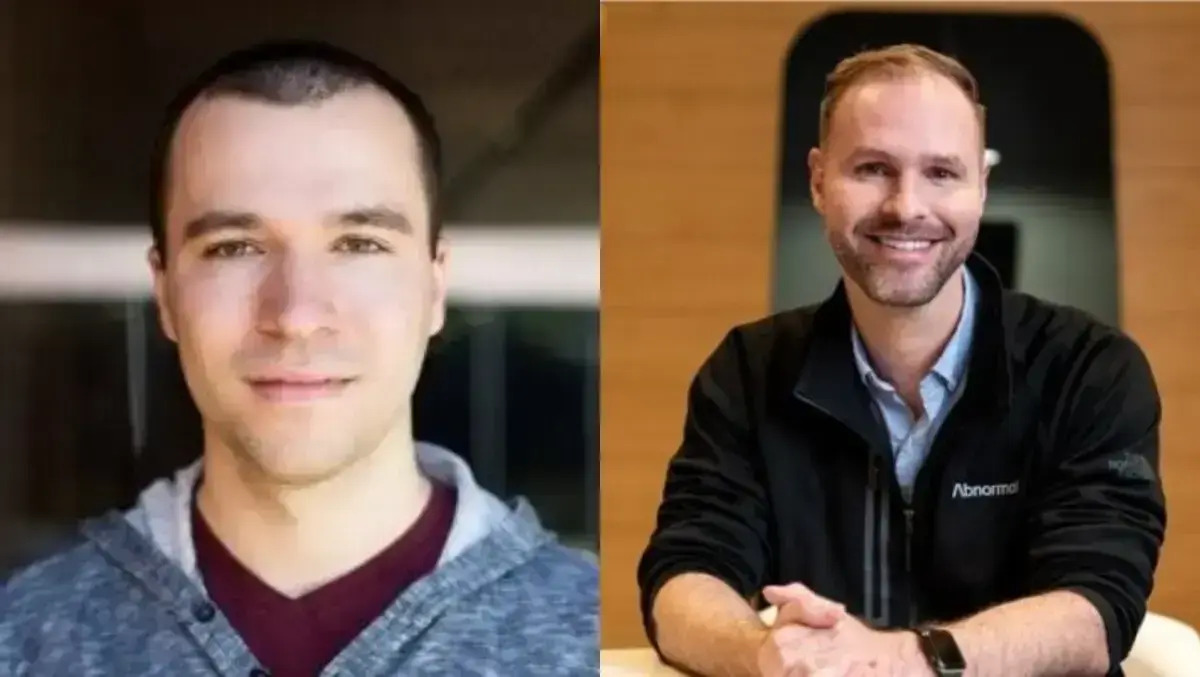
- Tristan Buckmaster and Levent Alpöge spent about a year studying a related version of the Navier-Stokes equations with AI assistance, demonstrating that a solution can develop a singularity in finite time.
- On September 3, Buckmaster learned that information about his and Alpöge's work had reached OpenAI.
- On September 6, Buckmaster spoke with OpenAI's Sébastien Bubeck, who informed him that the internal model had produced a Navier-Stokes proof.
- Buckmaster alleges that OpenAI requested he remove Alpöge due to his affiliation with Anthropic and pressured him to publish in a specific order.
- Buckmaster rejected OpenAI's proposal and chose to release his work publicly to establish a record of their research.
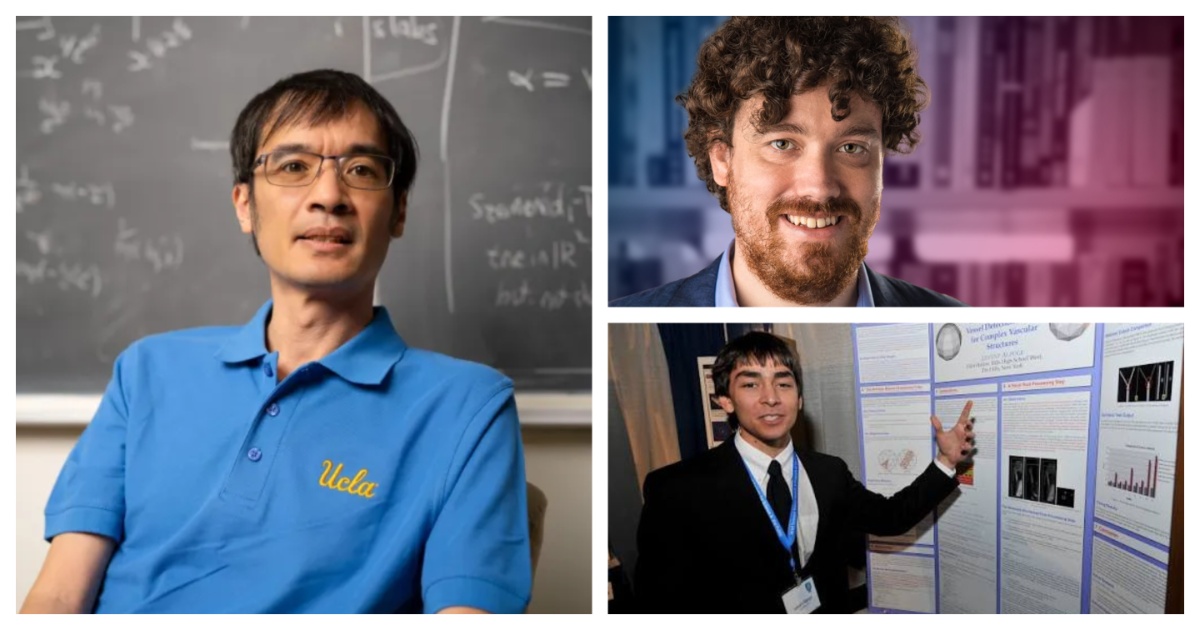
- Terence Tao praised Buckmaster and Alpöge's fluid dynamics proofs as a 'remarkable achievement' that could assist in solving the Navier-Stokes problem.
- OpenAI's alleged proof of the Navier-Stokes problem remains private and unverified.
- Buckmaster has raised concerns that OpenAI's systems may have been exposed to his private mathematical drafts, which he had been inputting into the company's tools during the year.
- He alleges that OpenAI initially claimed its model had been given the Navier-Stokes problem with little human assistance, but later discussions revealed a more complex involvement.
- The Navier-Stokes equations describe fluid movement and are one of the seven Millennium Prize Problems, with a $1 million prize for a complete solution.
- The problem is significant in mathematical physics, and a proof resolving whether smooth solutions can develop singularities would settle a fundamental question.
Mathematician Tristan Buckmaster has raised serious allegations against OpenAI, claiming the company pursued a breakthrough on the Navier-Stokes equations after learning about his work with Levent Alpöge. Buckmaster's concerns stem from a conversation with OpenAI's Sébastien Bubeck, where he was informed that an internal model had produced a proof of the Navier-Stokes problem shortly after OpenAI became aware of his research.12310
Buckmaster stated, “When I heard ‘forced,’ it was a bright red flag,” indicating that the approach OpenAI described closely mirrored his and Alpöge's work. He also expressed doubts about whether OpenAI's model had been trained on his unpublished drafts, which he had been inputting into the company's tools.
In contrast, Fields Medalist Terence Tao praised Buckmaster and Alpöge's work as a “remarkable achievement,” noting that their proof has been formalized in Lean, ensuring its logical integrity. Tao emphasized that while the methods show promise for extending to the Navier-Stokes problem, he does not declare it solved yet.6
The Navier-Stokes equations, a fundamental question in fluid dynamics, remain one of the seven Millennium Prize Problems, with a $1 million prize for a complete solution. Buckmaster's allegations raise ethical questions about the intersection of AI and academic research, particularly regarding the ownership and originality of mathematical breakthroughs.
OpenAI's alleged proof, reportedly generated in just a few days, remains undisclosed, leaving the mathematical community unable to verify its claims. Buckmaster's decision to publish his findings publicly, despite their unfinished state, aims to establish a timeline for his research amidst these controversies.
“Buckmaster says OpenAI's model was first used on easier problems, including Euler, before turning to Navier–Stokes, and that an 'insane amount of compute' was used. He also alleges OpenAI asked him to remove Alpöge because he works at Anthropic, a rival AI company.”
 OfficeChai
 Firstpost