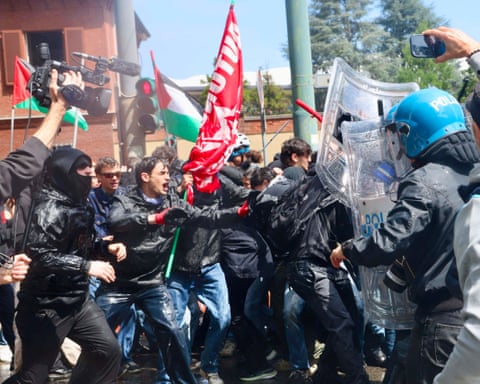
Labour Day demonstrations around the globe emphasized
workers' rights as rising energy costs, partly due to the ongoing Iran war, spark anger among labor groups. Protests in cities like Manila and Istanbul highlighted tensions with police, fueled by economic disparities and geopolitical conflicts.
Participants directed grievances against the U.S. and Israeli policies, with the
European Trade Union Confederation stating that working people “refuse to pay the price for Donald Trump’s war in the Middle East.” In the Philippines, workers raised concerns about rising fuel prices impacting their wages, reflecting similar sentiments worldwide.
Renato Reyes from Bayan, stated there will be a “louder call for higher wages and economic relief.”
Tensions escalated as protests evolved into clashes reflecting broader anti-war sentiments, with manifestos citing Palestinian issues and military funding critiques.
Fears of global recession loom over the gatherings as income inequality widens, further propelling demands for fair wages. The Palestinian General Federation of Trade Unions reported approximately 550,000 workers in Gaza and the West Bank without income, exacerbating an already dire economic situation amidst ongoing conflict.
Demonstrators in countries, including Turkey and Argentina, echoed these labor concerns while challenging national policies crucial for workers’ rights.
Sources: 

Labour Day demonstrations around the world highlighted the struggle for workers' rights amidst rising energy costs linked to the Iran war. Protesters chanted against U.S. involvement and voiced resentment towards Israeli actions, turning marches into battlegrounds for anti-American and anti-Israel sentiments, as economic concerns prevailed.