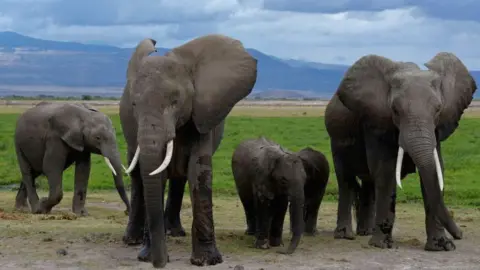
- Fifteen elephants found dead in southern Kenya outside the Amboseli National Park are suspected to have been poisoned by eating tomatoes that had been sprayed with pesticides on nearby farms.
- The Kenya Wildlife Service (KWS) says preliminary laboratory tests found cyanide in samples taken from the animals' carcasses.
Kenya is currently investigating the mysterious deaths of 15 elephants in the Amboseli National Park, with the Kenya Wildlife Service (KWS) confirming that preliminary tests have detected cyanide in the carcass samples. The elephants are believed to have died between 24 June and 24 July 2026, raising serious concerns about the impact of agricultural practices on wildlife.12
The KWS has indicated that the elephants may have ingested pesticide-sprayed tomatoes from nearby farms, leading to suspicions of pesticide poisoning. This incident highlights the ongoing conflict between agricultural development and wildlife conservation in the region.
According to the Amboseli Trust for Elephants, which monitors the local elephant population, there were over 2,000 elephants in the Amboseli ecosystem as of 2025. The deaths of these elephants could have significant implications for the local ecosystem and conservation efforts.
As investigations continue, the KWS is urging farmers to adopt safer agricultural practices to prevent further incidents that could threaten wildlife. The situation underscores the need for a balance between farming and wildlife conservation to ensure the survival of these majestic creatures in their natural habitat.
“Preliminary laboratory tests by the Kenya Wildlife Service revealed cyanide in the carcasses of the elephants, raising concerns about potential poisoning. The elephants were found dead outside Amboseli National Park, suspected to have ingested tomatoes sprayed with pesticides from nearby farms.”
 BBC
BBC



