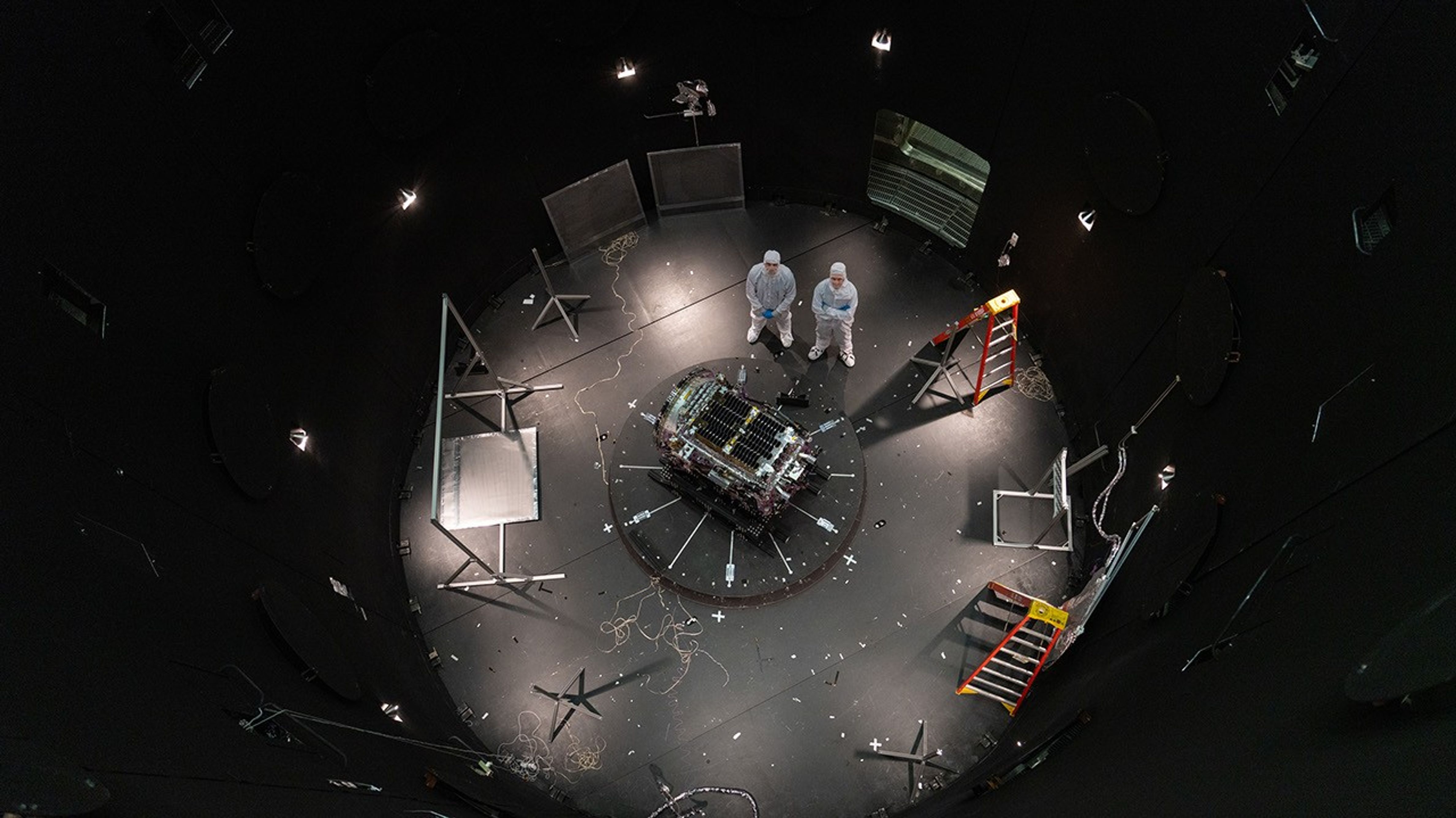
Katalyst Space Technologies completes environmental tests for LINK spacecraft; Mission to boost NASA's Swift expected to launch in June.

Katalyst Space Technologies recently wrapped up environmental testing for its LINK spacecraft, a critical component in the effort to reboost NASA's Swift observatory. The mission plays a pivotal role in preventing the $500 million satellite from descending to unsafe altitudes.

Sources:
Aviation WeekNASA Science (.gov)+2
Trending 1h ago
Tab background
Sources: NASA Science (.gov)SpaceNewsSpaceflight Now
Katalyst Space Technologies completed environmental testing for its LINK spacecraft, essential for reboosting the NASA Neil Gehrels Swift Observatory facing orbital decay. The mission, described as ‘fast, high-risk, high-reward’ by Swift’s mission director, is set to launch later this June.

The LINK spacecraft passed a series of rigorous tests at NASA’s Goddard Space Flight Center, which included vibration and thermal vacuum assessments. During vibration testing, engineers simulated the intense shaking expected during its launch aboard a Northrop Grumman Pegasus rocket.

This follow-up mission is critical as the Swift observatory, launched in 2004, is projected to reenter the atmosphere by late 2026. The observatory's orbit has accelerated its decline from about 600 km to 400 km in recent years, necessitating this reboost mission to prevent a loss of the $500 million satellite.

“Because of that, we have enough time for this team to get to the launch pad,” Shawn Domagal-Goldman, director of NASA’s astrophysics division, stated earlier this year. Following successful tests, LINK is slated for integration with the Pegasus rocket at NASA's Wallops Flight Facility early in June, with a launch target later that month.

In September 2025, NASA awarded Katalyst a $30 million contract to develop this spacecraft, further emphasizing the importance of this mission as Swift’s orbit deteriorates rapidly, indicating potential challenges ahead for the team.
Sources: SpaceNews
Katalyst Space Technologies has successfully completed environmental tests of its LINK spacecraft at NASA's Goddard Space Flight Center, paving the way for a June launch aimed at boosting the declining orbit of NASA's Neil Gehrels Swift Observatory, according to NASA officials.
Section 1 background
The Headline

Katalyst completes environmental tests for LINK mission

Key Facts
  • Katalyst Space Technologies this week completed environmental testing of its LINK robotic servicing spacecraft, a milestone in a planned June launch to boost NASA's descending Neil Gehrels Swift Observatory.Aviation Week
  • On May 4, Katalyst completed the environmental tests at NASA’s Goddard Space Flight Center in Greenbelt, Maryland.NASA Science (.gov)
  • The Swift boost mission aims to prevent a $500 million space observatory from meeting a fiery demise, passing a notable prelaunch testing milestone.Spaceflight Now1
  • The Swift mission is described as a fast, high-risk, high-reward endeavor according to John Van Eepoel, the mission director.NASA Science (.gov)Spaceflight Now2
  • The LINK spacecraft will first be integrated with the Pegasus rocket at NASA’s Wallops Flight Facility in Virginia in early June, before its launch later that month.Spaceflight NowSpaceNews2
Section 2 background
Background Context

Context on Swift mission and Katalyst's role

Key Facts
  • The Swift spacecraft was launched on November 20, 2004, and has experienced accelerated orbital decay in recent years.Aviation Week
  • In September 2025, NASA awarded Katalyst a $30 million contract to develop the LINK spacecraft, aimed at raising Swift's orbit.Spaceflight Now1
  • Swift's orbit is decaying faster than initially planned, with expectations of dropping below 300 kilometers between October 2026 and January 2027.SpaceNews
  • The Swift mission's timeline has created urgency to accept a higher level of risk, noted Kieran Wilson from Katalyst.
Article not found
CuriousCats.ai

Article

Source Citations