
- KAIST's research team has developed a new neuromorphic neuron semiconductor that utilizes noise generated in semiconductors for information processing, achieving high accuracy in motion and voice recognition.
- The technology was published in Advanced Materials on August 5, highlighting its significance in the field of materials science.
- KAIST announced the development of this technology on the 16th, showcasing its innovative approach to information processing.
- The team achieved 94.8% accuracy in motion recognition and 95.0% accuracy in voice recognition by processing signals through a programmable probabilistic artificial neuron (PPM).
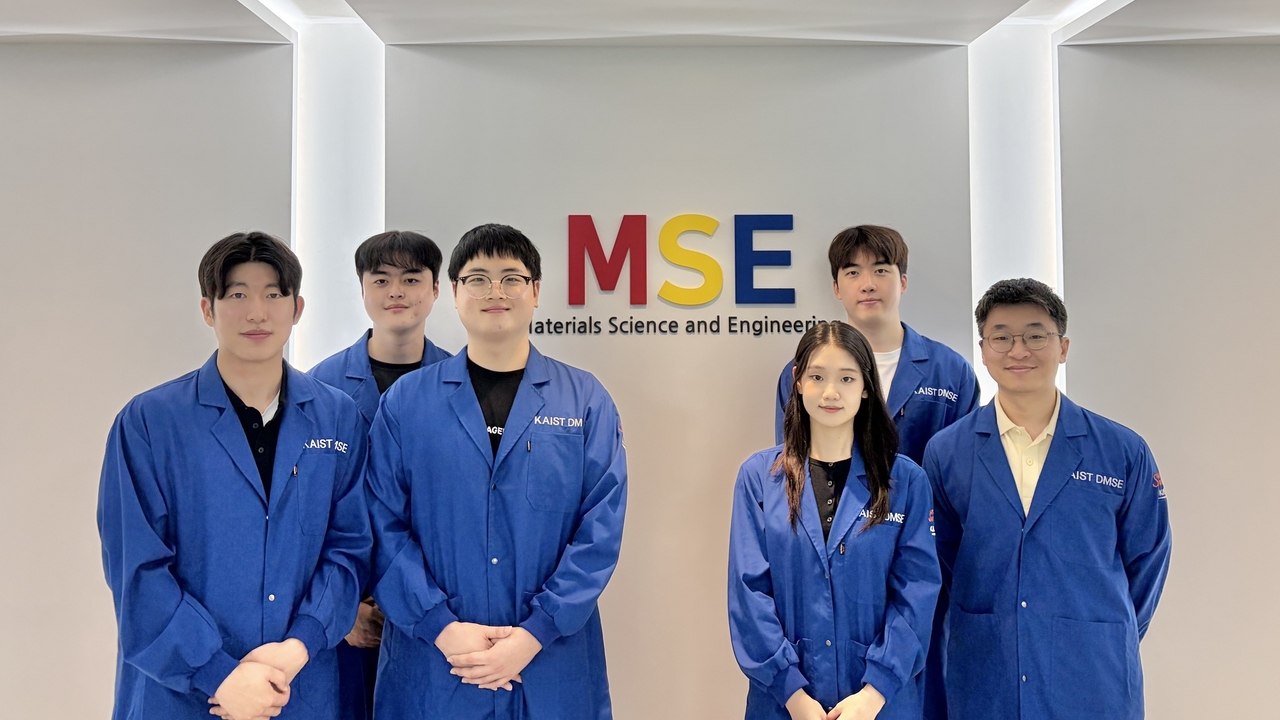
KAIST's research team, led by Professor Kyung Min Kim, has pioneered a neuromorphic neuron semiconductor technology that utilizes semiconductor noise for information processing, akin to human brain function.12
The team developed a Programmable Probabilistic Neuron (PPN) that adapts to various signal frequencies by controlling the resistance state of a memristor.
This innovative approach allows the system to generate electrical signals, or spikes, similar to those produced by biological neurons, effectively turning noise into a valuable resource for processing information.
The technology achieved impressive results, with 94.8% accuracy in motion recognition and 95% in voice recognition, demonstrating its potential for real-world applications.56
Professor Kim emphasized the significance of this development, stating, "We treated memristor noise not as a simple error or instability but as an information processing resource."
The research findings, published in Advanced Materials, highlight the ability of the PPN to process a range of signals without altering circuit structures, simply by adjusting the memristor's resistance state.
This flexibility could lead to advancements in low-power, brain-mimicking semiconductor technologies, as the system can extract frequency features directly at the sensor edge, reducing data transfer burdens.
As Professor Kim noted, "As a single hardware can be reconfigured to handle signals of various speeds and frequencies, it could be utilized as a signal processing technology for future low-power brain-mimicking systems."
“The technology reconfigures a single neuron to handle signals from slow motion to fast voice by adjusting the memristor's resistance state, eliminating the need for circuit changes. Professor Kim noted that integrating memristors with peripheral circuits on a single chip is required for real product application.”
 조선일보
조선일보



