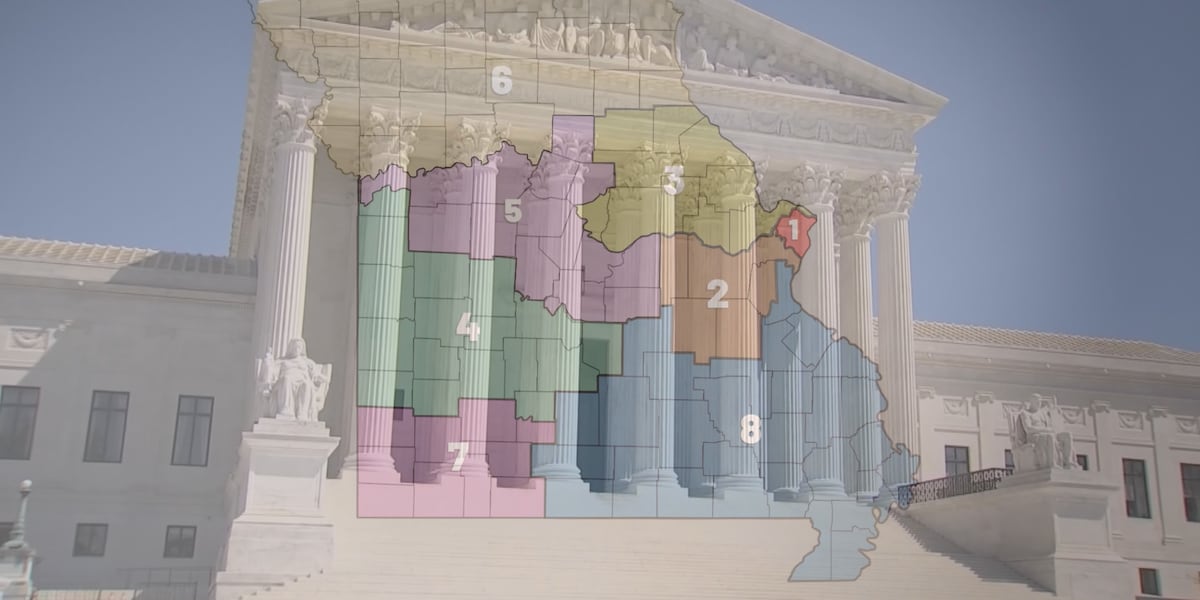
- Justice Kavanaugh denied Secretary of State Denny Hoskins' emergency request to stay the Missouri Supreme Court ruling on Tuesday, which had declared that House Bill 1 (HB 1) never legally took effect.
- Chief U.S. District Judge Stephen Clark granted a temporary restraining order (TRO) requiring Missouri to conduct the November congressional elections under the HB 1 map, despite the Missouri Supreme Court's ruling.
- Clark's order bars state officials from using any congressional district map other than the HB 1 map for the November 3 general election.
- Missouri Attorney General Catherine Hanaway stated that the state would comply with Clark's order and use the HB 1 map in November, arguing that switching maps mid-election would be unfair to voters.
- Governor Mike Kehoe described Clark's ruling as providing clarity for voters and election officials, emphasizing the need for consistency in election rules.
- Missouri voters submitted over 300,000 signatures last December to invoke a referendum against HB 1, which the Missouri Supreme Court ruled had never legally taken effect.
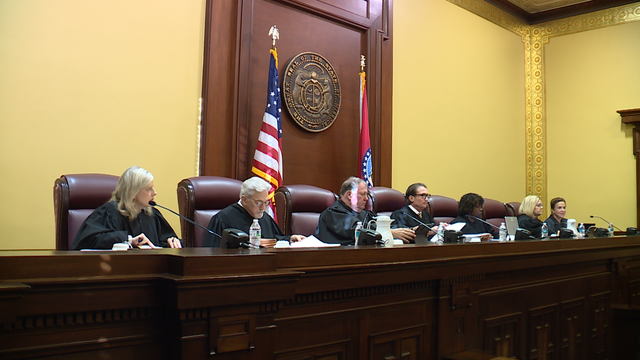
- The Missouri Supreme Court ordered that the 2022 congressional map be used, stating that HB 1 is not the law and has never been the law.
- Missouri conducted its congressional primaries on August 4 under the HB 1 map, which has now become a point of contention.
- Secretary of State Denny Hoskins argued that switching maps after the primaries would violate federal law and create chaos for the general election.
Justice Brett Kavanaugh denied an emergency application from Missouri Secretary of State Denny Hoskins, blocking the GOP-drawn congressional map, known as House Bill 1 (HB 1). This decision followed a ruling from Chief U.S. District Judge Stephen Clark, who mandated the use of HB 1 for the upcoming November elections.10
Clark's ruling came after the Missouri Supreme Court determined that the map had never legally taken effect due to a valid referendum petition with over 300,000 signatures submitted by opponents. The court stated that the map was not law and ordered the use of Missouri's 2022 congressional map unless voters approved the new districts in November.8
In his ruling, Clark emphasized that switching maps mid-election could nullify primary ballots and create unequal voter classes, stating, “Using a different map for the general election would wreak havoc on the fairness and orderliness of Missouri’s congressional elections.” Missouri Attorney General Catherine Hanaway expressed the state's commitment to comply with the ruling, arguing that changing maps between elections is “simply not feasible and profoundly unjust to Missouri voters.”5

The Supreme Court's decision is a significant setback for the GOP, which aimed to leverage the new map to gain an advantage in the upcoming elections. Gov. Mike Kehoe called the ruling “much-needed clarity” for voters and officials, emphasizing the importance of consistency in election rules.6
The case highlights ongoing tensions surrounding redistricting in Missouri, particularly as the state navigates the implications of a politically charged map drawn under pressure from former President Trump.
“The Missouri Supreme Court had ruled HB 1 'is not the law and has never been the law' after opponents submitted over 300,000 signatures. Federal Judge Stephen Clark found a 'high probability of success' on equal protection claims, warning that switching maps could nullify primary ballots.”