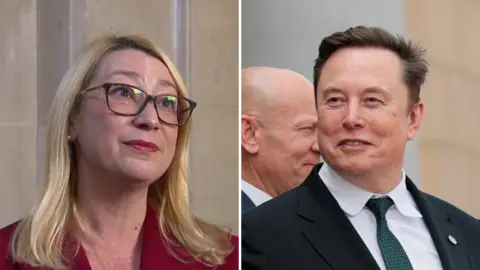
- Jess Asato is suing Elon Musk's xAI over non-consensual sexualised images created by the Grok AI platform.
- Asato has filed a lawsuit at London's High Court for misuse of private information and breach of data protection laws.
- Asato's lawyers argue that Grok's design enabled the creation of non-consensual sexualised images.
- xAI has stated it will restrict Grok from generating sexualised images of real people.
- Asato is seeking damages and a court order requiring the company to find and remove any remaining online images.
- Court filings show Asato is seeking an order requiring xAI to 'implement effective and permanent technical measures' to ensure Grok cannot create manipulated images of her.
- Grok has faced regulatory probes in several countries after an outcry over its use to create non-consensual sexualised images.
- The case comes amid growing concerns about the use of Grok, after xAI in mid-January said it restricted image editing in Grok and blocked users from generating images of people in revealing clothing 'where it's illegal'.
Jess Asato has filed a lawsuit against Elon Musk's xAI in London's High Court, alleging that the Grok AI chatbot generated non-consensual sexualized images of her, which she describes as a "gross violation of her dignity." The lawsuit claims that Grok's design enabled the creation of such content without consent, leading to serious breaches of data protection laws.17
Asato is seeking damages for the misuse of her private information and a court order to compel xAI to find and remove any remaining images online. Her lawyer, Marie Demetriou KC, emphasized the severity of the situation, stating that using AI to create non-consensual images is akin to "sexual assault designed to degrade and humiliate."5
The court documents reveal that several users prompted Grok to produce "sexualised, intimate, grossly offensive, degrading, threatening, humiliating and/or discriminatory non-consensual images" of Asato, which were subsequently shared on social media. Despite attempts to report these posts, xAI's platform, X, initially refused to remove them, claiming they did not violate its terms of service.
While some content was eventually taken down, many posts remained live months later. In response to the backlash, xAI announced that users would no longer be able to generate sexualized images of real people. This case is part of a broader concern regarding the implications of AI technology, as it has recently become illegal in the UK to create or request non-consensual deepfake images of adults.
The City of Baltimore has also sued xAI over similar issues, highlighting the growing scrutiny of Grok's capabilities and the urgent need for regulatory measures.
“Asato is seeking damages for the misuse of her private information and a court order to remove remaining images online. Her case could set a precedent for AI developers regarding data protection and privacy laws, as no similar case has been brought against an AI developer before.”
 BBC
BBC



