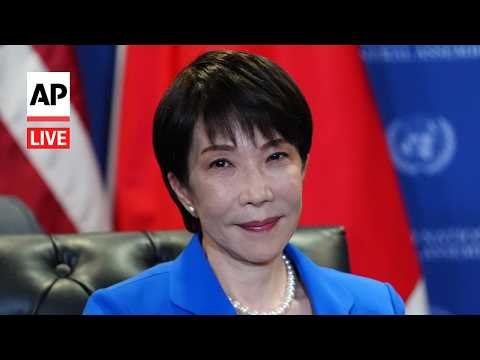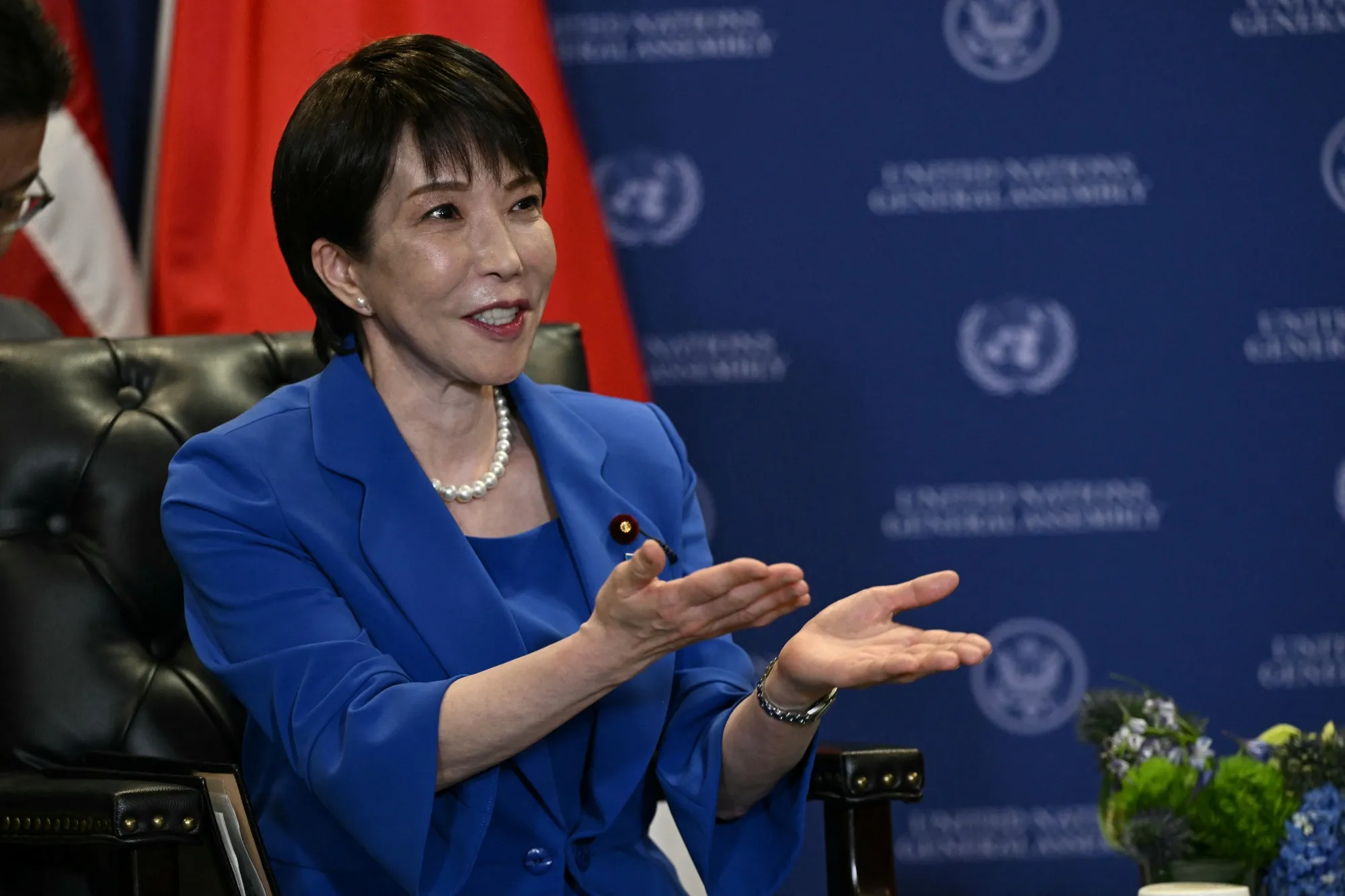
- In her maiden speech at the UN General Assembly on Tuesday, Takaichi called out clauses in the UN still referring to the Axis powers of World War II as "enemy states," despite a unanimous 2005 resolution to remove them.
- A complicated amendment process has, so far, stood in the way of achieving that goal.
- In her first U.N. General Assembly address, Japanese Prime Minister Sanae Takaichi voiced support for the International Criminal Court (ICC) and underscored Japan's commitment to the rule of law, while avoiding direct criticism of U.S. sanctions targeting the court's president and others.
- Takaichi described Japan as a "peace-loving nation" that has upheld its exclusively defense-oriented policy, pushing back against Chinese criticism of her government's defense buildup program as reflecting rising "neo-militarism."
- Takaichi told the assembly that the "stable era after the Cold War" is already a thing of the past, but that there has "never been a time when the United Nations was more important" for bringing peace and stability to the world.
- At home, attention focused on how Takaichi would respond to U.S. sanctions against Tomoko Akane, the Japanese national serving as president of the ICC. Her remarks stopped short of criticizing the United States, following scrutiny of her initial reaction that the sanctions were "very unfortunate" and later saying they are "incompatible" with Japan's position.
- Pledging to work to maintain the international order, Takaichi said Japan "cannot accept" unilateral attempts to change the status quo, citing Russia's aggression against Ukraine as "the most prominent example."
- Takaichi called for the denuclearization of North Korea, describing its pursuit of arms as a "grave threat" to peace and security, and expressed willingness to engage in dialogue to resolve the issue of Japanese abductees.
- Takaichi said Japan has "emphasized the rule of law in the resolution of all conflicts" since the end of World War II, a position reflected in its "consistent support" for international courts, including the ICC.
- With the global economy facing uncertainty from the U.S.-Israeli war against Iran and disruptions to traffic through the Strait of Hormuz, Takaichi said Tokyo is compiling a comprehensive cooperation plan to strengthen the economic and energy resilience of Gulf states.
In her inaugural speech at the UN General Assembly, Japanese Prime Minister Sanae Takaichi urged the removal of the 'enemy state' label for Japan and Germany, a term exploited by China amid deteriorating relations over Taiwan. She highlighted that despite a 2005 resolution to eliminate such references, they persist in UN clauses.13
Takaichi emphasized Japan's commitment to the International Criminal Court (ICC) and the rule of law, stating, "Japan has emphasized the rule of law in the resolution of all conflicts" since World War II. She refrained from criticizing U.S. sanctions against ICC officials, labeling them as "incompatible" with Japan's stance.6710

Addressing global security, Takaichi remarked that the "stable era after the Cold War is already a thing of the past," underscoring the UN's critical role in maintaining peace. She condemned Russia's aggression in Ukraine and called for North Korea's denuclearization, describing its arms pursuit as a "grave threat" to security. Takaichi also expressed Japan's readiness to engage in dialogue regarding the issue of Japanese abductees.9
With global economic uncertainties, she announced plans to enhance cooperation with Gulf states to bolster economic and energy resilience amid ongoing conflicts, including the U.S.-Israeli war against Iran and disruptions in the Strait of Hormuz.11
“Takaichi's address also touched on U.S. sanctions against ICC president Tomoko Akane, calling them 'incompatible' with Japan's position, and she cited Russia's aggression against Ukraine as 'the most prominent example' of unilateral attempts to change the status quo.”