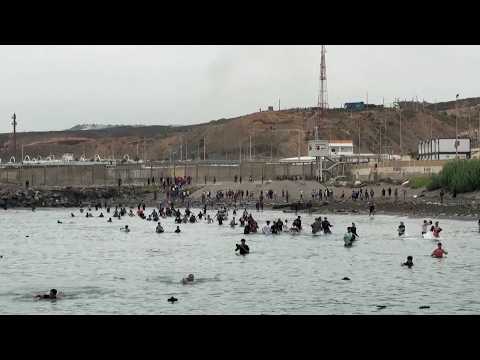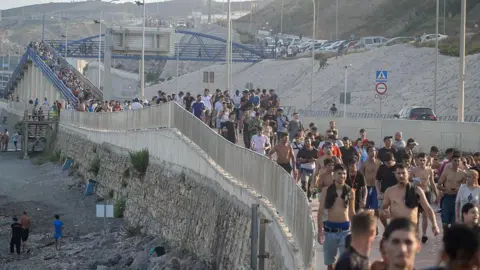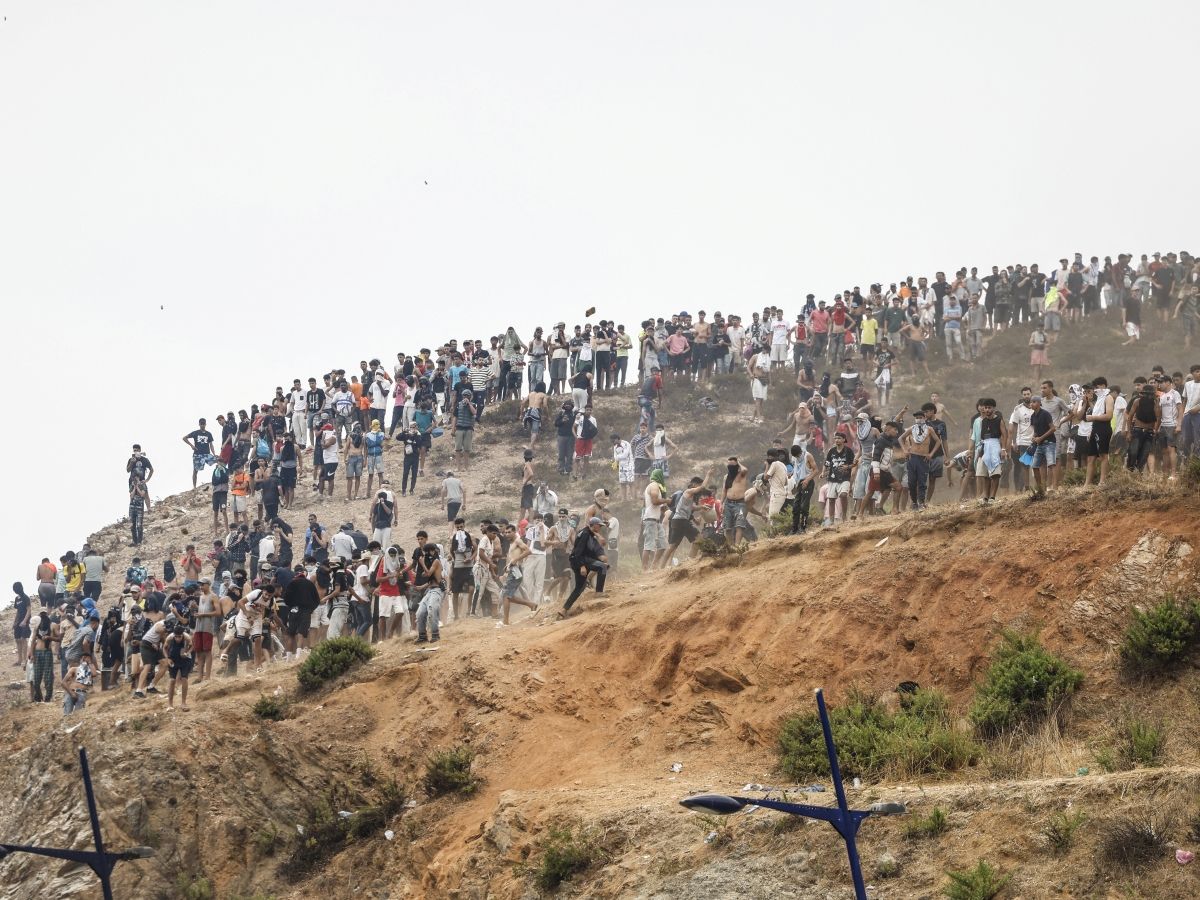
- Spain said on Friday it had reversed a huge rush of migrants into Ceuta, with most of the more than 50,000 people who crossed already heading back voluntarily, and 57 bodies had been recovered on the Spanish side of the border.
- 48,300 migrants had returned by 6 p.m. Friday; Ceuta's local government head said as many as 60,000 had pushed across.
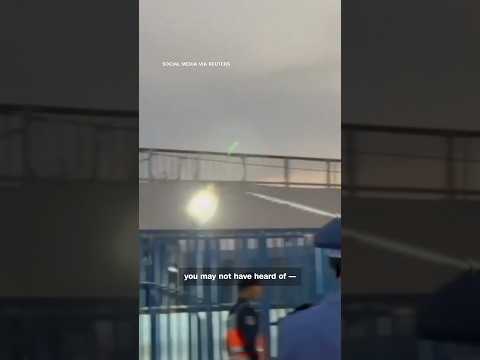
- At Ceuta's border, Moroccan forces beat back crowds with batons and tear gas; water cannon trucks were deployed and the charred remains of a bus and seven cars were seen after clashes.
- Arrivals were hungry, thirsty, barefoot and without a place to stay; videos showed street violence and men scaling apartments, and the column called it an invasion posing serious national security concerns.
- Several hundred people were seen returning to Morocco; one returnee said "I don't even know why I came, and now I'm going back", and a 20-year-old said "There was no food inside Ceuta" and he was kicked out by the Spanish army.
- The rush caused division in Europe; Italy said it was suspending border-free Schengen arrangements with Spain, which Madrid said violated EU treaties.
- Ceuta and Melilla are the EU's only land borders with Africa and periodically see surges, but the scale appeared unprecedented; a Supreme Court ruling and understaffed Guardia Civil police may have contributed.
Tens of thousands of migrants surged into Ceuta from Morocco, with estimates of over 60,000 people attempting the crossing over several days. The situation escalated into chaos, leading to 57 confirmed deaths as migrants faced dire conditions upon arrival.34
The Spanish government reported that 48,300 migrants had returned by Friday evening, with many citing a lack of food and shelter as reasons for their departure. A young Moroccan man expressed his disillusionment, stating, "Honestly, I don't even know why I came, and now I'm going back," highlighting the desperation faced by many.
Prime Minister Pedro Sánchez condemned the mass crossing as a "violation of Spain's territorial integrity" and announced accelerated expulsions of those who entered illegally. The incident has sparked a political backlash, with Sánchez facing protests and criticism for his government's immigration policies.
The rush has raised national security concerns, with Spanish officials noting that Moroccan forces struggled to control the crowds, using tear gas and water cannons to disperse them. The Spanish Supreme Court ruling earlier this month, which prevents the summary deportation of migrants intercepted at sea, is believed to have contributed to the surge.56
As the situation unfolds, European leaders are calling for Spain to manage the crisis effectively, with Italy even suspending its Schengen border accord with Spain, further complicating the already tense situation.1112
“Sánchez called the crossing “a violation of Spain's territorial sovereignty” and said repatriations were speeding up with Morocco's cooperation, while Italy suspended Schengen border-free arrangements with Spain. The State Department blamed Madrid's migration policies for the surge, and France said police presence on the Spanish border would be quintupled by Saturday.”