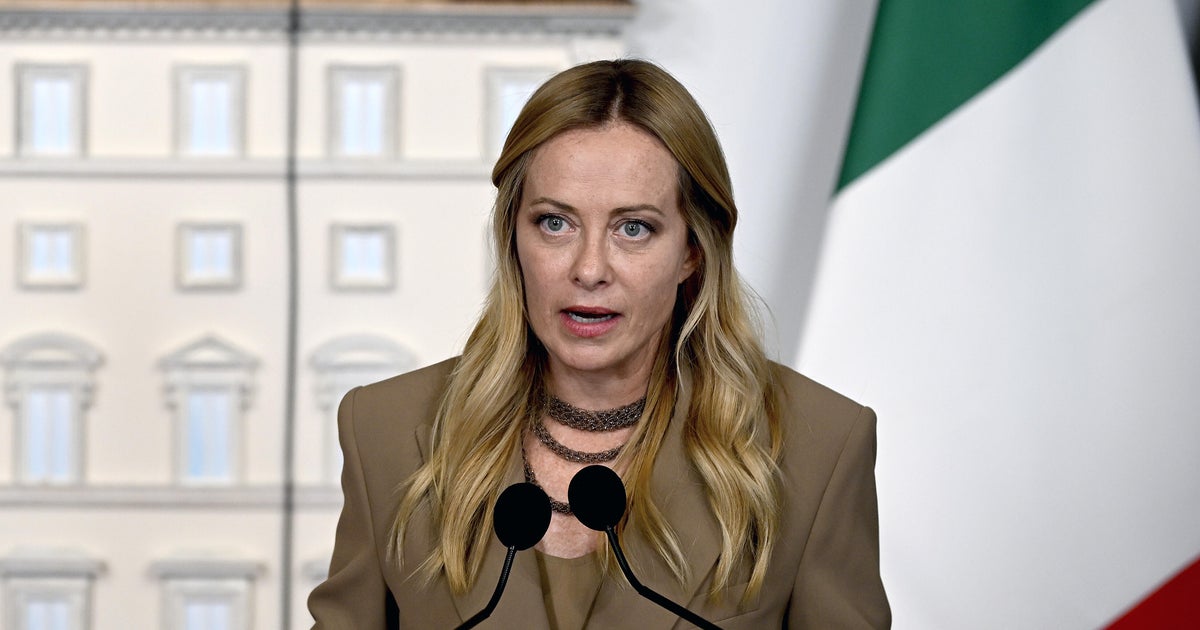
- Italian Prime Minister Giorgia Meloni announced plans on Sunday to introduce a legal limit on the number of foreign students allowed in Italian classrooms, as well as a ban on face-covering garments, including the Islamic burqa and niqab, in schools.
- Meloni argued that if many non-Italian-speaking children are in a classroom, it is not integration but abandonment, and she stated that the government would introduce legislation to limit foreign students to about 30% per classroom, saying: "There's no way that in an Italian classroom, the ones who feel marginalized are Italian children because they have become a minority."
- Meloni also announced plans to prohibit face-covering garments, specifically mentioning the burqas and niqabs worn by some women and girls, in schools, stating: "At school, you go with your face uncovered, and in Italy no one, in the name of a real or presumed tradition, can decide that a young woman has to hide. Equality between men and women is non-negotiable."
- Meloni said the government would bring the proposed legislation to the Council of Ministers, after which it would require parliamentary approval to become law.
- Sociology professor Mariagrazia Santagati noted that in some depopulated areas, higher concentrations of non-Italian background people lead to higher numbers of non-Italian students in classrooms.
- Santagati expressed skepticism, emphasizing that Italian schools are based on inclusion and are open to every child regardless of juridical status and religion, saying: "It's hard to understand how this would be put into practice. We are for multiculturalism."
- The proposed limit on foreign students in classrooms would represent a first in Europe if adopted.
Italian Prime Minister Giorgia Meloni has unveiled a controversial plan to cap foreign students in classrooms at 30% and ban face-covering garments like burqas and niqabs in schools. This legislation aims to address concerns about integration and the marginalization of Italian children.
Meloni stated, "If in a classroom there is only one child who doesn't understand Italian, it is possible that that child will manage, with the help of his peers and teachers, to learn the language and integrate fast. But if these children are many, or even the majority, that's not integration anymore, that's abandonment."
Currently, students with non-Italian citizenship make up about 11.6% of total school enrollment, according to the ISMU ETS Foundation. Meloni emphasized that the proposed limit would ensure that Italian children do not feel marginalized in their own classrooms, stating, "There's no way that in an Italian classroom, the ones who feel marginalized are Italian children because they have become a minority."
The ban on face-covering garments is framed as a matter of gender equality, with Meloni asserting, "At school, you go with your face uncovered, and in Italy no one, in the name of a real or presumed tradition, can decide that a young woman has to hide. Equality between men and women is non-negotiable."
The proposed legislation will be presented to the Council of Ministers and requires parliamentary approval to become law. If adopted, it would mark a significant shift in European educational policy regarding foreign students.
Experts, including Mariagrazia Santagati, a sociology professor, have raised concerns about the practical implications of such a policy, emphasizing the importance of multiculturalism in education.
“The proposed foreign-student cap would be a first in Europe if adopted, according to the report. Sociology professor Mariagrazia Santagati questioned how the ban would work, noting Italian schools are based on inclusion and open to all children regardless of status or religion.”


 CBS News