
- Italian divers have discovered the 2,100-year-old wreck of a Roman ship off Sicily, piled high with hundreds of well-preserved amphorae, likely used to transport wine.
- Diver De Mola described the moment of discovery: "Visibility wasn't the best... I got closer. And my heart stopped. Below me was a vast expanse of amphorae," in an Instagram post with video footage.
- Divers from a special police unit arrived at the scene after receiving a report from fishermen. Fisherman and freediver Giacomo De Mola shared on social media that while surveying the seabed, he spotted an object on his scanner that at first appeared to be a large rock. After diving down, he discovered hundreds of amphorae and called it the most significant discovery of his life.
- Divers from the Carabinieri’s Cultural Heritage Protection Unit were brought in to assist with the investigation. Officials stated that they would take measures to secure the find while experts examine the nature of the wreckage and its cargo.
Italian divers have made a remarkable discovery off the coast of Sicily, uncovering a 2,100-year-old Roman shipwreck. The vessel, located about 46 meters (150 feet) deep near Mazara del Vallo, was found piled high with hundreds of well-preserved amphorae, which were primarily used for transporting wine.1
The ship, measuring approximately 21 meters long and 6 meters wide, is believed to date back to the 2nd or 1st century BCE, according to the Italian Ministry of Culture. Culture Minister Alessandro Giuli described the find as “one of the most significant underwater archaeological discoveries in recent years.”
The discovery was made by freediver Giacomo De Mola, who initially mistook the wreck for a large rock while scanning the seabed. Upon diving closer, he was astonished to see the vast expanse of amphorae, stating, “my heart stopped.”2345
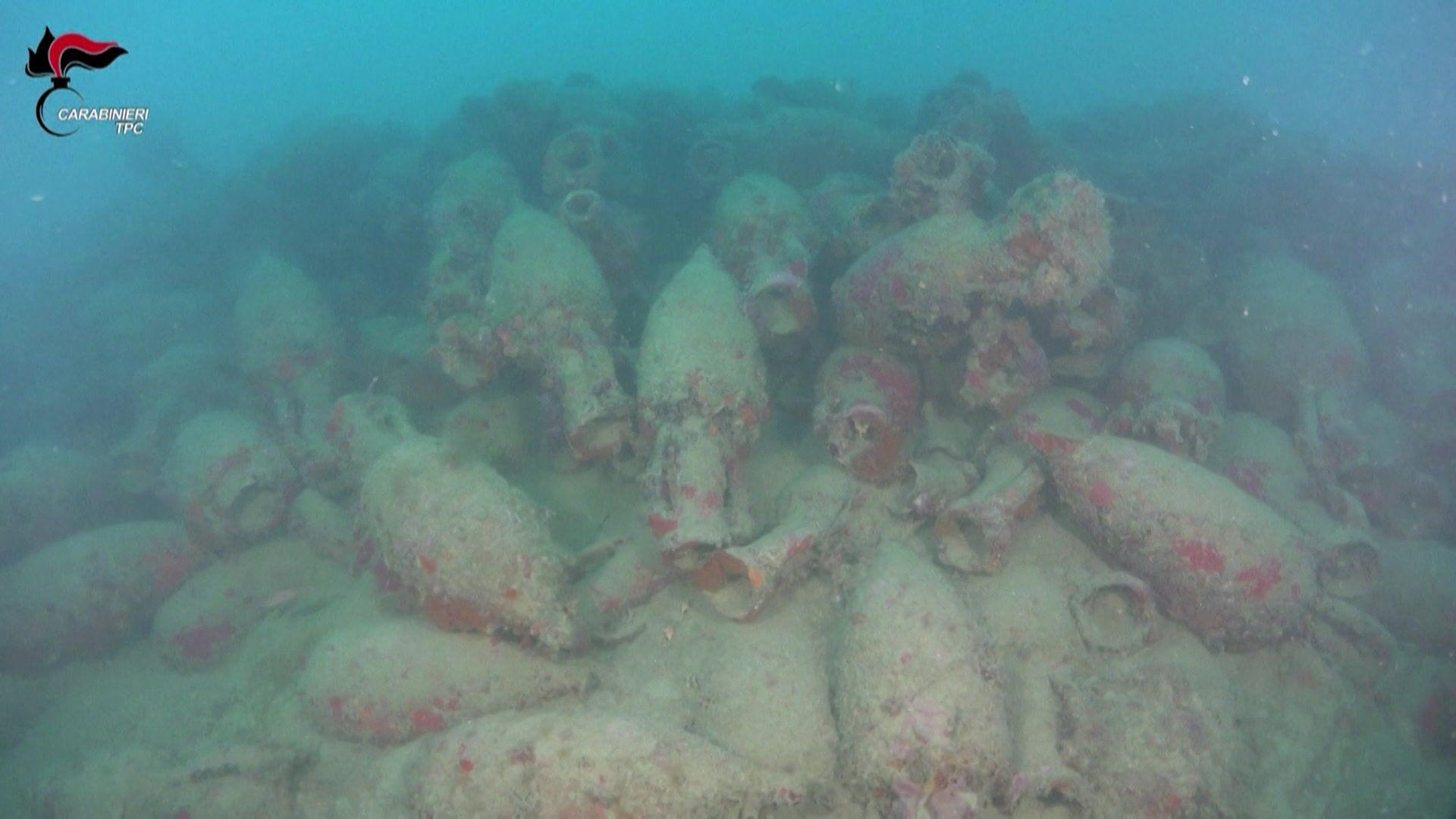
Divers from the Carabinieri’s Cultural Heritage Protection Unit were called in to assist with the investigation after receiving a tip-off from local fishermen. Officials are now taking measures to secure the site while experts examine the wreckage and its cargo, which also included containers used for olive oil and grain.67
This significant find not only sheds light on ancient Roman maritime trade but also highlights the importance of protecting underwater cultural heritage.
“The discovery was made by fisherman and freediver Giacomo De Mola, who spotted the wreck on his scanner and called it the most significant find of his life. Authorities from the Carabinieri’s Cultural Heritage Protection Unit are securing the site while experts examine the cargo, likely used for wine transport.”





