- Israeli strikes on southern Lebanon early Saturday resulted in the deaths of 11 people, including three children, marking the deadliest raids since June's agreements aimed at easing hostilities.
- The Israeli military stated that the strikes were in retaliation for an attack by Hezbollah on its troops in southern Lebanon.
- Hezbollah has vowed an 'appropriate' response to the Israeli attacks, urging Lebanese authorities to abandon the path of direct negotiations.
- Lebanese leaders condemned the escalation, with President Joseph Aoun stating that the attacks send a clear message regarding the negotiations process.
- Hezbollah initially drew Lebanon into the Middle East war in March by launching rocket fire at Israel, which led to a significant Israeli military response.
- In response, Israel conducted heavy airstrikes and a ground invasion, resulting in over 4,300 deaths according to Lebanese authorities.
- Violence levels decreased following a US-Iran memorandum of understanding in June and the subsequent Israel-Lebanon framework deal.
- On Friday, Hezbollah chief Naim Qassem accused Lebanese authorities of applying undue pressure in the implementation of the framework deal.
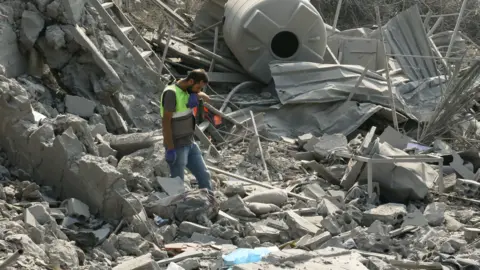
Israeli airstrikes in southern Lebanon on Saturday resulted in the deaths of 11 individuals, including three children, marking the most lethal incident since a ceasefire was established in June. The strikes were reportedly a response to an attack by Hezbollah on Israeli troops.1356
Lebanon's health ministry confirmed that seven fatalities occurred in the village of Ansar, where an entire family was reportedly killed. Additionally, four others died and 17 were injured in Deir Zahrani, including a child and 11 women. The National News Agency of Lebanon noted that these strikes represented the first significant military action at this depth since the ceasefire.
In response, Hezbollah declared that the attacks would be met with an 'appropriate response', criticizing Israeli Prime Minister Benjamin Netanyahu for escalating tensions to bolster his domestic political standing. Lebanese President Joseph Aoun described the strikes as a clear message against ongoing negotiations, while Prime Minister Nawaf Salam emphasized that the victims were not military targets.
As the situation escalates, Lebanon and Israel are scheduled to engage in US-sponsored negotiations next month in Rome, aimed at addressing the framework deal that includes disarming Hezbollah and the withdrawal of Israeli forces from southern Lebanon.
Parliament speaker Nabih Berri urged negotiation sponsors to take responsibility before the situation deteriorates further, while a US State Department official reiterated that a permanent military presence in southern Lebanon contradicts previous commitments.
“The strikes hit a home in Ansar and the Ali al-Taher ridge, with Lebanon's health ministry reporting seven killed in Ansar, including three children and two women. Lebanese President Joseph Aoun called the violations 'a clear message on the negotiations process,' while Hezbollah urged abandoning 'the humiliating path of direct negotiations.'”