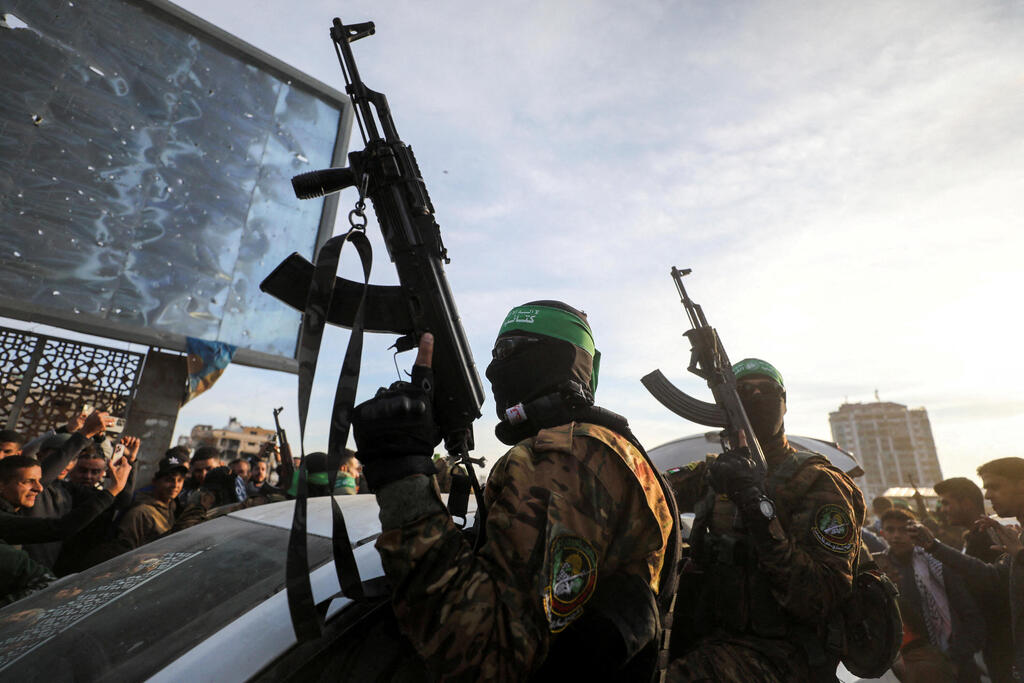
- Hamas has accepted complete disarmament as part of an emerging agreement, according to Israeli officials.
- Talks between mediators and Hamas leaders in Cairo have seen rare progress towards full implementation of a U.S.-brokered Gaza peace plan, sources close to the effort said on Thursday.
- The proposed agreement would be strict and detailed, requiring the dismantling of heavy and light weapons, tunnels, weapons depots and production facilities.
- Hamas will have no role in governing Gaza after the disarmament process, which will be based on reciprocity and independent verification.
- There will be no Israeli withdrawal without disarmament, according to Israeli officials.
- The roadmap under discussion in Cairo would see authority transferred in phases to the U.S.-backed National Committee for the Administration of Gaza (NCAG), under the principle of "one authority, one law, one weapon".
- The plan includes the elimination of tunnels, arms stockpiles and weapons production facilities, with the goal of having no remaining militant infrastructure in Gaza by the end of the process.
- Despite the roadmap, the reality on the ground in Gaza remains far from this roadmap.
Israeli officials have indicated that Hamas has accepted a plan for complete disarmament during talks in Cairo, marking a significant step towards peace in Gaza. The proposed agreement is described as strict and detailed, requiring the dismantling of all weapons, tunnels, and production facilities.4
The roadmap aims to ensure that Hamas will have no governing role in Gaza, with authority transferred to the National Committee for the Administration of Gaza (NCAG). This transition is based on the principle of one authority, one law, one weapon, ensuring a unified governance structure.
The process will be governed by reciprocity and independent verification, with each step contingent on the other side's actions. An Israeli official emphasized, “There will be no withdrawal without disarmament,” highlighting the importance of verification in the disarmament process.
While discussions have been described as “positive” and “making progress”, sources close to Hamas indicated that the group prefers to “confine and store” heavy weapons under Palestinian authority rather than surrender them to Israel. The roadmap also includes the elimination of tunnels and arms stockpiles, aiming for a complete dismantling of militant infrastructure in Gaza.
Despite the optimistic outlook, the reality on the ground remains far from this roadmap, with ongoing tensions and violence in the region.
“The proposed agreement requires dismantling heavy and light weapons, tunnels, and production facilities, with no role for Hamas in governing Gaza post-disarmament. Despite the roadmap, sources indicate that the reality on the ground in Gaza remains far from this plan.”
 ynetnews.com



