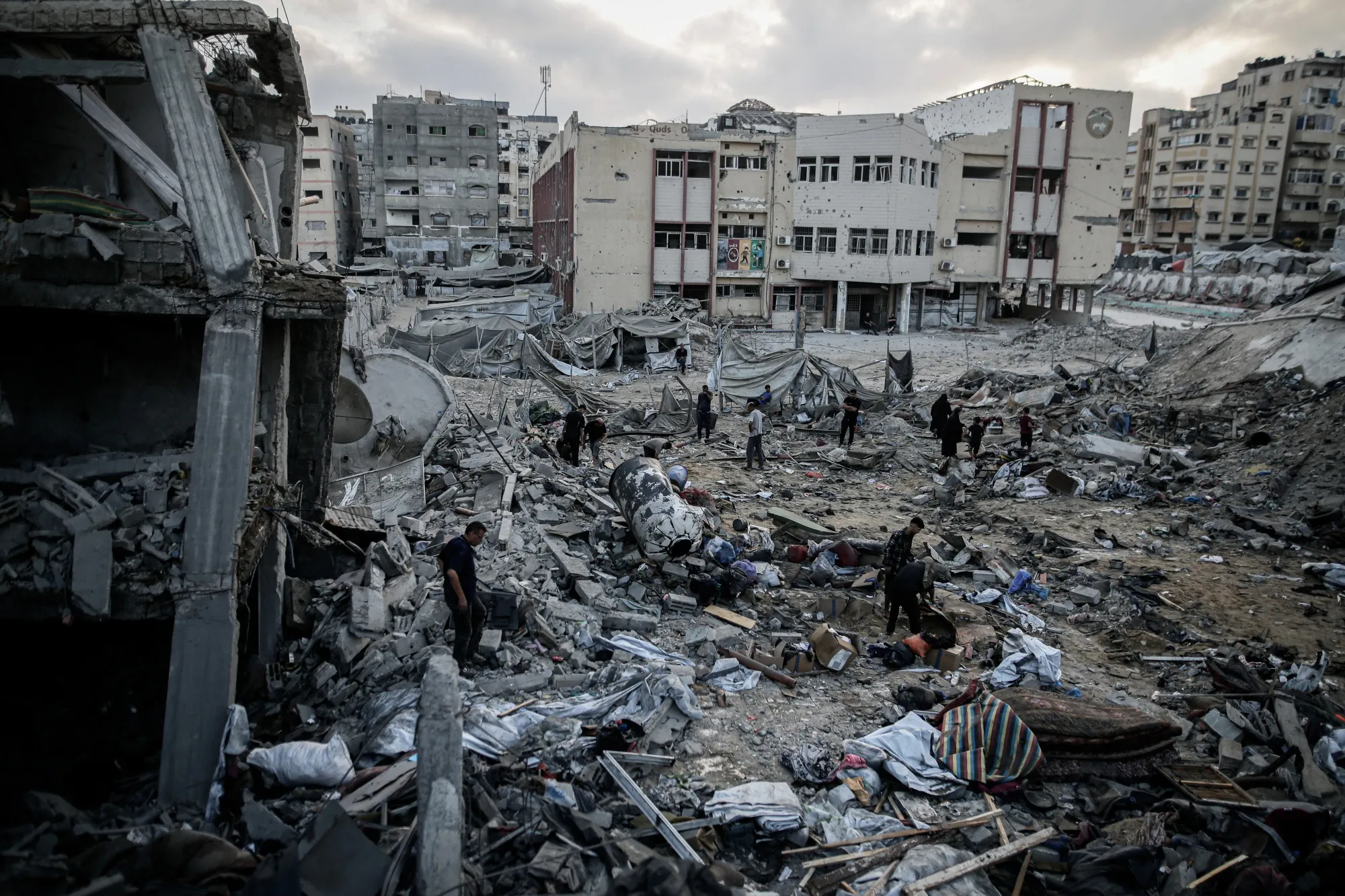
- Israel has escalated attacks on Gaza, raising concerns about the revival of President Trump's peace plan, which may have been premature following Hamas's conditional agreement to disarm.
- July was the deadliest month for Gazans since a ceasefire was agreed in October, with 152 Palestinians killed, according to the Hamas-run Health Ministry.
- At least 19 Palestinians were killed in Israeli attacks on Saturday, contributing to a weekend death toll of 26, including women and children.
- Israel's government cites serious security concerns regarding the peace plan, despite Hamas's agreement to a phased disarmament.
- The continued bombardment of Gaza threatens Trump's peace plan and exacerbates the humanitarian situation for Palestinians.
- Israeli media reports indicate that the government demands the total disarmament of Hamas and the handover of weapons to a Western state.
- Netanyahu's government will not withdraw until Hamas is completely demilitarized, complicating the peace process.
- Experts suggest Netanyahu's stance on Gaza is influenced by domestic political calculations ahead of the general elections in October.
- Netanyahu is attempting to avoid a public clash with Trump while stalling on core issues like military withdrawal.
- Israel's refusal to formalize its position has left the critical negotiation period for implementation protocols frozen.
Israel's military actions in Gaza have escalated significantly, with July marking the deadliest month since a ceasefire was established, resulting in 152 Palestinian deaths.
Israeli officials claim that 57 of those killed were Hamas or Islamic Jihad members.
The recent strikes, which have killed 26 Palestinians over a weekend, including women and children, have raised serious concerns about the future of President Trump's peace plan.
Despite Hamas's conditional agreement to disarm, Israeli officials are demanding total disarmament, complicating the peace process.
Doron Spielman, spokesperson for Prime Minister Netanyahu, stated that Israeli forces will not withdraw until Hamas is completely demilitarized.

Experts suggest that Netanyahu's government is using the situation to delay any serious implementation of the peace roadmap, fearing electoral repercussions ahead of the October elections.
“The government of Benjamin Netanyahu will continue its policy of procrastination, evasion, and disruption until the date of the Israeli elections on October 27,” said analyst Shehadeh.
The ongoing violence and humanitarian crisis in Gaza, exacerbated by Israel's refusal to formalize its position, threaten to derail any potential revival of the peace plan.10
“Freedom of Israeli action in Gaza means, in practice, a full occupation,” warned al-Qarra, emphasizing the need for a suitable environment to rebuild infrastructure.
Israel's formal objections to the participation of Qatar and Turkiye in the verification mechanisms further complicate the situation.
“Hamas conditionally agreed to disarm late last week, yet Israel’s government cites “serious security concerns” and says forces would not withdraw until complete demilitarisation of Hamas. With general elections due in October, the 14-day negotiation period for implementation protocols remains entirely frozen, and Gaza’s weekend toll reached 26 people, including women and children.”





