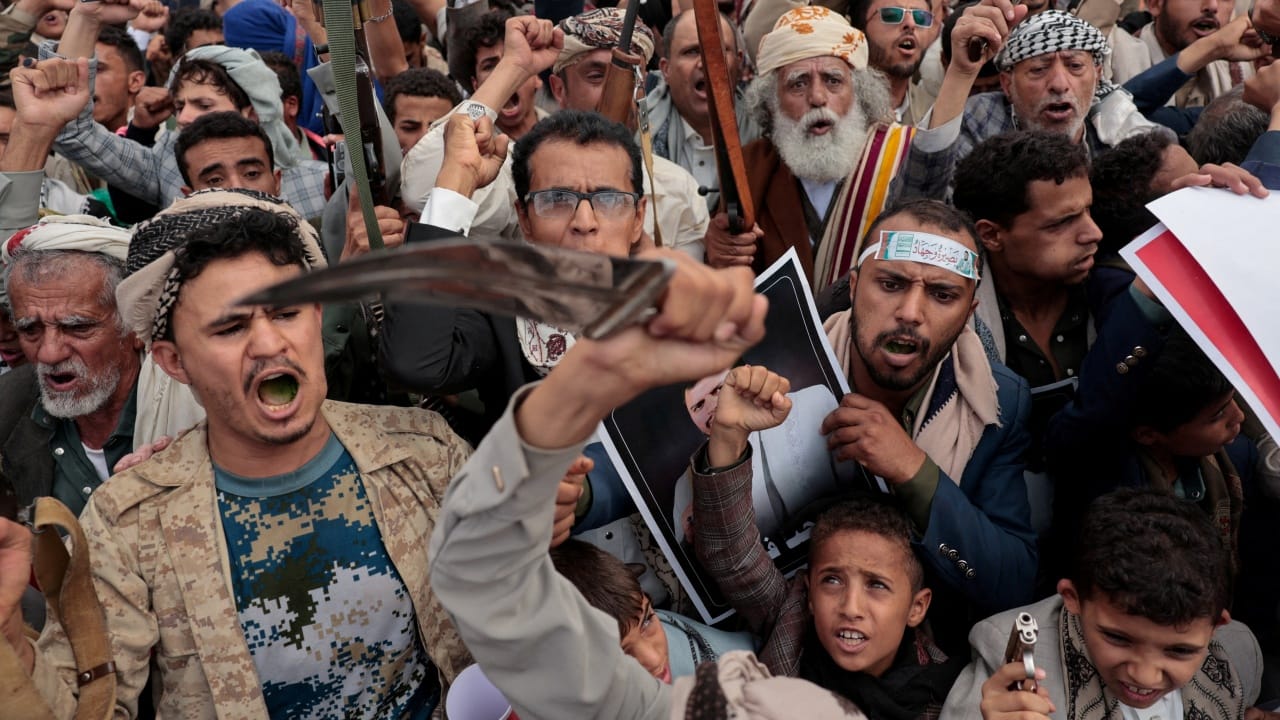
- Iran-backed militias served as Tehran's primary deterrent for decades, with the Axis of Resistance working for more than two decades.
- Israel's sweeping military response to the Hamas-led October 7, 2023 attack killed senior leaders such as Yahya Sinwar and Hassan Nasrallah and weakened Iran's regional network.
- Iran-backed groups are now adapting and rebuilding capabilities, with Hezbollah bouncing back faster than Israel predicted.
- Iran reaffirmed support for Hezbollah, with Supreme Leader Mojtaba Khamenei messaging Hezbollah chief Naim Qassem, and made ending Israeli operations in southern Lebanon a key condition in Washington talks.
- The Houthis intensified attacks on Saudi Arabia and fired missiles at Saudi oil facilities after a blockade of the Bab al-Mandeb Strait.
- Analysts say the Axis of Resistance is alive and changing, expanding the conflict's geographic scope and strengthening Tehran's leverage in future negotiations.
- The Iran-backed militia network was significantly weakened after Israel’s response to the Hamas-led October 7, 2023 attack, but experts say the groups are adapting and gradually rebuilding their operational capabilities.
- Trita Parsi of the Quincy Institute said the Axis worked for more than two decades; once the groups were weakened, Iran paid the price by having both the US and Israel attack it.
- Analyst Ali Ahmadi said describing the groups as proxies oversimplifies Iran’s relationship with them; Iran maintains influence over groups including Hezbollah, the Popular Mobilization Units (PMU), Hamas, and the Houthis.
Nearly three years after suffering major setbacks, Iran-backed armed groups are re-emerging as a critical pillar of Tehran's strategy. The revival of the 'Axis of Resistance' is enabling Iran to exert pressure on the US and Israel by opening multiple fronts across the region.16
For decades, this alliance served as Tehran's primary deterrent against direct attacks. However, it was significantly weakened following Israel's military response to the Hamas-led October 7, 2023 attack, which resulted in the deaths of several senior militant leaders and diminished Iran's regional influence.79
Experts indicate that these groups are adapting to the new battlefield environment and rebuilding their operational capabilities. Trita Parsi, executive vice president of the Quincy Institute for Responsible Statecraft, noted, "The Axis (of Resistance) worked very well for more than two decades, helping ensure there was no attack on Iran while these groups extended their influence within their own territories." He added that Iran's response was to strengthen its strategy rather than abandon it.38
Hezbollah, in particular, has recovered more quickly than anticipated. "These groups were never eliminated, and Hezbollah in particular has bounced back much faster than Israel predicted," Parsi stated.
The Houthis have intensified attacks against Saudi Arabia, reflecting a coordinated effort to consolidate gains and reshape the regional landscape. Analysts noted that these actions are part of a broader strategy to strengthen Iran's leverage. As the conflict continues, Iran's allied militias are playing a central role in expanding the confrontation's geographic scope, increasing pressure on US allies.5
Iran's Supreme Leader Mojtaba Khamenei reaffirmed support for Hezbollah, emphasizing that "the axis is not going anywhere."4
“Israel's post-October 7 campaign killed leaders such as Yahya Sinwar and Hassan Nasrallah, but analysts say the groups are adapting and Hezbollah has bounced back faster than predicted. Tehran also made ending Israeli operations in southern Lebanon a key condition in Washington talks and sent a message from Supreme Leader Mojtaba Khamenei to Hezbollah chief Naim Qassem.”




