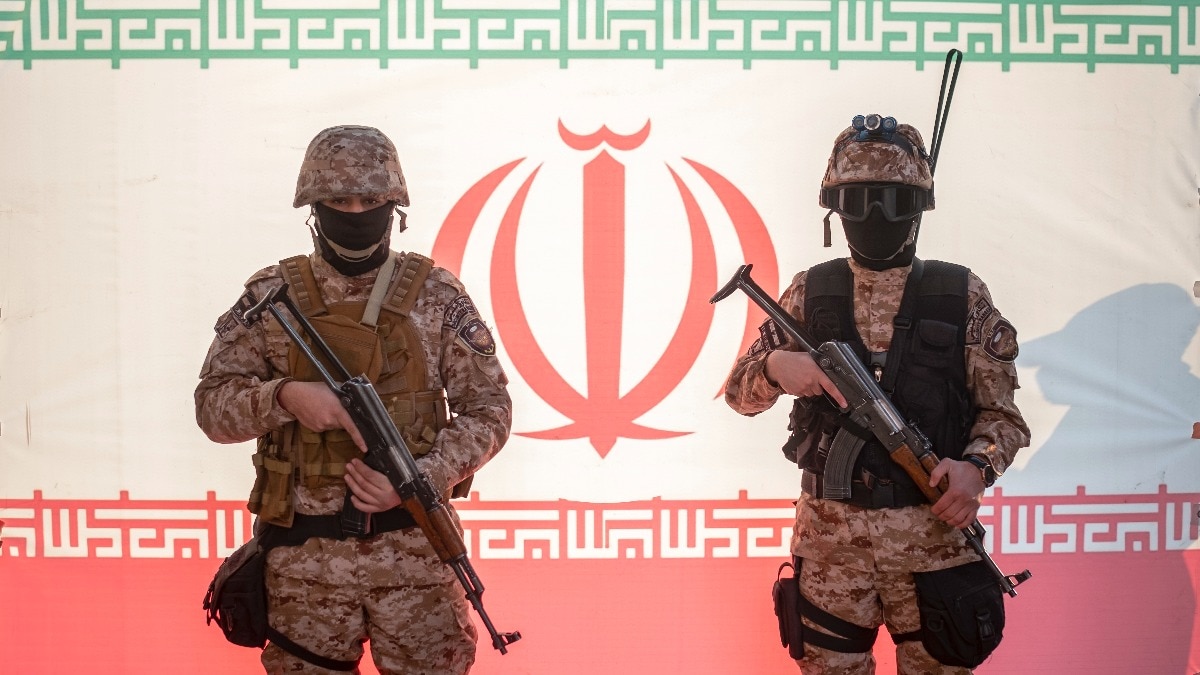
- Iran appears to have been the first to resume direct hostilities after the brief pause, indicating a shift in its approach.
- The missile barrage ended what had been the longest pause in direct exchanges since the latest phase of the conflict.
- The IRGC hit US bases in Jordan, resulting in further escalation of the Middle East war.
- US Central Command announced that American forces had carried out a 'heavy wave' of strikes on Thursday, hitting dozens of IRGC targets.
- Something appears to have changed fundamentally in Iran's approach, particularly regarding its willingness to initiate a strike if it considers that to be the only viable option.
- American officials were quick to point out that Iran fired first, with the missile attack occurring before their own military operation in Iraq on July 29.
- The joint US-Saudi operation marked another significant escalation in the Middle East conflict.
- It also seems that Iran now doesn't want to end this war, and for now, neither side appears willing to step back.
Iran's military actions have significantly escalated the conflict in the Middle East, particularly with the IRGC's recent missile attacks on US bases in Jordan. This marks a notable shift from a period of relative calm to renewed hostilities, raising questions about Tehran's long-term strategy.1345679
The missile barrage ended what had been the longest pause in direct exchanges since the latest phase of the conflict, indicating a fundamental change in Iran's approach. American officials noted that Iran fired first, suggesting a proactive stance rather than a defensive one.2
The IRGC's actions have prompted concerns that Tehran may not want to end this war anytime soon. The joint US-Saudi operation that followed the attacks further escalated tensions, with US Central Command reporting a 'heavy wave' of strikes targeting dozens of IRGC facilities, including military command centers and missile production sites.8
This escalation reflects a broader shift in the dynamics of the conflict, as both sides appear unwilling to step back. The situation remains precarious, with the potential for further military engagements looming on the horizon.
“Something appears to have changed fundamentally in Iran's approach,” analysts suggest, highlighting the risks of a prolonged conflict in the region.
As the situation develops, the international community watches closely, aware that the stakes are higher than ever in this volatile landscape.
“The IRGC's recent missile barrage marks a significant escalation, ending the longest pause in direct exchanges since the conflict's latest phase. American officials noted that Iran fired first, indicating a fundamental change in Tehran's willingness to initiate strikes, suggesting neither side is ready to de-escalate.”






