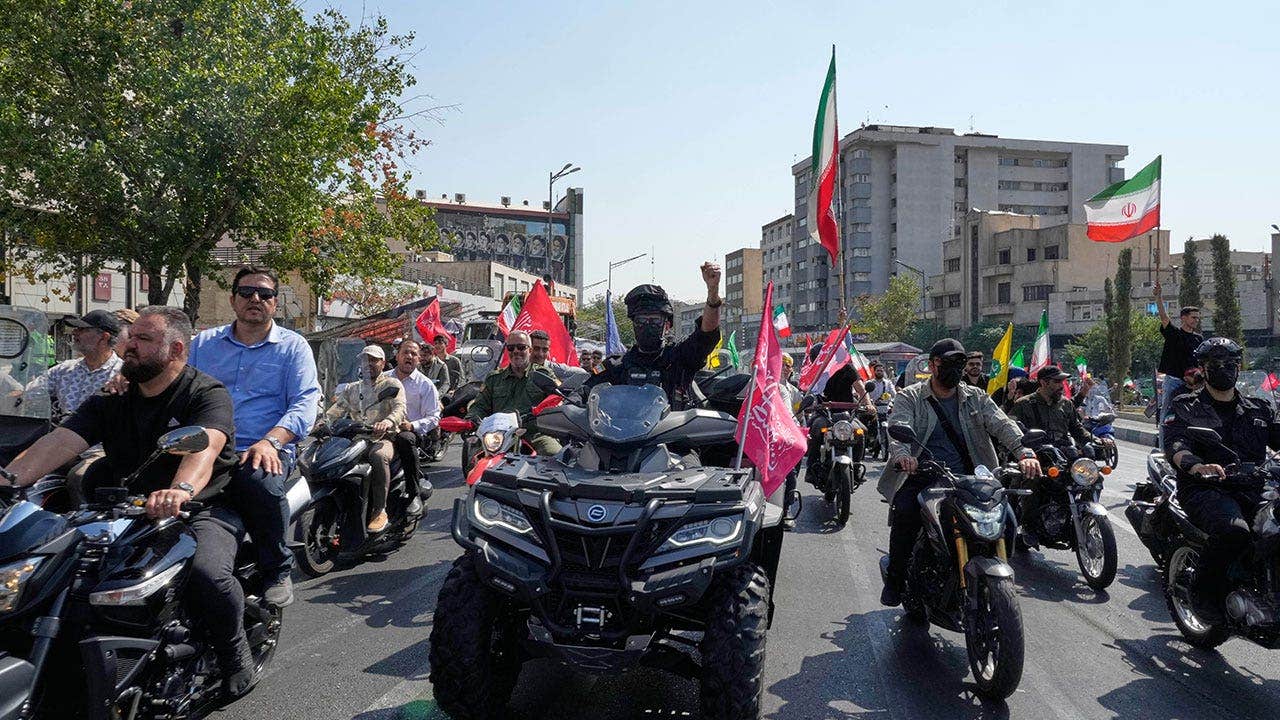
- 51,000 personnel from the Army, IRGC, Basij, and State Security Force were deployed in Greater Tehran as part of heightened security measures, with leave canceled until September 27.
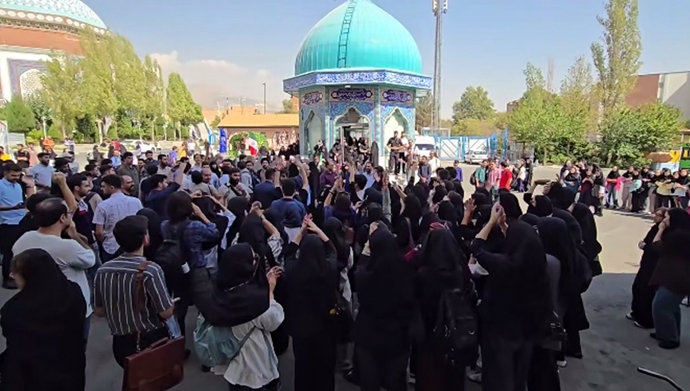
- On September 28, students at Allameh Tabataba'i University protested against compulsory hijab, rising tuition, and security measures, with demonstrations expanding to broader political issues.
- On the same day, telecommunications retirees held demonstrations in Isfahan, Kermanshah, and Bijar, while Shafaroud company retirees protested outside the Gilan governorate.
- Protests by steel industry retirees occurred on September 27 in Isfahan and by Social Security retirees in Shush, Tehran, Khuzestan, and Rasht.
- Videos from September 28-29 showed students chanting against the morality police and expressing opposition to political repression.
- Security forces were placed on maximum alert starting September 25, with extensive measures including motorized patrols and searches of pedestrians and mobile phones.
- The protests reflect ongoing economic, social, and political grievances in Iran, with authorities struggling to quell unrest through intimidation.
Iranian students and retirees protested across multiple cities on September 28, demanding an end to compulsory hijab and addressing rising economic pressures.34
Protests at Allameh Tabataba’i University highlighted grievances over educational costs and security measures targeting female students.
Students chanted, “Neither barracks nor business enterprise; long live the university,” linking their opposition to the commercialization of education with broader social issues.
The demonstrations coincided with a nationwide security alert, with 51,000 personnel deployed across Greater Tehran to prevent unrest, as reported by the Iranian Resistance.12
Retirees from various sectors, including telecommunications, joined the protests, indicating a unified front against economic hardships.
“Don’t think it’s only one day; our appointment is every day,” was another slogan echoing the determination of the protesters.
The security measures included motorized patrols, pedestrian searches, and increased surveillance, as authorities braced for potential unrest during Iran’s annual “Sacred Defense Week.”
Sources indicated that security forces were actively monitoring and suppressing dissent, with reports of new checkpoints and increased presence of plainclothes agents in urban areas.9
The protests reflect a growing discontent among various segments of Iranian society, uniting students and retirees in their demands for change amidst a backdrop of heightened security and economic challenges.
“Students chanted 'Neither barracks nor business enterprise; long live the university,' linking opposition to campus security and commercialization. The protests follow a nationwide alert that canceled leave for security forces through September 27, with motorcycle patrols and checkpoints reported in Tehran and other cities.”
 Fox News