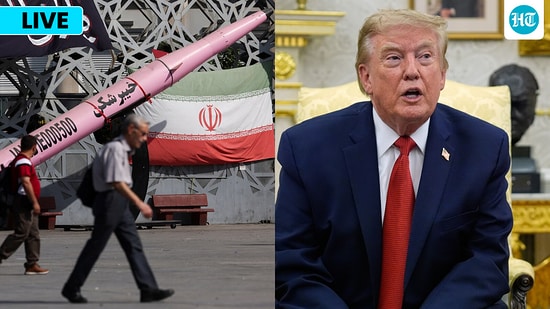
- US President Donald Trump announced plans for stronger economic measures against Iran, warning countries and businesses against providing financial or economic support to Tehran.
- Iran vowed to strengthen its economy and withstand what it calls unjustified US sanctions.
- Iran's Foreign Ministry described the latest sanctions as economic terrorism and said they would not weaken Iran's determination to protect its independence and sovereignty.
- Iran's Armed Forces chief of staff, Major General Ali Abdollahi, warned of a 'devastating' response across land, sea, air, air defence and cyberspace.
- Parliament Speaker Mohammad Baqer Qalibaf stated that the US appeared to have concluded it could not prevail in a direct military confrontation with Iran.
- China rejected the US approach, with spokesman Lin Jian calling for a political and diplomatic solution.
- Oil prices rose after Trump's announcement, and two ceasefire agreements between the US and Iran have broken down.
- Iran has vowed to find ways to withstand what it calls unjustified US sanctions.
- Iranian Foreign Minister Abbas Araghchi accused Washington of trying to divert attention from economic problems inside the United States.
- China accounted for more than 80% of Iran's shipped oil purchases in 2025.
Iran has vowed to respond decisively to new U.S. sanctions, with Major General Ali Abdollahi stating that the armed forces are ready for a "crushing" response across multiple domains.5
The U.S. Treasury Secretary Scott Bessent announced plans for the toughest sanctions ever imposed on Iran, aimed at pressuring its leadership. President Donald Trump described this campaign as an unprecedented effort of economic warfare.12
Iranian officials, including Parliament Speaker Mohammad Baqer Qalibaf, have accused the U.S. of using economic pressure after failing to achieve military objectives. Ghalibaf emphasized the connection between economic strength and national security.6

Iran's Foreign Ministry condemned the sanctions as economic terrorism, asserting they would not weaken Iran's resolve to maintain its sovereignty. Foreign Minister Abbas Araghchi accused the U.S. of diverting attention from its internal economic issues.412
Meanwhile, China has opposed the U.S. approach, advocating for diplomatic solutions instead of sanctions. Data indicates that China accounted for over 80% of Iran's oil purchases in 2025.7813
The ongoing tensions have led to the breakdown of ceasefire agreements between the U.S. and Iran, further complicating the geopolitical landscape.
“Major General Ali Abdollahi said Tehran is prepared to respond across land, sea, air, air defence and cyberspace. Parliament Speaker Mohammad Baqer Qalibaf claimed the US concluded it cannot win a direct military confrontation, while China, which bought over 80% of Iran's oil in 2025, urged a political solution.”


 Minute Mirror