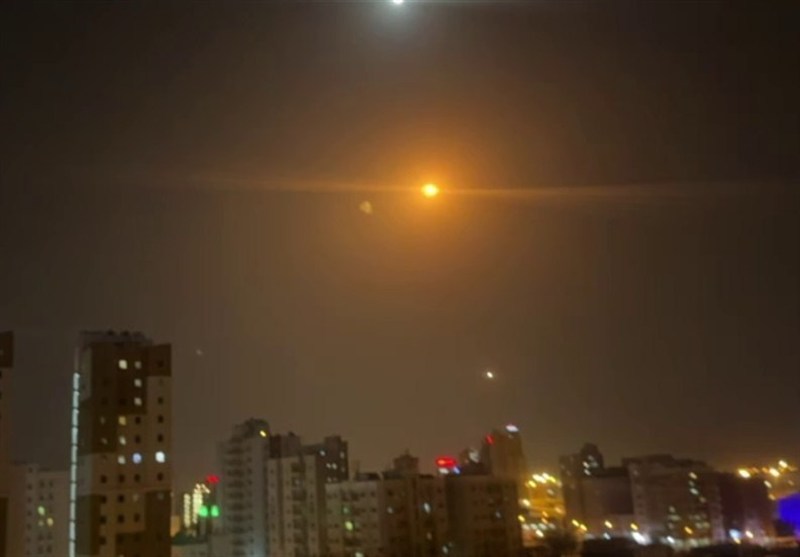
- Kuwait's military said its air defenses intercepted the incoming missiles and drones, calling it Iranian aggression.
- Iranian state media reported drone attacks on U.S. bases in Bahrain and the U.A.E..
- The latest attacks follow a U.S. strike on Iranian rocket launchers in the Strait of Hormuz, which the U.S. military said were being used to deploy.
- President Donald Trump stated that renewed Mideast hostilities will not last 'too long' and predicted that Iran's regime could eventually fall.
Iran's recent missile and drone strikes on Kuwait and Bahrain have escalated tensions in the Middle East, with Kuwait's military successfully intercepting the attacks.12
Iranian state media confirmed drone assaults on U.S. bases in Bahrain and the U.A.E., marking a significant uptick in hostilities.
This surge in aggression follows a U.S. strike on Iranian rocket launchers in the Strait of Hormuz, which the U.S. military reported were being utilized for offensive operations.3
President Donald Trump, amidst his campaign rhetoric, asserted that Iran's military capabilities have been largely dismantled, stating, “They don’t have a Navy. They don’t have an Air Force,” and predicted that the Iranian regime would eventually collapse.4
Despite these claims, Iran has vowed to continue its retaliatory actions against the U.S. and its allies, indicating that the current hostilities may persist.

The situation remains fluid, with the U.S. military monitoring the Strait of Hormuz, where vessel traffic has decreased significantly, reflecting the heightened risks in the region.
As tensions rise, the international community watches closely, concerned about the potential for broader conflict in the Middle East.
“Kuwait's military said its air defenses intercepted the incoming missiles and drones, calling it Iranian aggression. Iranian state media also reported drone attacks on U.S. bases in Bahrain and the U.A.E., while six vessels transited the Strait of Hormuz Wednesday, down from 11 the day before.”


 AP News